










Israeli agtech startup BloomX raises $13 million Series A to improve crop pollination
The company uses robotics and AI to help pollinate blueberries and avocados, reporting average yield increases of about 20% among growers using its systems. The Series A round brings its total funding to $20 million and will support expansion into the U.S. and additional Latin American markets.
Israeli agtech company BloomX, which develops technology to manage and optimize agricultural pollination, has raised $13 million in a Series A funding round led by the Elah Fund.
Other participants included the Rothschild Fund, Sadot Innovation, Tene Fund, OurCrowd, BioBee, Gidulei Sade Dganim, the Mishkey Hevel Aza Group, the kibbutzim Eyal, Horashim, Magal and Kfar Glikson, as well as private investors and the Israel Innovation Authority. The round brings BloomX’s total funding since its founding to $20 million.
Founded in 2019 by CEO Thai Sade, CTO Avi Keren and VP of Software Development Ido Senesh, the company employs 19 people, 15 of whom are based in Israel.
Demand for pollination services has grown in recent decades amid climate change, declining populations of natural pollinators and the expansion of agricultural land. However, the supply of honeybee hives has not kept pace. Honeybees are also generalist pollinators and are not the most effective option for every crop, depending on factors such as flower structure and weather conditions.
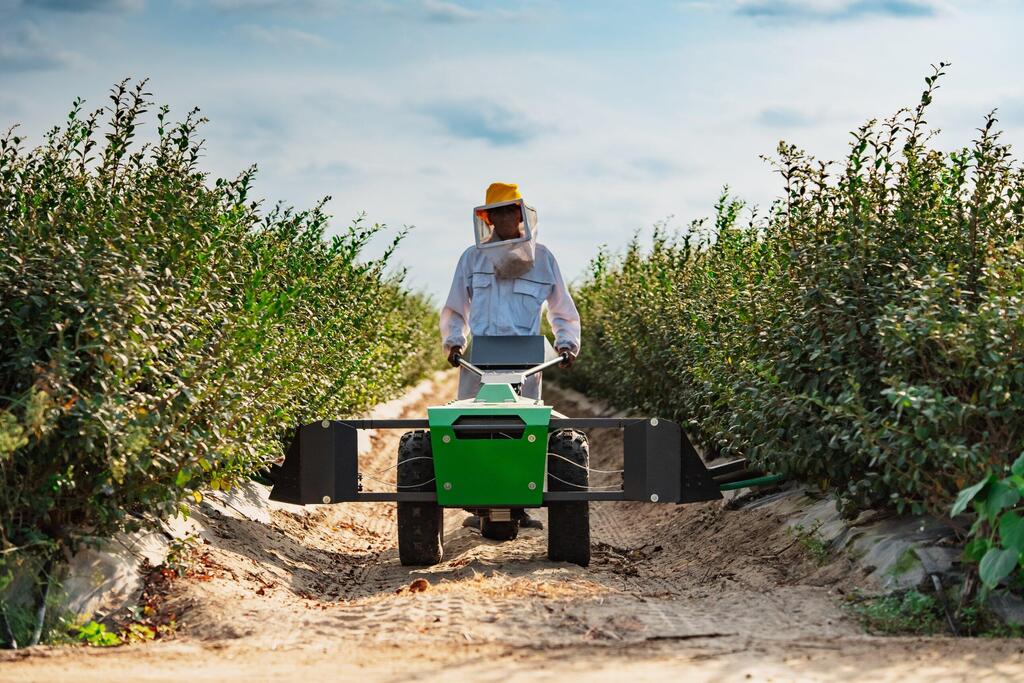
Against this backdrop, BloomX has developed biomimetic systems that combine robotics with artificial intelligence-based algorithms to make pollination a more controllable and measurable agricultural input. The company says its technologies are already in full commercial use and are offered through a “Pollination-as-a-Service” model, allowing growers to access the systems without significant upfront investment.
One of its products, the Robee system, is designed for blueberry crops and mimics the “buzz pollination” mechanism used by bumblebees. It applies controlled vibrations to plants, stimulating the anthers to release pollen onto the stigma.
Another system, the Yahav 2400, was commercially launched this year for use in avocado orchards. It uses high-voltage electrodes to create a controlled electric field that attracts pollen grains and detaches them from male flowers. The system collects the pollen on a specialized textile designed to mimic a bee’s body before transferring it to receptive female flowers.
According to BloomX, growers using its systems, including Agrícola Cerro Prieto (ACP) and Fruitist, formerly known as Agrovision, in Peru, Allesbeste in South Africa and the Granot Group in Israel, have recorded an average yield increase of about 20%, alongside improvements in fruit size and quality. The company also reports returns on investment of up to 10.5 times. A single operator can cover up to 3.5 hectares, or about nine acres, a day, and continue working in extreme weather conditions when bees may be unable to pollinate.
The new funding will support BloomX’s expansion in its existing markets of Peru, Mexico, South Africa and Israel, while preparing the company to enter the U.S. and additional Latin American markets and develop applications for new crops. In the U.S., the company plans to target almond and blueberry growers.
“Over the years, modern agriculture has learned to manage irrigation, fertilization and crop protection with remarkable precision. Pollination, a critical link in fruit production, has remained entirely at the mercy of nature,” said Thai Sade, BloomX’s co-founder and CEO.
“This funding round is a tremendous vote of confidence in the biomimetic technology we have developed, which does not replace bees but works alongside them, giving growers an unprecedented level of operational and economic certainty,” Sade added. “Our goal is clear: to help the world grow more food, of higher quality, in a sustainable way suited to a changing climate.”



