










Israel wants more Apaches, CH-53Ks and missiles. Its defense industry needs cash now
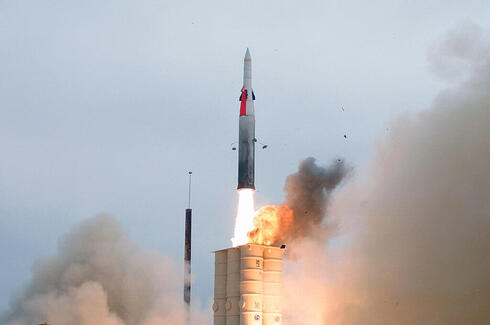
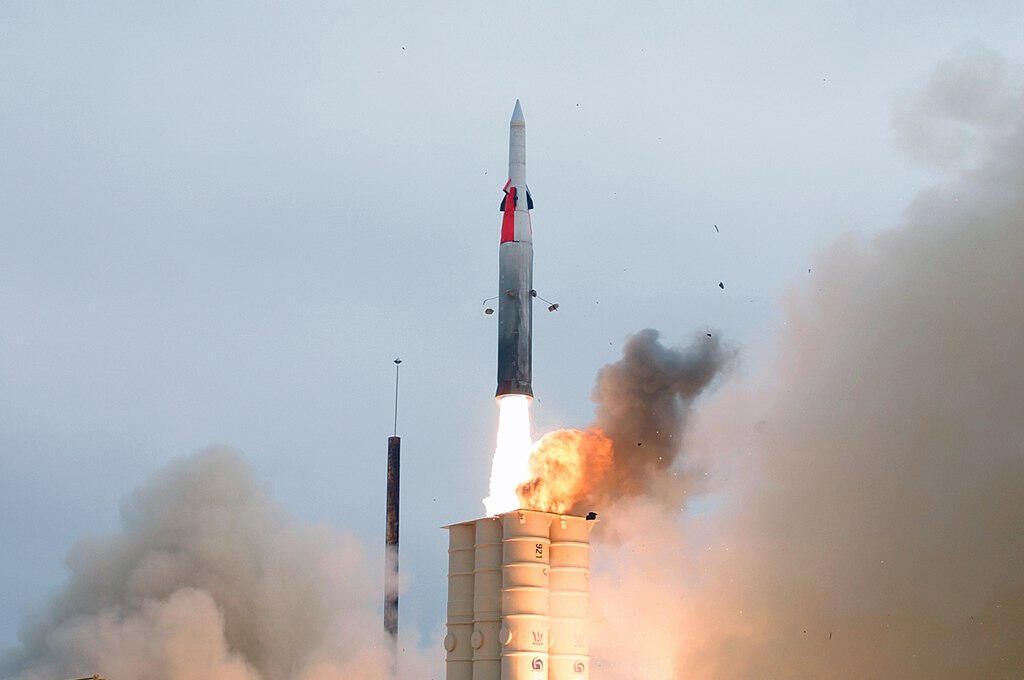
The military is preparing a major procurement push while defense companies warn that several missile and artillery production lines could stop operating within weeks without funding for new orders.
The roughly NIS 40 billion ($13.3 billion) addition that the government plans to transfer to the defense establishment, breaking the state budget and now undergoing legislative and government approval procedures, will push Israel’s 2026 defense budget to NIS 184 billion ($61.3 billion), the second-largest ever, after NIS 188 billion ($62.7 billion) in 2024.
The increase was agreed last week by Prime Minister Benjamin Netanyahu and Finance Minister Bezalel Smotrich, following months of delays and amid a deep crisis of trust between the Defense Ministry and the Treasury.
The basic framework was agreed more than two months ago: The Treasury will immediately transfer NIS 15 billion ($5 billion), while a decision on an additional NIS 25 billion ($8.3 billion) will be made toward the end of the year. The Treasury sought to ensure that the forecasts underpinning the military’s demands were not overly optimistic.
The mistrust between the two ministries is expected to continue even after the government approves the increase on Wednesday. The Treasury views the defense budget as a black hole over which control has been lost. It has also criticized the management of Defense Ministry Director General Amir Baram and warned that the defense establishment, traumatized by the events of October 7, is losing control over public funds and putting the country’s economic future at risk.
The Finance Ministry’s sharp shift in responding to the defense establishment’s demands has been interpreted in the political system as reflecting a shared understanding between Netanyahu and Smotrich that strengthening the military could help improve their security credentials ahead of the elections.
The defense establishment, meanwhile, is desperate for funding. In the coming weeks, several missile and artillery production lines at Israeli defense companies could shut down because of a lack of financing for new orders.
“This is not how Sparta operates. This is how Bardak operates,” a senior defense official said, using the Israeli slang for chaos.
The money is needed to replenish ammunition stocks depleted during the war, cover the costs of military operations and maintain readiness along Israel’s borders. Some of the funds are also expected to help reduce the Defense Ministry’s debt to the country’s three largest defense companies, estimated at NIS 15.5 billion ($5.2 billion): about NIS 5.5 billion ($1.8 billion) owed to Israel Aerospace Industries, NIS 7 billion ($2.3 billion) to Rafael and NIS 3 billion ($1 billion) to Elbit Systems.
The Defense Ministry expected the CEOs of the defense companies to pressure the finance minister and prime minister over the issue. But the ministry’s attempt to portray the debt as “Israel’s debt” was viewed by at least some of the companies as an attempt to shift responsibility.
“With all due respect, we sign our deals with the Defense Ministry and not with the Finance Ministry,” a senior executive at one of the companies told Calcalist.
The debt is already having consequences. Some defense companies have been forced to delay payments to suppliers and subcontractors. Israel Aerospace Industries, for example, swung to negative cash flow of about $795 million in the second quarter, compared with positive cash flow of $170 million a year earlier, even as revenue rose 35% and its order backlog reached a record $35 billion.
The defense companies also sought to persuade the Defense Ministry and Treasury to cover at least the financing costs associated with the debt, estimated at about NIS 1 billion ($333 million). Those efforts were unsuccessful.
The immediate budget increase is largely about putting out fires. But the defense establishment is also waiting for approval of a much larger procurement and force-building program based on a supplementary multiyear budget of NIS 350 billion to NIS 400 billion (116.7billion-133.3 billion).
Part of that money is intended to prepare for the possible cancellation of U.S. security assistance at the end of 2028, currently worth about $3.8 billion a year.
The agreement expected to be submitted to the government would also authorize the defense establishment to make long-term commitments. That would allow it to place orders based on the supplementary budget beginning in 2027, with commitments extending 10 to 15 years into the future.
Those are enormous financial commitments, particularly during an election period. They will also bind the government that follows.
The defense establishment is warning that further delays could cause Israel to lose places on already crowded production lines at U.S. defense companies to other countries that are also rapidly rearming. The consequence could be years of additional waiting for aircraft and other weapons systems.
Among the purchases under consideration are 12 Apache helicopters and eight CH-53K helicopters, as well as ammunition, missiles, bunker-busting weapons, unmanned vehicles for border protection and remotely operated vessels. In May, the purchase of two additional fighter squadrons, the F-15IA and F-35, was also approved.
On Thursday, Israel received the second tanker aircraft it ordered from Boeing four and a half years ago, with the aircraft landing at Nevatim Airbase.
The waiting time for that aircraft illustrates the broader problem facing Israel’s defense establishment. In a world in which countries are rapidly expanding their military capabilities and production lines are booked years in advance, money alone cannot solve every problem.
Israel may be preparing to spend hundreds of billions of shekels on defense. But if procurement decisions continue to be delayed, some of the most valuable resources may be the ones that cannot be replenished: time and production capacity.



