










Astera president: “I want to look back and see that we built an iconic company of the AI era”
Sanjay Gajendra says Astera Labs aims to become one of the technology giants created by the AI boom, as demand for data center connectivity surges and the company expands its Israeli development center.
“Avigdor Willenz decided to invest in us within five minutes,” Sanjay Gajendra, president, chief operating officer and co-founder of Astera Labs, tells Calcalist, recalling the moment the Israeli venture capitalist decided to back the founding of the U.S.-based company, which has since become a prominent player in AI infrastructure.
“There were other Israeli partners who invested in the company as well, but Avigdor was our first investor, the first to write us a check.”
Founded in 2017, Astera Labs develops chips and connectivity infrastructure for AI data centers and employs approximately 756 people worldwide. The Nasdaq-listed company plans to expand its Israeli development center to approximately 200 employees by the end of the year. In 2025, its revenue surged 115% to $852.5 million. In the second quarter of 2026, revenue reached $392.4 million, more than double the figure for the same quarter a year earlier. The company’s market capitalization stands at approximately $60 billion, while its stock has risen 120% since the beginning of the year.
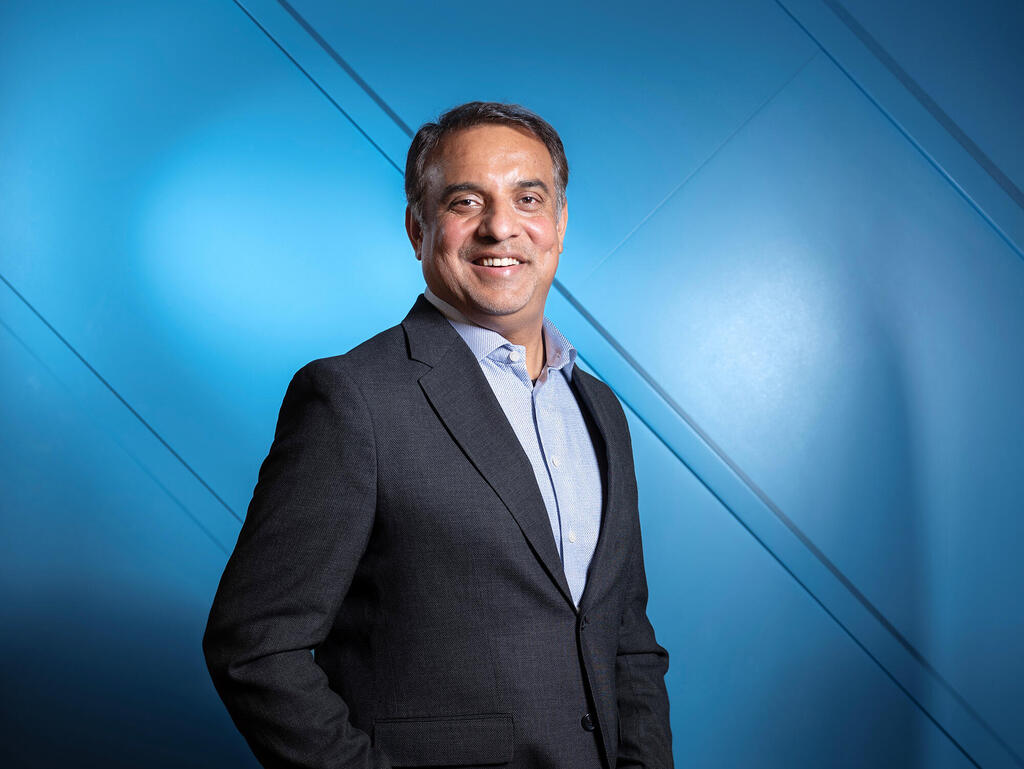
Gajendra manages Astera Labs’ business and operations from the San Francisco Bay Area. He and the company’s two other co-founders previously worked at Texas Instruments. Before that, Gajendra worked at National Semiconductor, initially as an engineer and later in business management roles. Both companies had significant operations in Israel, and he has been visiting the country since 2007.
“I love Israel, the food and the people,” he says.
His relationship with Willenz predates Astera Labs.
“At TI, I managed the communications and connectivity chip business and worked very closely with Annapurna Labs. We supplied the chips required for Amazon’s network cards. My connection with Avigdor began in 2013 and continued even after Amazon acquired Annapurna. That relationship became the foundation for the support we received when we founded Astera.”
When did you decide to found Astera?
“We left TI in September 2017. We presented our idea to TI that artificial intelligence would require a significant shift in data center architecture. At the time, TI thought it was too niche a field and not worth the investment. I said that if TI wouldn’t invest, we would do it ourselves.
“Within a month, we had built a business plan. In November 2017, we met with Avigdor. The concept was that servers were changing, moving beyond just processors to include GPUs, SmartNICs and other components, and they would need to transfer massive amounts of data between them. We realized that connectivity would become a critical issue.”
What happened at the meeting with Willenz?
“We presented the idea to him, and within five minutes, he decided to invest. After hearing horror stories about fundraising rounds requiring meetings with 50 or 60 investors, this was amazing.
“He stood up and wrote the investment figures on the whiteboard, pre-money and post-money, while I was under the table Googling exactly what those terms meant. The funding round came together very quickly, with one of the best chip investors you could ask for, Avigdor. We haven’t looked back since.”
To what extent was Willenz involved in the company’s early days?
“He really loves the early stages. As a company grows and matures, he loses interest, but he is a technologist at heart and loves technology and chips. He was deeply involved as an adviser from the very beginning. He helped us make decisions, opened doors and connected us with people.
“Both Avigdor and his partners were instrumental for us. Manuel Alba, who was Avigdor’s partner, is now chairman of the board at Astera.”
In effect, what you presented to him in 2017 was the very idea that lies at the heart of the AI industry today, that the challenge is not just processing power but also the ability to move vast amounts of data between components.
“Exactly. Artificial intelligence is transforming entire industries, and the infrastructure needs to evolve alongside it. Processing power has improved dramatically, so the bottlenecks have shifted to connectivity, memory and networking. We focus on moving data within AI data centers.”
Tech giants are increasingly building their own networks and chips. Google is doing it, and Amazon is doing it through Annapurna. How can Astera ensure it has a place in a world where hyperscalers are trying to do everything themselves?
“Every new technology begins with a race to dominate it, but ultimately open markets and diverse supply chains win out.
“We want to enable customers to pursue ‘AI Your Way,’ choosing the architecture that suits them best. We work with a wide range of technologies and customers, and we aren’t tied to any single architecture, GPU or hyperscaler.
“We provide the connectivity layer, including chips, software and solutions for networking and component interconnects. So even if a company develops part of the technology in-house, they can still work with us.”
But other companies might say they don’t need you. Nvidia could claim it will provide the connectivity itself.
“That’s easier said than done. Nvidia focuses on core computing power. Its NVLink relies on its own proprietary technology, and we aren’t trying to compete with it directly. On the contrary, we announced a collaboration around NVLink Fusion, which enables the use of this technology in custom accelerators.
“At the same time, we are working with many other companies. Our technology is currently found in a vast number of the data centers being built worldwide. We estimate that nine out of 10 data centers currently being deployed use Astera’s technology. The market is so large that if we can continue to double our revenue, that is enough for us.”
What role do you envision for Israel in Astera’s future?
“Israel is one of the hubs where we intend to invest significantly and continue expanding our team.
“There are two reasons for this. The first is Israel’s deep heritage in networking technologies. Many major companies in the field started here, and there is a vast pool of talent.
“But beyond the talent, there is a specific mindset. Israel is a fast-paced, highly competitive market. People here are accustomed to tackling challenges, taking risks and having confidence in their ability to build technology that transforms how AI is deployed.
“This combination of capabilities and mindset makes Israel the perfect location for us. We are an engineering-driven company that isn’t afraid of major challenges.
“There is a difference between a large company simply operating in Israel and one where the Israeli hub becomes part of the heart and soul of an organization that remains committed to innovation and pioneering new ground. Israel is a place where we want to invest.”
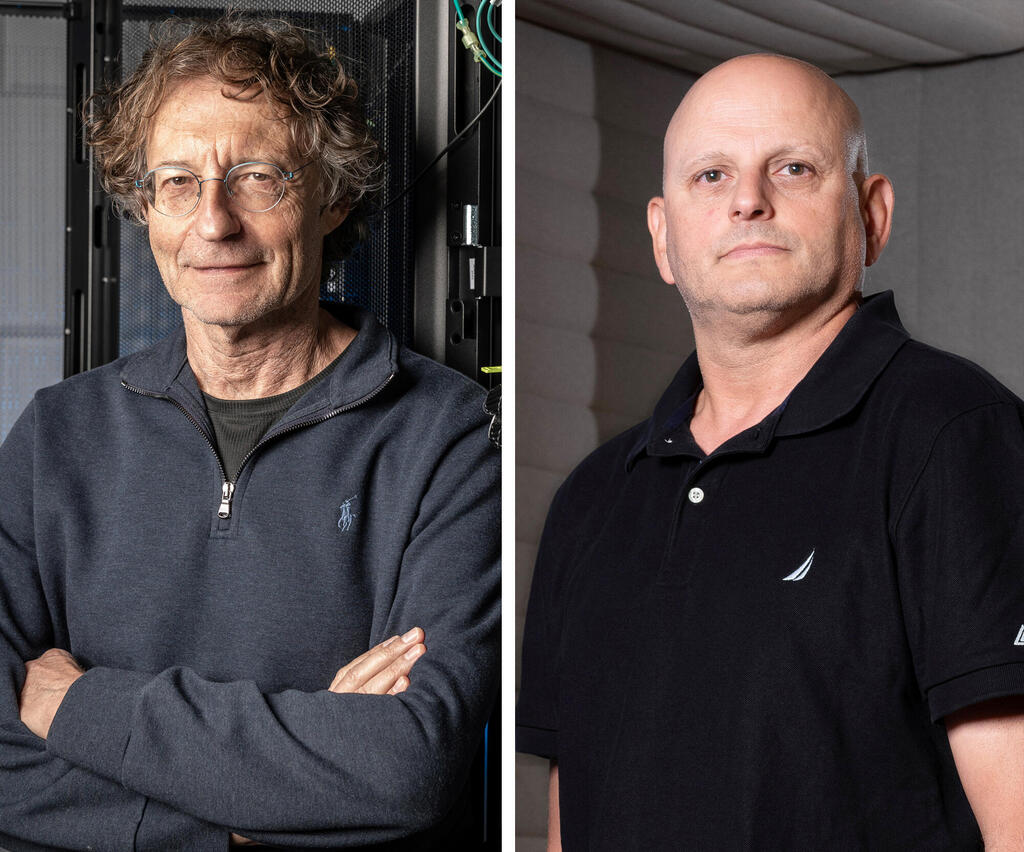
According to Guy Azrad, who leads the company’s operations in Israel, the local center is already responsible for key components of Astera’s product roadmap.
“The Israel center is working on the next generations of Scorpio, the company’s technology, including chips that will support bandwidths exceeding 100 terabits per second, as well as solutions tailored to the needs of specific customers.
“This means the local team is responsible for key areas of the company’s product roadmap and is critical to its success.
“Competition for engineers in Israel is real. Ultimately, people consider what they can build and the impact they can have. We are in a relatively rare position: Astera already enjoys significant growth and business momentum, yet it is still building, growing and operating at a startup pace.
“This allows engineers to take on broad responsibilities and make a real impact.”
You started in Israel by acquiring Pliops, and recently acquired another company in Germany, Xsight. Will this be your strategy moving forward, acquiring companies and talent?
“It’s a combination of everything. We have a strong brand built on performance and innovation, and customers and partners constantly bring us ideas for new products and technologies.
“At the same time, we need people. We can’t grow at the pace we want through organic hiring alone. That is why we are also looking for acquisitions that bring in people, technologies and capabilities, enabling us to accelerate growth and better serve our customers.”
So when you look for acquisitions, you aren’t necessarily seeking large companies, but rather teams and technologies that can integrate into your strategy?
“Exactly. We are already seeing organic momentum in areas like networking, optics and memory expansion. We work closely with the hyperscalers and know what they will need in the future.
“If there is a technology or a team that can help us address those challenges and accelerate our progress, we will consider an acquisition. We don’t need an acquisition to generate revenue or enter a new market. We need a clear reason, a mission that the market and customers are already validating.”
We are currently seeing cross-investments between companies. Nvidia, for example, acquires technology from companies while simultaneously investing in them. Is this changing the way the industry operates?
“Yes, and it is already happening. Amazon, for instance, holds warrants in Astera, the right to purchase shares at a preset price based on the products we sell them, and there have been several rounds of such warrants. Nvidia uses similar structures as well.
“The ecosystem is essentially self-sustaining. AI infrastructure requires massive amounts of capital. These structures enable companies to expand faster and build the necessary infrastructure.”
But the scale has changed significantly.
“Absolutely. We’re talking about investments in the billions of dollars, sums that seemed inconceivable just a few years ago. But at the same time, we need to see revenue.
“In recent months, we’ve seen significant evidence that customers are starting to generate revenue from AI usage, and that changes the whole picture.”
But companies still haven’t solved the profitability question.
“I’m not worried. We’re seeing very strong growth in revenue and AI monetization, and I believe profitability will follow.
“At Astera, too, AI usage is growing rapidly, not just in engineering but also in areas like HR, such as candidate screening. Since the beginning of the year, our spending on AI tools has increased roughly 40-fold.
“Once people start using AI and discover they can be more efficient, there’s no turning back. It’s like the calculator. Once it was invented, no one wanted to go back to calculating everything by hand. The genie is out of the bottle.”
Will the growing use of AI allow companies to hire fewer people?
“AI will enable the same number of people to do much more. We are actually growing rapidly and continuing to hire. But the existing workforce can take on more projects.
“Today, roughly 80% to 90% of our chip design work is done using AI tools. In the past, if we had limited resources, we had to choose which project to tackle first. Today, two engineers can work on several things simultaneously.
“The chip development process will change dramatically, and so will engineer productivity.”
Will there still be a need for four years of university study and traditional engineering training in the future?
“I still strongly believe in the university experience and the foundation it provides. However, that same level of training in programming itself might not be necessary. You don’t necessarily need to know C++ if you can explain to an AI system in English what you want it to do.
“What will remain important is understanding the ‘why’ and the ‘how,’ thinking logically and grasping systems. You need to know how to define the problem and the task, and then use the tools to solve it.”
But perhaps a year from now, even the things you currently consider fundamental will become irrelevant?
“Absolutely. We will all have to adapt. Some skills we currently view as fundamental might become less important, but creativity, logic, solution design and the ability to understand whether the result is correct will remain.
“You need to know what to ask the AI, recognize when it makes a mistake and connect the components. The foundation of human thinking remains, even as the tools change.”
Are we in an era where new tech giants will emerge, just as happened during the internet era?
“Yes. New giants have emerged in every era. The internet created companies like Cisco and Broadcom. The social media era created Facebook and Meta, and the personal computing era created Microsoft and Apple.
“The AI era will create new giant companies. I hope Astera will be one of them. I want us to look back in eight or 10 years and see that we built an iconic company of the AI era.”
Do you think the new giants will be exclusively hardware companies?
“No. There will be hardware, software and application companies.
“Think about medical research, for example. AI can enable companies to solve problems that previously required massive teams of experts. We will see new companies built around these capabilities.”
What about the power consumption of data centers? That is already a real problem.
“It is one of the industry’s biggest challenges. Data center power consumption could increase tenfold or 15-fold within four to five years.
“In the past, we discussed a general-purpose computing server rack that consumed around 15 kilowatts. Today, with accelerated computing, that figure can reach 150 or 200 kilowatts.
“The problem is that electrical infrastructure cannot be built at the same pace. Constructing a power plant takes five to seven years. Consequently, even if we have sufficient chips and memory, there isn’t always enough electricity to power them.
“While bottlenecks in memory and chip manufacturing will occur in the coming years, some can be resolved within two to four years. Electricity presents a more difficult challenge because physical infrastructure takes much longer to develop.”
How can the electricity shortage be addressed?
“We need to improve both chip efficiency and system utilization. If you manage to reduce power consumption by 10%, you effectively create 10% more capacity within the infrastructure you’ve already built.
“The issue isn’t just the chip’s power consumption. Currently, GPUs are utilized only about 52% of the time. They spend nearly half their time waiting for data or memory, yet they continue to consume power.
“This is precisely why connectivity has become so critical. In the AI era, building a more powerful processor isn’t enough. You must ensure the entire system can feed it data, interconnect all the components and fully leverage existing computing power.”



