










Israeli AI cooling startup ZutaCore raises $100 million Series C at estimated $600 million valuation
Samsung, Mitsubishi Electric and Carrier back data center infrastructure company from Sderot.
Israeli company ZutaCore, which develops advanced direct-to-chip liquid cooling systems for artificial intelligence processors in data centers, has announced the completion of a $100 million Series C funding round. The round was led by global industrial and technology groups Mitsubishi Electric, Carrier, and Samsung Electronics, through its investment arm Samsung Ventures.
The latest financing brings ZutaCore’s total funding since its founding to approximately $200 million. The capital will be used to accelerate the company’s global commercialization efforts, expand its sales network, and meet rapidly growing demand for AI and high-performance computing (HPC) infrastructure.
The explosive growth of AI applications is reshaping data center architecture and creating unprecedented cooling challenges. Traditional air-cooling systems are increasingly unable to handle the heat generated by next-generation AI servers. Power consumption per server rack has risen dramatically, from roughly 10 kilowatts in conventional systems to more than 100 kilowatts in advanced AI deployments, with most of that energy ultimately converted into heat that must be removed efficiently.
The liquid-cooling market is currently divided between two main approaches. One relies on circulating water through pipes placed near processors, a method that faces efficiency limitations and concerns over water consumption. The alternative approach, pioneered by ZutaCore, uses a two-phase cooling process that does not require water.
The company’s flagship technology, HyperCool, circulates a proprietary dielectric liquid that is non-conductive and non-flammable directly across the processor. As the liquid absorbs heat, it boils and transforms into vapor, efficiently removing thermal energy through the phase-change process. According to the company, the system eliminates the risk of electrical shorts while enabling deployment in high-density AI environments.
ZutaCore says its technology can be integrated into advanced AI servers and work alongside existing cooling infrastructure in large-scale data centers operating at capacities of tens or even hundreds of megawatts. The company also says the technology can help operators improve energy efficiency and potentially reuse waste heat, supporting long-term sustainability goals.
To support development and deployment, ZutaCore has built what it describes as one of the world’s most advanced thermal simulation and testing facilities at its development center in Sderot. The 2-megawatt facility allows the company to test cooling performance, system stability, and infrastructure compatibility under real-world operating conditions before customer deployment.
The company says its technology has already been deployed at more than 75 sites across North America, Europe, and Asia. It also maintains partnerships with major semiconductor and computing companies.
Mitsubishi Electric and Samsung Electronics join an investor base that already includes Carrier, Mitsubishi Heavy Industries, Daikin, and Israeli shipping company Zim.
A Sderot-Based Growth Story
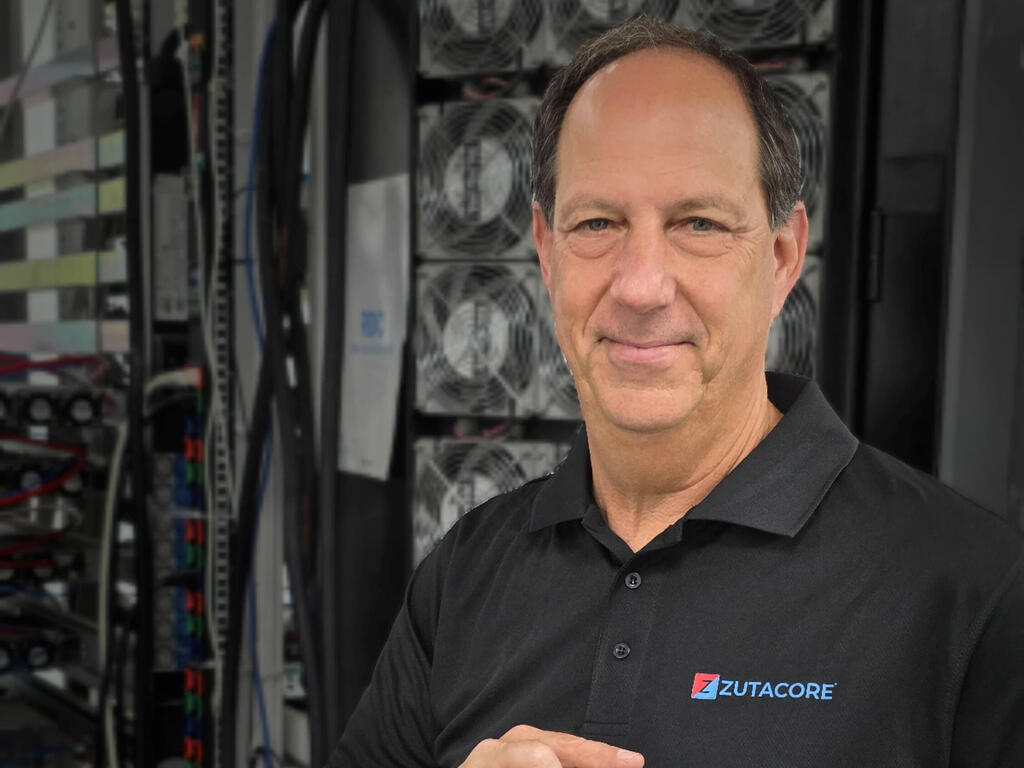
Behind the company is founder, chairman, and CEO Erez Freibach, who established ZutaCore in 2016 after returning to Israel following years in Silicon Valley. Freibach said he founded the company around three goals: developing breakthrough sustainability technology, bringing advanced high-tech employment to Israel’s south, and creating quality jobs in the Gaza border region.
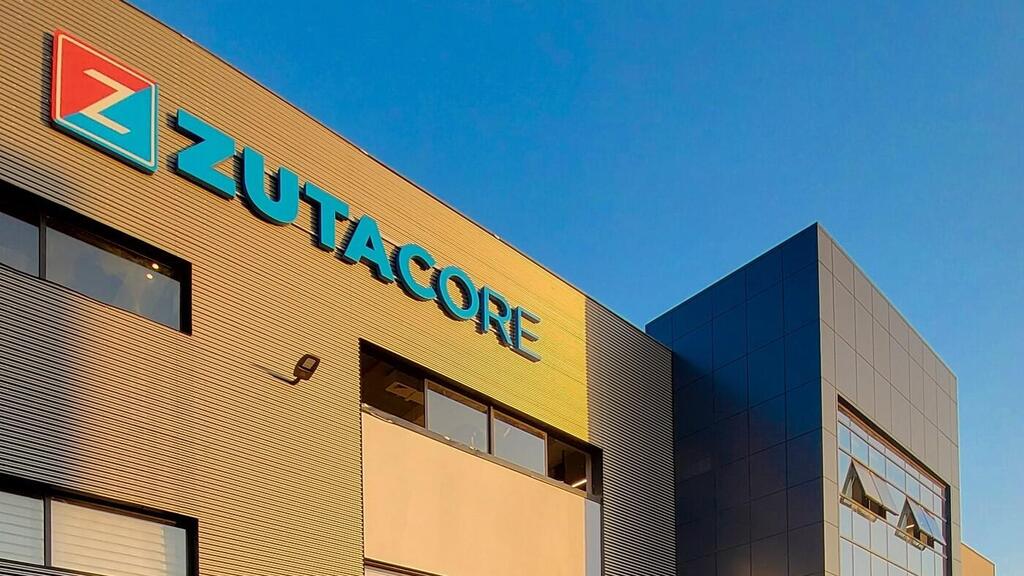
The company’s research, development, and manufacturing operations are based in the Sapirim Industrial Park near Sderot, while its commercial headquarters are located in San Jose, California. ZutaCore also maintains operations in Europe, India, and Taiwan.
Speaking to Calcalist, Freibach recalled the impact of the October 7 attacks on the company and its employees.
“On October 7, I was living in Silicon Valley, and it was my 60th birthday,” he said. “By October 9, it became clear that our employees were scattered across the country following the evacuations. Fortunately, we had no casualties, although terrorists entered the homes of several employees. At that moment, I decided our stay in the United States was over, and within a day and a half I was back in Israel.”
Following his return, Freibach said the company worked to support displaced employees and restore operations at its Sderot-area facility.
ZutaCore is currently valued at close to $600 million, according to Calcalist estimates, but he says the company’s goal is to build a long-term business rather than pursue a quick sale.
“The cooling and energy infrastructure market for AI is one of the most important technology sectors today,” he said. “We have built advanced offices and laboratories in Sderot and are committed to keeping our core development and manufacturing activities here.”
The company currently employs approximately 140 people worldwide, including about 100 in Israel. ZutaCore plans to hire roughly 50 additional employees globally, including around 40 positions at its Israeli development center. Recruitment efforts will focus on engineers, physicists, systems specialists, and software developers.
At the same time, the company has expanded its executive team to support growth. Recent appointments include Yaniv Reinhold as Chief Financial Officer, Sarah Warshavsky Oberman as Chief People Officer, Yoni Nir as Head of Research and Development, and Sharon Shafran as Chief Operating Officer.
“The current funding round is a significant vote of confidence from leading global partners,” Freibach said. “It positions us to play a leading role in the future of AI infrastructure while improving energy efficiency and reducing environmental impact.”



