









“A Great Depression-scale recession is coming by the end of the decade”
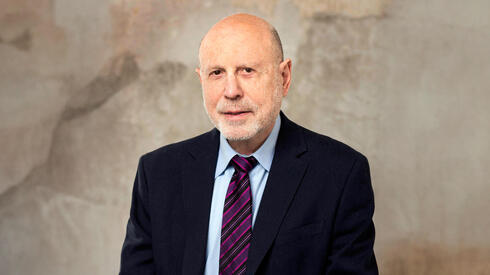
Veteran fund manager Yaakov Weinstein explains why markets are nearing the end of a long cycle and why today’s growth fuel will eventually run out.
"2026 should be a good year, but with more moderate gains of around 10%, compared with the 20% returns of recent years. The main event will be the U.S. midterm elections in November. All macroeconomic policy, from the administration and the central bank, will be aimed at helping Republicans achieve strong results.
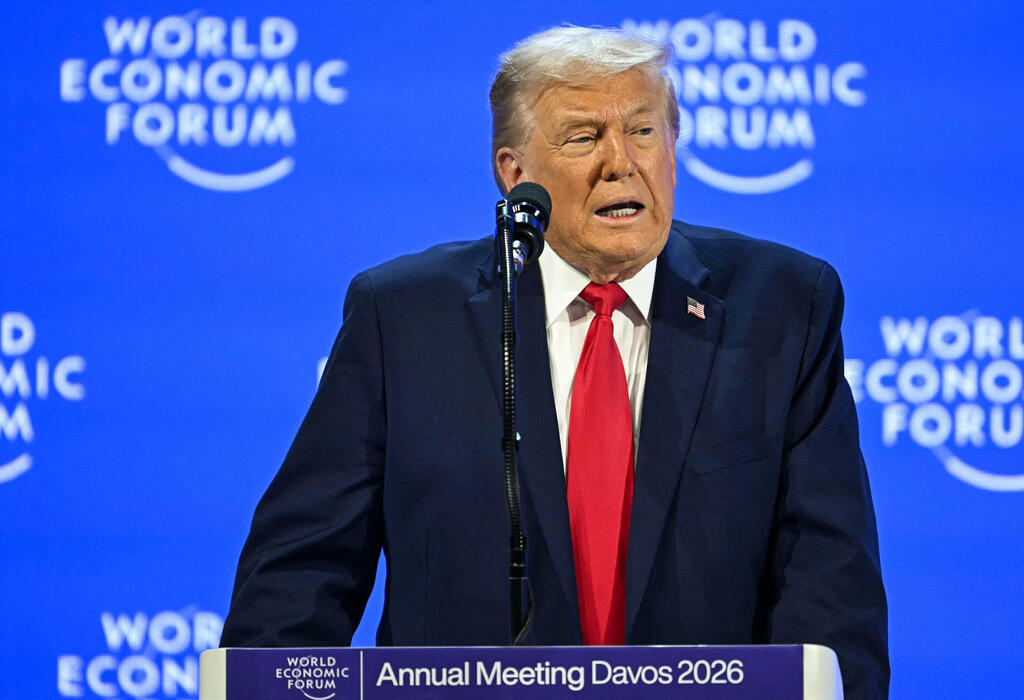
"I assume the Fed chair will be replaced by Trump, which will blur the line between the Treasury and the central bank. They will effectively function as one body, leading to more interest rate cuts than necessary. Everything will be geared toward the average American voter, who worries about three things: food prices, gas prices, and mortgage costs. Gas prices are already low, food prices are hard to influence, so that leaves mortgage rates. I wouldn’t rule out a scenario in which 50-year mortgages are introduced."
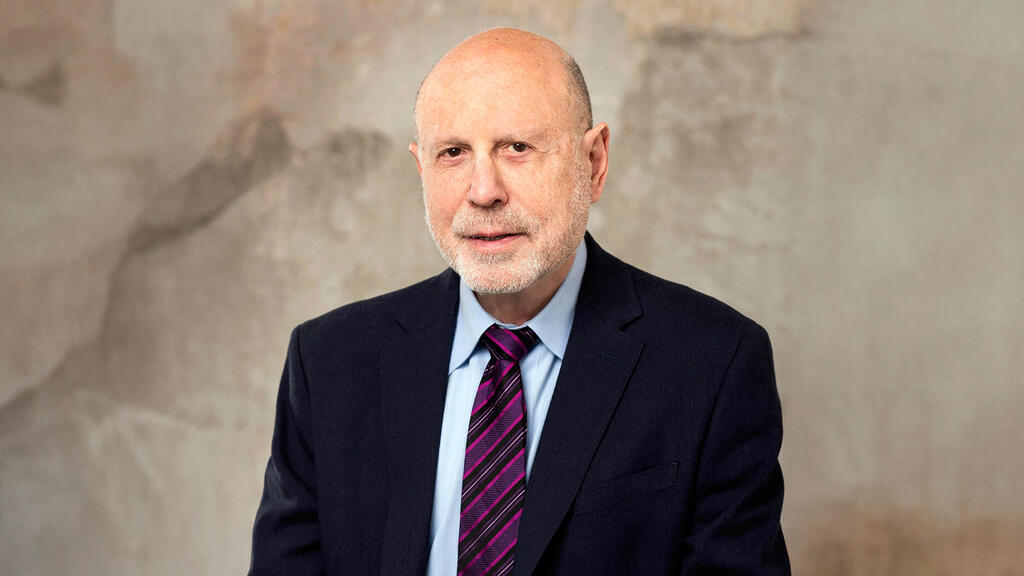
These are the words of Yaakov Weinstein, one of the most experienced investment managers in the capital market, who has led mutual funds and hedge funds for many years. In the past, he served as chief investment officer at Migdal Capital Markets and founded the Afikim investment house. Today, he views the Israeli capital market from a different vantage point. Weinstein currently lives in London, where he manages the IBI Total Return hedge fund for IBI Investment House, which aims to generate positive returns in all market conditions, with low correlation to the markets and low volatility.
Yet you remain pessimistic about the medium and long term. While the world is euphoric about AI, you predict a major upheaval toward the end of the decade. Why?
"I distinguish between the next one to three years and the end of the decade. Toward the end of the decade, I expect a deep recession, on the scale of the Great Depression. There will not be a single trigger, as in 2008. Instead, a range of processes will mature simultaneously, and the fuel driving markets higher will simply run out."
Weinstein emphasizes that the 2008 crisis was a financial event, not a depression, and could have ended far worse without massive central bank intervention.
When was the last real depression?
"1929. Since World War II, consumer activity and accumulated wealth have helped economies overcome smaller crises. But that engine is now weakening. Real estate no longer drives the sense of wealth, neither in Israel nor in the U.S.. because prices have stopped rising, and I don’t expect them to resume."
Why will the upheaval occur?
"I believe strongly in cycles. We are in a prolonged positive cycle that is nearing exhaustion. Rising prices, aging demographics, and soaring healthcare costs are converging. Baby Boomers are retiring, consumption is declining, and profit growth will eventually slow. Multiples are already stretched, 23–24 times forward earnings in the S&P 500 is extremely high. Sustaining gains would require profit growth of over 13%, which may be possible in the short term thanks to AI-driven productivity, but not indefinitely."
Will the Magnificent Seven continue to benefit from AI in 2026?
"Questions already emerged in 2025. This year we’ll see more interest in smaller companies. There is growing uncertainty around trillion-dollar AI investments and their return on capital. Eventually, markets will realize that many of these investments will not justify themselves."
Can young retail investors offset the downturn you foresee?
"Absolutely not. Look at crypto. Young investors fled when prices fell and returned to stocks. These are not strong hands. Institutional investors will continue to dominate. Moreover, AI will reduce employment, leading to lower pension contributions, while remaining workers earn higher wages, fueling inflation."
Could anything change this trajectory, for example, an end to the Russia-Ukraine war?
"The war will end soon, in my view, through what will be called a peace agreement, but will in practice be Ukraine’s surrender. It reminds me of the Kissinger-era Vietnam agreement, after which only one Vietnam remained."
What is your investment strategy?
"In investments, you live by returns. I focus on very low volatility, targeting 1%–1.5% monthly returns. In 2022, I finished flat while markets fell 10%-20%. In 2025, I returned 13.6%, less than the market, but that’s the trade-off. The real hedge is consistency over time, with volatility lower than bonds. Today’s market is unforgiving, you are only as good as your last return."
Weinstein is extremely positive in regards to the rising shekel. "The shekel is a phenomenal story. Despite the judicial reform and the events of October 2023, it is holding up, and the reason for this is that the Israeli capital market is very, very closed. From time to time there are entries by foreign investors, but the real reason is the large local entities, they always come in to buy, even when there are declines and foreigners are selling. The local players continue to invest in stocks and thus strengthen the shekel.
"The truth? They have a good reason: the banks and insurance companies are very profitable, and the defense industry is also strong. Sales by high-tech companies also contribute to dollar inflows and the strengthening of the shekel, and soon revenues from gas sales will also be added. Therefore, even if the dollar strengthens globally, it does not mean that the shekel will not strengthen at the same time.
"But from the perspective of foreign investors, the Tel Aviv Stock Exchange is still very small and cannot provide what large institutions are looking for, and I do not see any prospect of significant foreign activity here. When I say the local stock exchange is small, I mean that the selection of stocks is not large enough. If you compare the big companies here to the big companies in the U.S., you realize there is nothing to compare. It is a different world and a different level, and therefore the interest of large foreign institutions here is very limited. What seems to us to be a large influx of foreigners is mostly buying in line with Israel’s weight in global indices."
So you don’t think the stock exchange’s move to Monday-Friday trading will affect foreign investor participation?
"Absolutely not, and I wouldn’t be surprised if within a year or two trading reverts to Sunday-Thursday. On the one hand, it’s not a meaningful enough change, and on the other, it’s hard to alter deep-rooted socio-cultural habits like errands and cafés on Fridays," Weinstein says.
In the meantime, reality seemed to contradict him, with trading volume reaching NIS 3 billion on Friday, led by bank stocks, which are favored by foreign investors.
And as an outsider, what do you think of the Israeli real estate market? There are conflicting signals, with CBS data showing price increases for the first time in eight months, even as transaction volumes remain low.
"I am shocked by the valuation levels of real estate and construction companies in Israel. These valuations are inflated, and I say this broadly, without going into company-specific analysis. Residential construction valuations also appear exaggerated, partly due to expectations of rebuilding apartments damaged in the war with Iran. But there is also a serious problem in offices, there are far too many in the center of the country.
“This also happened in the U.S., but there we are already seeing price declines. The same trend is beginning in Israel, especially in central areas. One factor still supporting prices is emotional buying by Jews from abroad, particularly in Jerusalem and coastal cities like Netanya. But overall, demand, especially for large apartments, has largely been exhausted. What we will continue to see is strong demand for small apartments, driven by the constant formation of young families. Still, I do not expect real estate prices in Israel to rise in the coming years."
What impact will the upcoming elections have on the capital market, the shekel, and real estate?
"I don’t think there will be a meaningful impact. Even from the perspective of foreign investors, Israel has effectively become an American protectorate, and political decisions here are not fully independent. There has never been a U.S. president as sympathetic to Israel as Donald Trump, and we are benefiting from that. But he also supports Qatar, the Gulf states, and Turkey to the same extent. Trump ultimately cares about himself and his profits, and I estimate that by the end of his term he will become the first trillionaire president in history."



