





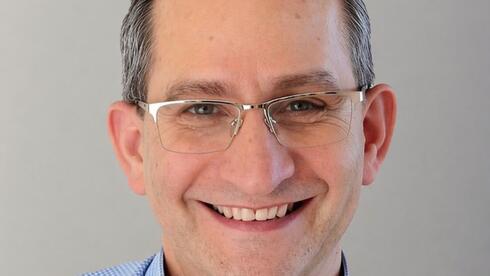





“Drones are here, whether you want them or not”
Airwayz CEO Eyal Zor on autonomous fleets, regulation, and why ports must learn to manage their skies.
“Every revolution starts with concerns,” says Eyal Zor, comparing autonomous drone fleets to electric scooters when they first appeared on the streets of Tel Aviv. “And then… you start adapting to it.”
“Drones are here, whether you want them or not, they’re already here,” says Zor, CEO of Airwayz, a company focused on enabling safe, scalable autonomous drone operations across complex environments. “So you address the concerns. You don’t ignore them, but you make sure of your solution and the way you go to the market… you address their concerns, and you show them how to work.”

Zor’s remarks to CTech came after a proof-of-concept conducted at Ashdod Port, which brought together Airwayz and drone services company Propeller Drones, alongside Dynamic Infrastructure, Sentrycs, and FlightOps, to test an autonomous drone system in a live operational environment. Similar systems are already operating at major international ports, including Rotterdam, a consideration for Ashdod as a strategic national facility required to remain operational at all times.
The pilot in Ashdod marked a step closer to an increasingly viable future that, as Zor argues, has already arrived, in which drones become an essential management tool in complex infrastructure and supply-chain environments.
The aim, Zor continues, was to provide an autonomous solution, from security to operations, by creating an ecosystem of drones controlled by a single entity, such as a port. That ecosystem is supported by a single system that brings “all of the aspects together,” designed to operate in a way that “autonomously [simplifies] the operation for the port, which, again, is not a drone expert.”
Namely, it helped to showcase the need for a workable model that allows non-aviation entities to operate and manage the aerial dimension as part of their core operations. Drones may be technically autonomous, but that means little if the organizations adopting them are not built to think about their aerial space at a systems level.
Tal Yadin, Propeller Drones’ VP of Business Development, argues that many large entities have failed to fully utilize drone capabilities because they approach them too narrowly, resulting in a fragmented patchwork that falls well short of the technology’s potential. “A lot of entities, they see small problems,” he says to CTech. “You see the problem, and you try to solve the specific problems, instead of looking at it in a bigger view…. You have a maintenance problem, so you fix it with a drone to do maintenance. You have a security problem, you fix it with a drone for security.”
Adopters, Yadin explains, need to move beyond this single-use mindset, where drones are treated as isolated solutions within the same environment (for example, for inspection, security, mapping, or delivery in a port). Yet while many organizations are increasingly recognizing the value of autonomous drone fleets, he says, they struggle with how to implement them at scale.
“More and more big entities understand that creating drone programs in their entity will improve safety [and] day-to-day operation,” Yadin says. “But they have problems understanding how they're going to implement it in a safe way, in a manageable way.”
While the demonstration showed that an autonomous drone fleet can be scaled in a port environment, for Zor it reinforced the complexity of creating such safe and manageable programs for large entities.
“Every port is a very complex environment,” he says. “Transitioning containers from the vessels themselves, from the ships to the shore.” Onshore, he adds, “the environment itself also is mixed,” including ground transportation such as trucks, further complicating how drone operations must be planned and managed.
For a fleet in practice, Zor explains, this means constant prioritization and deconfliction, to “take it all together and run the scenarios in real time with different autonomous decision making.” A security mission interrupted by an incident elsewhere, a delivery drone sharing airspace with inbound port traffic, or an unauthorized drone entering a restricted zone. “You need to decide again how do you deconflict the drone, or how do you change the operation, or who do you give priority?” he continues. “That’s real life that you will handle daily.”
Still, Yadin is careful to categorize the autonomous nature of the drone fleet as an extension of human control, not a replacement for it. “The autonomous part means that I want to make sure that if you have some kind of human in the loop or over the loop… it will not impact your workflow,” explains Zor. “On the opposite… I want to improve your workflow.”
“The integration of drones at the port demonstrates how technology can complement and strengthen human work, not replace it,” says Nissan Levy, CEO of Ashdod Port.
“The ability to manage the port’s airspace introduces a new dimension of safety and intelligence,” adds Shaul Schneider, chairman of Ashdod Port. “It allows us to prevent conflicts between drones and aircraft, ships, or critical infrastructure, to define safe and restricted flight zones, and to know precisely who is in the sky at any given moment. This capability marks another step in building a safer, smarter, and more efficient port where technology directly improves operations and drives economic value.”
However, even as these steps propel the industry closer, most drone fleet deployments remain constrained by regulation. “It’s a regulated environment,” Zor says. “So there’s always the question: is the pace of regulation fast enough for the adaptation of the technology?”
While regulation slowed adoption for years, Zor says this is beginning to change. “There’s a new approach of regulation here in Israel, of course, but also it started in Europe, in the US,” he says, citing new rules and frameworks that allow beyond-visual-line-of-sight operations and centralized supervision. “That’s unlocking the benefit of better OPEX.”
The other main barrier to realizing the full value of autonomous drone fleets is capital, which Yadin notes remains uneven. “There’s a need for more and more capital to be invested in order to make sure it can be fully adapted and fully scaled,” Zor adds. That is why the POC carried a symbolic weight, just as well as practical. “No one wants to be the first use case,” Yadin says. “But once you have the use case, other people are more keen.”
Looking ahead, both founders describe an industry that feels more tangible than it did even a few years ago, with Yadin seeing demand across nearly every sector. “There is almost no business or industry in Israel that can't be benefited by a drone in some sort of way,” he says.
For Zor, what he finds most gratifying in all the traction, he concludes, is that “we start seeing entities take control of their skies, and start to operate. More drones moving forward and not waiting anymore. And that’s very exciting.”



