










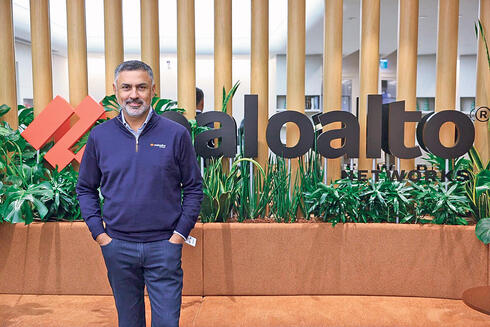
Palo Alto CEO: "The SaaS apocalypse is dead, at least in cybersecurity"
The cybersecurity giant's first full quarter with CyberArk highlights growing demand for AI-era security platforms.
After reaching an all-time high and a market value of approximately $250 billion, Palo Alto Networks, the largest company traded on the Tel Aviv Stock Exchange, is pulling back. The cybersecurity giant published quarterly results on Tuesday that, for the first time, included a full consolidation of CyberArk’s operations following the completion of its $25 billion acquisition in February. Despite reporting strong results and raising its outlook, Palo Alto’s shares are down following the earnings release.
The primary explanation appears to be profit-taking after a remarkable rally that has seen the stock gain about 65% since the start of the year. Investors are also weighing the impact of recent acquisitions on profitability. Palo Alto reported a net loss in the quarter after an extended period of profitability, although the company argues that the decline is temporary and largely related to acquisition-related expenses. Alongside CyberArk, Palo Alto has also spent $3.3 billion on the acquisition of Chronosphere and approximately $400 million on Israeli cybersecurity startup Koi, whose technology is intended to strengthen the company’s defenses against AI-related threats.
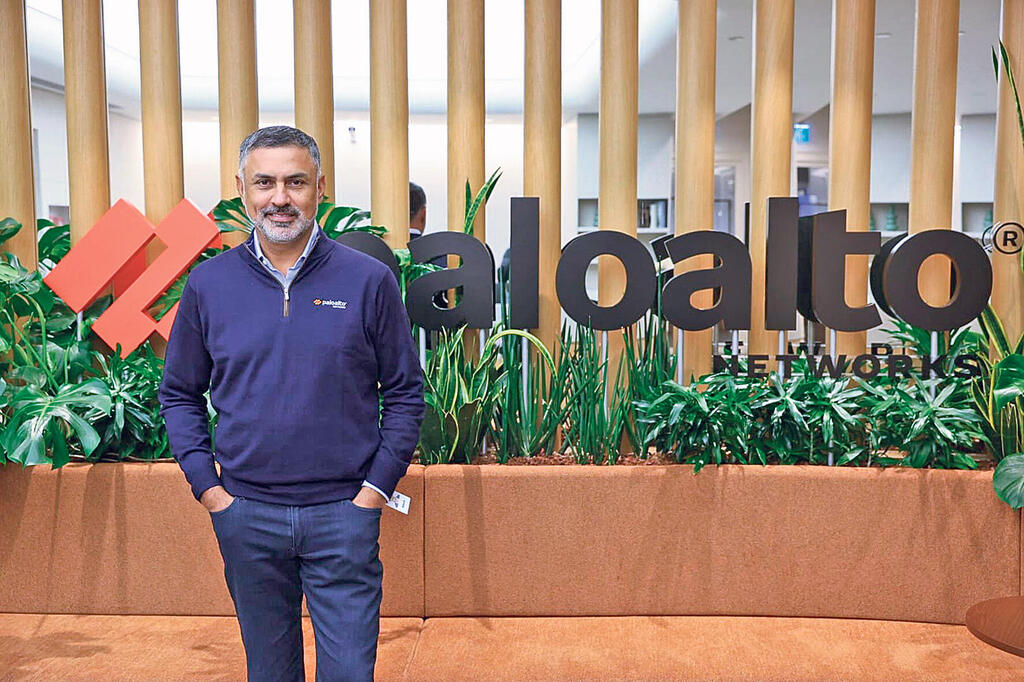
Palo Alto reported revenue growth of 31% year-over-year to $3 billion, exceeding analyst expectations. Acquisitions contributed $388 million to quarterly revenue, with CyberArk accounting for the majority of that figure. Before its acquisition, CyberArk had already surpassed an annual revenue run rate of $1 billion.
The company also announced that beginning in fiscal 2027 it will report results across three primary business segments, one of which will be CyberArk’s identity security platform. On the bottom line, Palo Alto recorded a net loss of $177 million, largely driven by acquisition-related employee compensation expenses that totaled approximately $500 million. Excluding those items, adjusted earnings came in at $0.85 per share, slightly ahead of expectations.
Free cash flow surged 57% to $910 million.
For the current quarter ending in July, Palo Alto expects revenue of approximately $3.35 billion, representing growth of 32%. The company also raised its full-year fiscal 2026 outlook and now expects annual revenue of approximately $11.4 billion, reflecting growth of 24% and adding roughly $100 million to its previous forecast. Adjusted earnings are expected to reach $0.96-$0.98 per share in the current quarter and $3.77-$3.79 per share for the full fiscal year.
Palo Alto said integration of CyberArk is progressing faster than expected, particularly in improving the profitability of the Israeli company, which historically operated at lower margins. According to management, the integration is currently running three to six months ahead of schedule, with profitability targets expected to be achieved within 12 to 18 months.
Immediately following the completion of the acquisition, Palo Alto laid off approximately 500 CyberArk employees, representing around 12% of the workforce, as part of efforts to realize synergies in sales, marketing, and corporate functions.
"CyberArk is the largest acquisition in Palo Alto's history and our opportunity to prove that we are capable of executing incredibly large acquisitions," CEO Nikesh Arora told analysts. "This success is an existential matter for me and our teams. The big fear in deals like this is that they break companies, and I think the most important thing is that we didn't break it."
Arora then joked: "Look, Mom, I didn't break it. Everything works."
He added that CyberArk’s entire product organization is now working closely with Palo Alto’s teams to integrate and enhance their offerings. The company also noted that 20 of the 110 platform-wide deals signed during the quarter already included CyberArk and Chronosphere products.
More broadly, Palo Alto’s results reinforce the improving sentiment toward software companies and the cybersecurity sector in particular. The earnings follow strong results from companies such as Snowflake, Salesforce, and Datadog, helping to ease concerns about a potential slowdown in the software-as-a-service industry and fears that cybersecurity vendors could be displaced by capabilities embedded directly into AI platforms.
Arora argued that the narrative surrounding AI and cybersecurity has shifted dramatically.
"The SaaS apocalypse is dead, at least in cybersecurity," he said. "The new capabilities of AI models make it easier to launch attacks, which is driving organizations toward more comprehensive and innovative security solutions."
"AI is a tailwind for the cybersecurity industry, not a death sentence," Arora added. "Six months ago, it seemed as though cyber stocks were doomed and AI would protect everyone, leaving no room for companies like us. Instead, we're hiring more employees, and AI isn't taking our jobs. Organizations increasingly understand that they cannot secure themselves without a cybersecurity platform."
According to Arora, more than 1,000 organizations have approached Palo Alto over the past two months to assess their readiness for AI-driven threats.



