










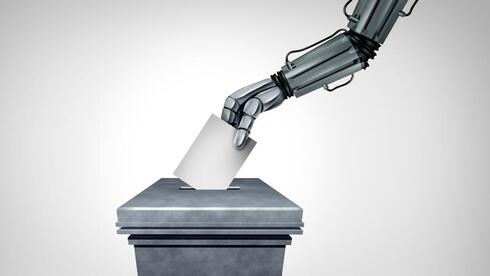
AI enters the Israeli election: one in four voters may turn to AI for guidance
Some 71% of Israelis say they have encountered election-related fake news, while 69% fear political discourse could fuel online violence around the election
One in four Israelis is considering using artificial intelligence tools or another online service to help decide whom to vote for in the country’s general election, according to a comprehensive survey by the Israel Internet Association ahead of the election, scheduled for late October. The survey also found that around 71% of Israelis have encountered election-related fake news frequently or occasionally, while only about 15% said they had not been exposed to it at all.
The public’s widespread exposure to fake news, disinformation and fake accounts on social media is not limited to any particular political camp and cuts across Israel’s political spectrum. Some 73.3% of respondents who identified with the right, 69.5% of those identifying with the center and 68.9% of those on the left said they had encountered false information. In addition, 56.8% of the public said they had encountered fake or impersonator accounts online frequently or occasionally, compared with only about 20% who said they had never encountered such accounts.
The survey, conducted by the Geocartography Group among a representative sample of 1,005 Israelis, also points to significant public concern over the impact of online discourse. A clear majority of 69% of Israelis said they were highly or very highly concerned that political discourse would fuel an escalation in online violence surrounding the election. At the same time, the survey found widespread exposure to the malicious use of technology: 48.2% of respondents said they had frequently or occasionally encountered the use of AI to harm or defame another person, while another quarter of the public (25.6%) had encountered it rarely. The Israel Internet Association stressed that these findings show that impersonation, disinformation and the malicious use of AI are no longer future threats, but an integral part of the current reality of Israel’s online sphere.
Against this backdrop, the Israel Internet Association published a special guide designed to help voters protect themselves from attempts at deception and manipulation online. Dr. Shaked Davran-Zivon, the association’s coordinator for online literacy and safety, stressed that a free and fair election depends on the ability to make decisions based on reliable information. According to her, AI tools can help voters understand issues and compare candidates’ positions, but they should not be relied on blindly. Voters should cross-check information, think critically and form their own views.



