










HR The Next Leap
Air Doctor: “Perks or bonuses don’t solve burnout where employees are balancing ongoing security concerns”
Shachar Eini Nachmani, Director of Human Resources at Air Doctor, discusses how the company maintains operational continuity under fire, while redefining roles in the age of automation, as part of CTech’s HR: The Next Leap series.
"Perks or bonuses don't solve burnout, especially in a reality where employees are balancing professional responsibilities with ongoing security concerns," says Shachar Eini Nachmani, Director of Human Resources at Air Doctor, an Israel-headquartered global health tech company providing a marketplace to match patients with specialized physicians while traveling. With flashy employee perks losing their luster, rendered insubstantial by the operative realities over the past few years, Nachmani recognizes that job candidate priorities have altered from the first touchpoint, explaining that "the biggest shift is not salary expectations, it’s that strong candidates are now optimizing for meaning and professional growth, not just compensation."
From active and looming war threats, to AI rapidly and constantly redefining what it means to be productive, running a company in Startup Nation brings with it its own category of challenges and rewards. HR: The Next Leap takes a glimpse into the heart of Startup Nation via the HR professionals shaping its culture. We survey the executives whose jobs are more demanding and more vital than ever, as they heed the future-proofing of their workforce, while simultaneously ensuring business continuity and employee wellbeing during relentlessly unprecedented times.
1 View gallery
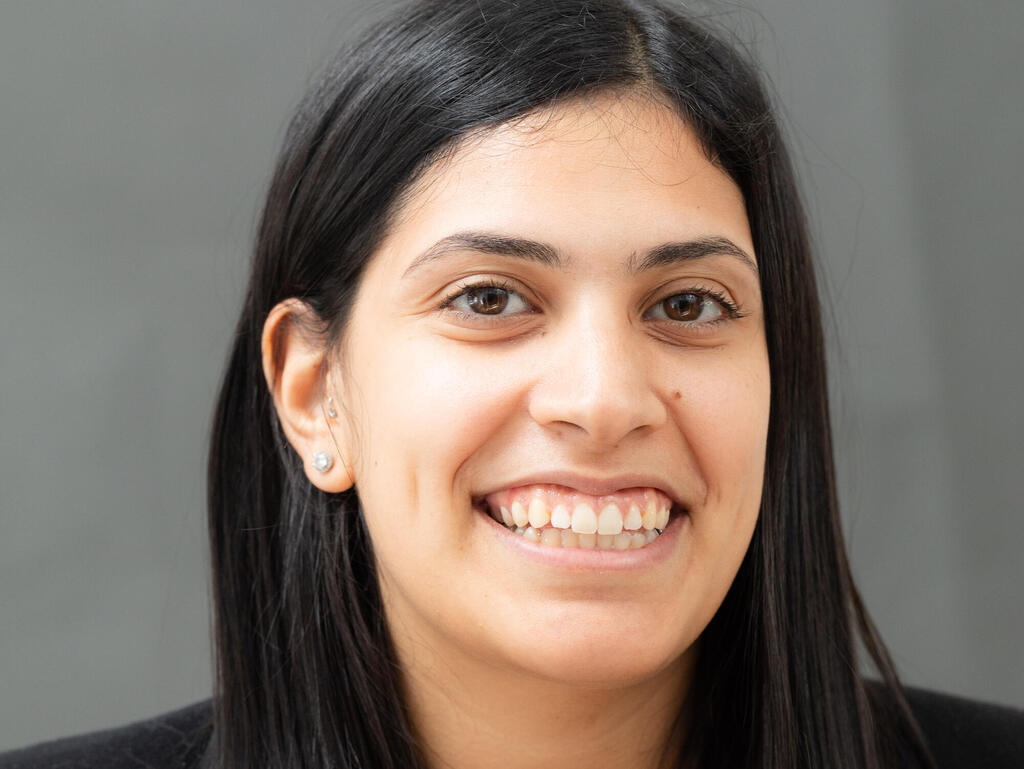
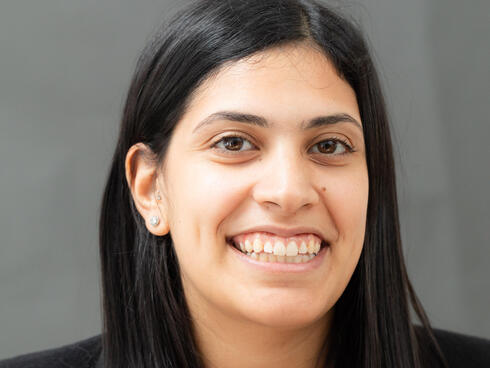
Shachar Eini Nachmani, Director of Human Resources, Air Doctor
(Photo: Rami Zarnegar )
According to Nachmani, Air Doctor's hiring approach has become more focused amid the current employer's market, aiming for "fewer hires, higher impact and being more precise while actively expanding." Meanwhile, the advent of AI has had “a clear impact on entry-level hiring,” she explains. “They haven’t disappeared, but the definition of ‘entry-level’ has fundamentally changed.”
You can read the entire interview below.
Company Name: Air Doctor Ltd
Sector: Travel Health Insurance
Founders: Jenny Cohen Derfler, Efrat Sagi-Ofir, Yam Derfler, and Yegor Kurbachev.
Year of Founding: 2019
Investment stage: Round B
Total investment to date: $52M
Investors: Tokyo Marine Holdings, Samsung Ventures, aMoon, Lightspeed Venture Partners, Vintage Investment Partners, Phoenix Insurance, and Munich Re Ventures.
Current number of employees: 108
Open positions: Shift Managers (Customer Care Department), Sales Development Representative (Medical Network Department)
Website: https://www.air-dr.com
Social Media: Facebook, LinkedIn, Instagram, X, YouTube, TikTok
In March 2026, as the market has officially shifted into an 'employer's market,' how have your screening criteria changed, and do candidates — including senior-level ones — still hold any leverage in negotiating salaries and terms?
The market may have shifted to employers, but the bar didn’t just rise, it changed. At Air Doctor, an innovative global health platform for the travel industry, currently in a strong growth and scale-up phase, our hiring approach has become more focused and deliberate to raise the bar on who we bring in – fewer hires, higher impact and being more precise while actively expanding.
We’ve shifted from hiring for potential alone to prioritizing candidates who can drive immediate impact, especially those with relevant scale-up or startup experience in ambiguity, strong ownership, and the agility to operate effectively and fast in lean environments. At the same time, one thing that has not changed for us is the importance of culture fit. This remains a non-negotiable element in our process, and we are careful not to compromise on it as we grow – we won’t trade velocity for misalignment, even in a fast scale phase.
The current employer-driven market allows us to be more thoughtful and less reactive. There’s less pressure to rush decisions and can take the time to ensure strong alignment on expectations, both in terms of role scope and what success looks like. Our screening today places greater emphasis on amazing execution, business understanding, and adaptability, while also maintaining transparency with candidates throughout the process. At the same time, we are hiring with a forward-looking mindset, not only for what is needed today, but also for the people who will help us grow and scale in the future. This approach helps us build teams that are not only high-performing but also cohesive and aligned with how we operate.
In terms of leverage, compensation discussions have become more balanced, with candidates generally bringing more grounded expectations. However, strong candidates, including at the senior level, still hold meaningful influence. They are evaluating the full value proposition, including the company’s growth trajectory, global presence, product-market fit, and the opportunity to create real impact to meet our aggressive growth goals. The biggest shift is not salary expectations, it’s that strong candidates are now optimizing for meaning and professional growth, not just compensation. From our perspective, this creates a healthier and more transparent dialogue, leading to better long-term decisions on both sides.
How have/are you managing operational continuity and recruitment while the economy navigates the emergency state triggered by the conflict with Iran? With the threat of escalation looming at any moment, how are you and have you been handling everything from interviews interrupted by sirens to managing teams thinned by massive, ongoing reserve duty?
In Israel today, it’s not unusual for an interview to pause for a siren or for team members to be called into reserves with little notice. However as a global company headquartered in Israel, we are able to maintain business continuity through our distributed teams so there is no operational impact on service availability, coverage, response times or support.
Alongside this, we have structured continuity plans we developed and refined during previous conflicts. This allows us to keep operations and recruitment, not only moving, but adapting locally to a constantly changing reality. Interviews pause, teams adapt overnight but because we operate globally by design, not as a backup plan, we continue to hire and grow without disruption.
At the same time, we've seen a significant increase in demand, with roughly 2.5x growth from Israeli travelers compared to routine periods, reinforcing the critical role we play in providing medical care abroad. This sense of purpose plays an important role internally. Knowing that our work directly supports people in moments of uncertainty helps create alignment and motivation, even during challenging periods.
Alongside that, we focus on creating space for employees to breathe without losing focus and accountability. We do this by setting clear but flexible expectations, defining realistic goals, giving people autonomy over their time, and recognizing that not every day looks the same. Trust is a key enabler here, built through transparency, consistency, and active listening, and reinforced by managing through shared responsibility and accountability rather than control. This combination allows us to sustain performance while supporting our people in a meaningful and practical way, like providing babysitters for team members with young kids at home for peace of mind.
This approach becomes even more important given that part of our team is in reserve duty. While some have shared experiences of uncertainty in the market, we made it a priority to provide stability, ensuring they have clarity and a role to return to, along with the right support when they come back.
Beyond the role of empowering employees, which roles has AI eliminated over the past year, what percentage of your workforce was reskilled to avoid being phased out, and how has this impacted entry-level hiring?
At Air Doctor, we don’t view AI as a tool for replacement, but as a catalyst for evolution. AI has gradually taken over many repetitive and manual tasks that were previously a significant part of certain roles. Beyond that, it has become a meaningful enabler in areas such as analysis and problem-solving. Today, AI is already embedded across our workflows, internal processes, and product, fundamentally changing how work gets done rather than eliminating roles outright.
This shift has had a clear impact on entry-level hiring. They haven’t disappeared, but the definition of ‘entry-level’ has fundamentally changed. We no longer hire for execution-only roles centered around repetitive or administrative tasks as this can be accelerated by AI driven tools. Instead, we are looking for candidates who demonstrate curiosity, adaptability, and strong critical thinking, along with the ability to work effectively with AI from day one.
Against the backdrop of the unstable security and political climate, are you seeing an increase in relocation requests or 'quiet quitting' by top-tier talent moving abroad, and what is the most proactive step you are taking to retain them in Israel?
There is definitely more conversation around relocation today, but in practice, we see less movement than one might expect. At the same time, top talent is not only looking for stability, they’re optimizing for impact, growth, relevance and a sense of purpose. Our focus is on enabling both: providing flexibility when needed, while reinforcing the opportunity to be part of building a global company from Israel. Retention, in this context, is less about preventing movement and more about creating an environment where employees feel they can grow, contribute meaningfully, and stay connected, regardless of where they are physically located.
In an era where stability has replaced flashy perks, how are you addressing the deep mental burnout of employees torn between the professional and security fronts, and what is the most critical benefit you offer today in place of the bonuses that have vanished?
Perks or bonuses don’t solve burnout, especially in a reality where employees are balancing professional responsibilities with ongoing security concerns. What people need most is understanding, flexibility, and leadership that acknowledges the complexity of the situation, truly seeing and hearing people, while also creating a sense that they are part of something bigger. At Air Doctor, we focus on creating an environment where employees feel they have the permission to slow down when needed, prioritize what truly matters, and not feel forced to choose between being professionals and being human, while ensuring they feel personally seen, especially during periods like these.
At the same time, a key anchor for our teams is a strong sense of purpose. Our mission, ensuring that travelers can access timely, reliable, and high-quality medical care whenever they need it most, becomes especially tangible during times of crisis. During the war, we saw firsthand how critical our service is for travelers who find themselves far from home and in need of medical support. This connection to real impact helps reinforce meaning in the day-to-day, and serves as a more enduring and motivating benefit than traditional perks. When your work matters in real-world moments of stress, it becomes a source of energy, not just effort.



