










The AI spending surge has a catch
Depreciation could erode profits faster than revenues grow.
The bottom lines in the earnings reports released last week by four tech giants - Microsoft, Amazon, Google, and Meta - were, on the surface, as strong as ever. Revenue and profits rose at double-digit rates, and most companies exceeded analysts’ expectations.
Yet the market reaction was notably muted. With the exception of Google, the companies’ shares declined, with Meta’s stock posting its sharpest drop in six months.
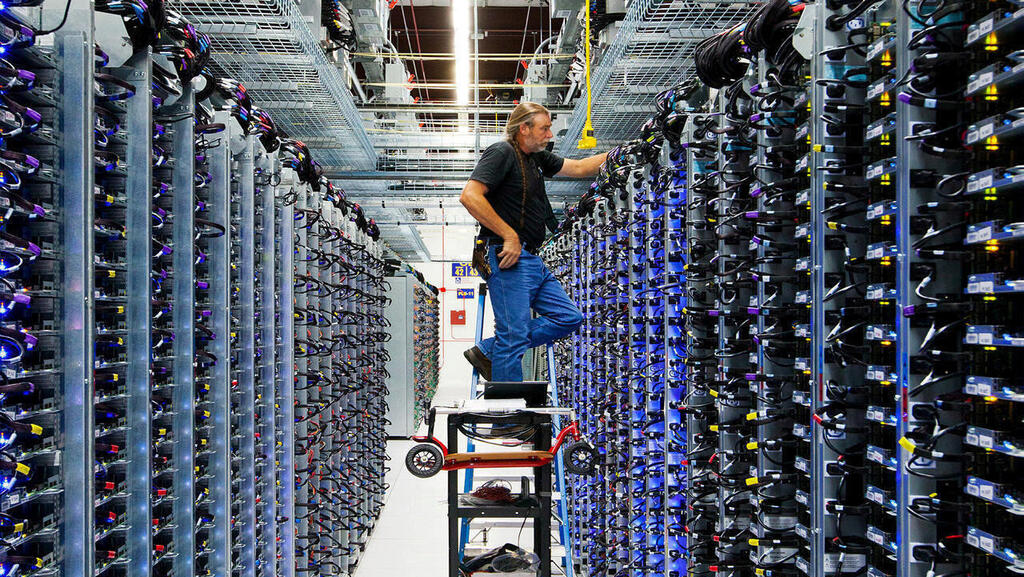
The familiar explanation played a central role: spending on AI infrastructure continues to surge. Combined capital expenditures by the four companies reached $133 billion last quarter, a 70% increase compared with the same period in 2025. The trajectory remains steep. Updated estimates suggest total AI infrastructure investment will reach $725 billion this year, $65 billion more than the companies projected at the end of 2025.
But another, less discussed factor is beginning to weigh on investors, a “sleeping bear” that is now stirring: depreciation.
Last quarter, the four companies recorded combined depreciation expenses of $41.6 billion, a 36.9% increase year-on-year. That figure is expected to rise sharply in the coming quarters, as recently built data centers, packed with advanced AI chips, begin to age and lose value.
The accounting mechanics are straightforward but consequential. Capital expenditures do not immediately hit the income statement; instead, they are expensed gradually through depreciation over time. As a result, the financial impact of today’s massive AI investments will be felt in future quarters and years.
This dynamic is particularly acute for AI infrastructure. Unlike traditional capital assets such as real estate or industrial equipment, AI hardware depreciates rapidly. Servers and chips can become obsolete within a few years, as new, more powerful generations are introduced at an accelerating pace.
Estimates suggest that Microsoft, Amazon, Google, and Meta will depreciate their AI infrastructure over just five to six years, a relatively short horizon for investments of this magnitude. The implication is clear: capital deployed today will begin to weigh increasingly on profits in the near future.
Executives have already acknowledged the issue. In March, Google’s CFO, Anat Ashkenazi, told investors that future depreciation expenses “will not be small,” given the scale of the company’s investments.
According to data from Visible Alpha, cited by The Wall Street Journal, annual depreciation expenses for the four companies could exceed $430 billion within five years. By comparison, their combined revenues stood at $372 billion in 2025.
Companies can make marginal adjustments. Meta, for instance, has extended the useful life of some non-AI servers to seven years. But such measures can only delay, not eliminate, the impact.
Depreciation itself is not inherently problematic, provided revenue growth keeps pace. The central question troubling investors is whether AI-driven revenues will scale quickly enough to justify the enormous capital outlays.
In this regard, Meta appears to face the greatest challenge. Unlike Microsoft, Amazon, and Google, each of which operates large cloud businesses, Meta lacks a clear, direct revenue model tied to AI infrastructure. Its current monetization relies largely on tools that enhance advertising and customer engagement on platforms such as WhatsApp.
To justify its investment levels, however, Meta will need to develop far more substantial revenue streams, particularly in areas tied to core enterprise functions, similar to efforts by companies like Anthropic.
Even the cloud leaders are not immune. Much of the current AI economy is built on the expectation that today’s spending will translate into tomorrow’s profits. Yet no major player, not even Anthropic, widely seen as having one of the more promising business models, has demonstrated the ability to fully offset AI-related costs with AI-driven revenues.
For now, investors remain cautiously patient. But that patience has limits. Should confidence falter, if expected revenues fail to materialize, the flow of capital into AI infrastructure could slow sharply. In such a scenario, the cloud-driven revenue streams that underpin Microsoft, Amazon, and Google’s AI strategies could weaken.
The industry’s largest companies are effectively wagering hundreds of billions of dollars that this outcome will be avoided, that viable business models will emerge before depreciation meaningfully erodes profitability.
The awakening of depreciation as a financial force underscores the stakes. Time is not unlimited. And as the costs begin to surface on income statements, the pressure to deliver returns on AI investments will only intensify.



