









AI startup Engram raises $98 million at $600 million valuation with just 13 employees
Wiz founder Assaf Rappaport led a star-studded group of Israeli tech entrepreneurs backing the company, including the founders of Dazz, Eon, Glow and Navan, alongside top Silicon Valley venture firms, betting on Engram's AI memory technology designed to reduce costs and improve model performance.
The American startup Engram, co-founded and headed by Israeli researcher Dr. Dan Biderman, has completed a $98 million funding round at a $600 million valuation. The round was led by several leading global venture capital firms, including Kleiner Perkins, General Catalyst, and Sequoia, alongside a long list of prominent Israeli investors from the technology industry.
Private investors include Assaf Rappaport, Merav Bahat and Tomer Schwartz, whose company Dazz was acquired by Wiz; Ofir Ehrlich (Eon); Roi Tiger (Glow); Ilan Twig (Navan), Andrej Karpathy, co-founder of OpenAI, and Pieter Abbeel, AI and robotics pioneer and co-director of the Berkeley AI Research Lab.
The company focuses on solving one of the most pressing challenges in generative AI: enabling models to learn and update in real time through online continual learning without forgetting previously acquired information and without requiring costly and time-consuming retraining from scratch.
The architecture developed by Engram separates a model’s "reasoning and inference" layer from its "memory" layer. This separation allows enterprise and personal AI models to adapt to user preferences, conversation history, and newly arriving data in real time, within seconds or hours.
“We founded the company last October directly out of Stanford University’s AI lab,” Biderman, who serves as the company's CEO, told Calcalist. “I worked there with Professor Christopher Ré, who is considered one of the world’s leading experts in the field. We also work with top advisers, including Andrej Karpathy and other key figures in artificial intelligence. Our company sits at the intersection of model development and infrastructure, and our goal is to solve one of the industry's most fundamental challenges: AI memory.”
According to Biderman, today’s AI models effectively "remember" information by storing it externally and retrieving it when needed.
“When you run complex software development projects, you quickly discover that AI agents are forced to search through files and folders again and again,” he said. “This process consumes a huge number of tokens. Our idea is to build a much more efficient memory architecture for AI. Companies that implement these solutions save substantial amounts of time and money. We are already on track to generate significant revenue through contracts signed with some of the largest companies in the market.”
Biderman explained how rapid changes in the AI market over the past year have increased demand for Engram’s technology.
“When we started building the company, token costs were not a major concern for most people in the industry,” he said. “Investors backed us primarily because of our technical and academic background. Everyone was willing to pay whatever was necessary, and efficiency was not the main issue. But at the beginning of this year, with the release of new capabilities in models such as Claude and others, token consumption increased dramatically. Suddenly, cost became a critical issue for organizations.”
This shift has led Engram to establish strategic partnerships with major technology companies.
“We have formed partnerships with companies such as Microsoft and Notion, among others, that are dealing with extremely high AI operating costs,” Biderman said. “Our models are customized for each customer and adapt autonomously to their needs. In some cases, they can reduce AI-related costs by a factor of 10 to 100.”
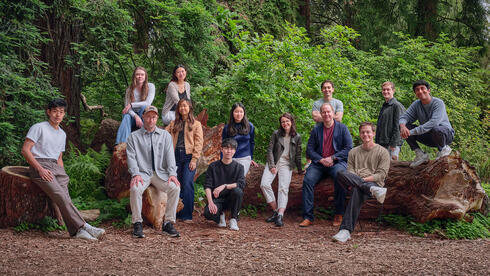
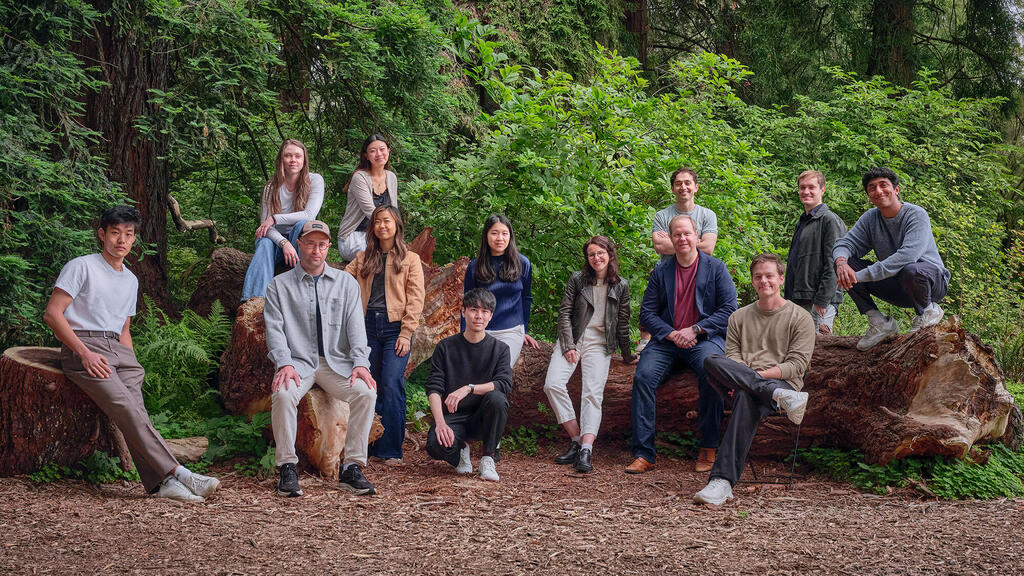
Despite its valuation and the size of the funding round, Engram remains lean, employing just 13 people. One of them is Dr. Natalie Biderman, the founder’s wife and a Stanford memory researcher, who was also the company’s first employee.
“In the current technological era, companies no longer need massive workforces,” Biderman said. “The talent we are looking for is extremely rare. The people we have recruited are among the best in the industry. Our founding team includes highly respected figures who turned down attractive offers from companies such as Anthropic and Google’s Gemini in order to take a calculated risk and join us at an early stage.”
Bahat, one of the investors in the company, said: “The growing adoption of AI agents in 2026 makes it clear that the industry faces a real cost problem. Users want more AI capabilities, there is a genuine shortage of computing power, and tokens remain expensive. Dan and his team developed important technological breakthroughs during their time at Stanford, and they are now testing those innovations at scale with some of the largest and most sophisticated companies in the world.”



