










“Israel could be a spacetech empire, but it's hard to raise money in the industry”
A new interactive database of Israel's space ecosystem highlights dozens of companies and organizations, underscoring both the industry's growth and its funding challenges.
"We have a lot of talent in Israel, a lot of knowledge, but it's hard to raise money today in the Israeli space industry."
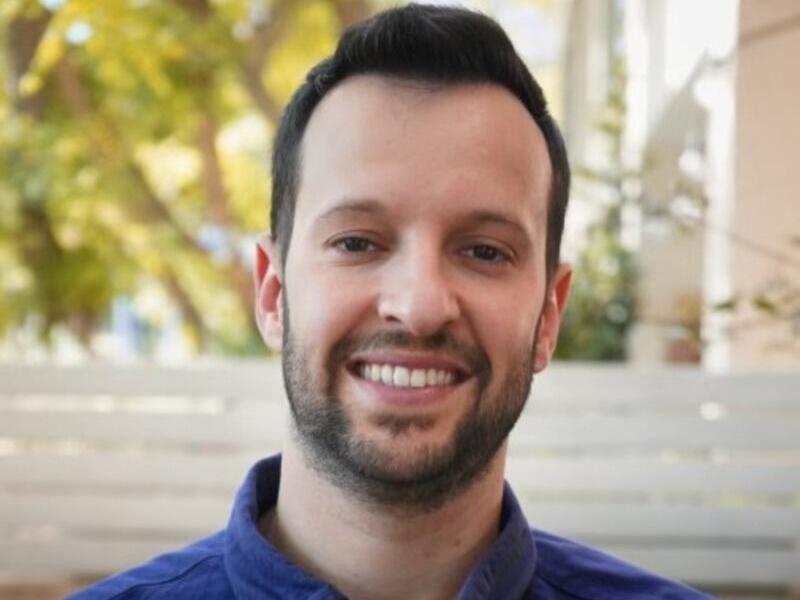
According to Israeli spacetech enthusiast and industry observer Tamir Shachar, Israel possesses the talent, expertise and decades-long heritage needed to become a global leader in the sector. The problem, he says, is that the ecosystem remains fragmented and underfunded.
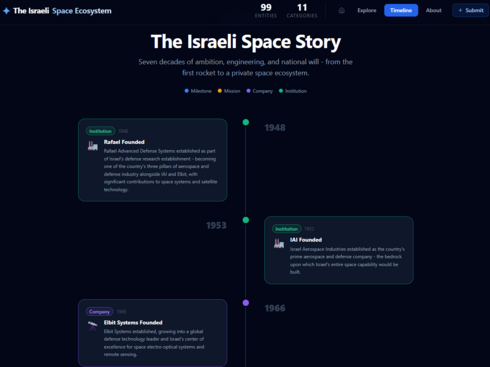
To help address that, Shachar recently launched an interactive online map of Israel's space ecosystem, cataloging dozens of companies, startups, investors, accelerators and academic institutions involved in the industry.
2 View gallery
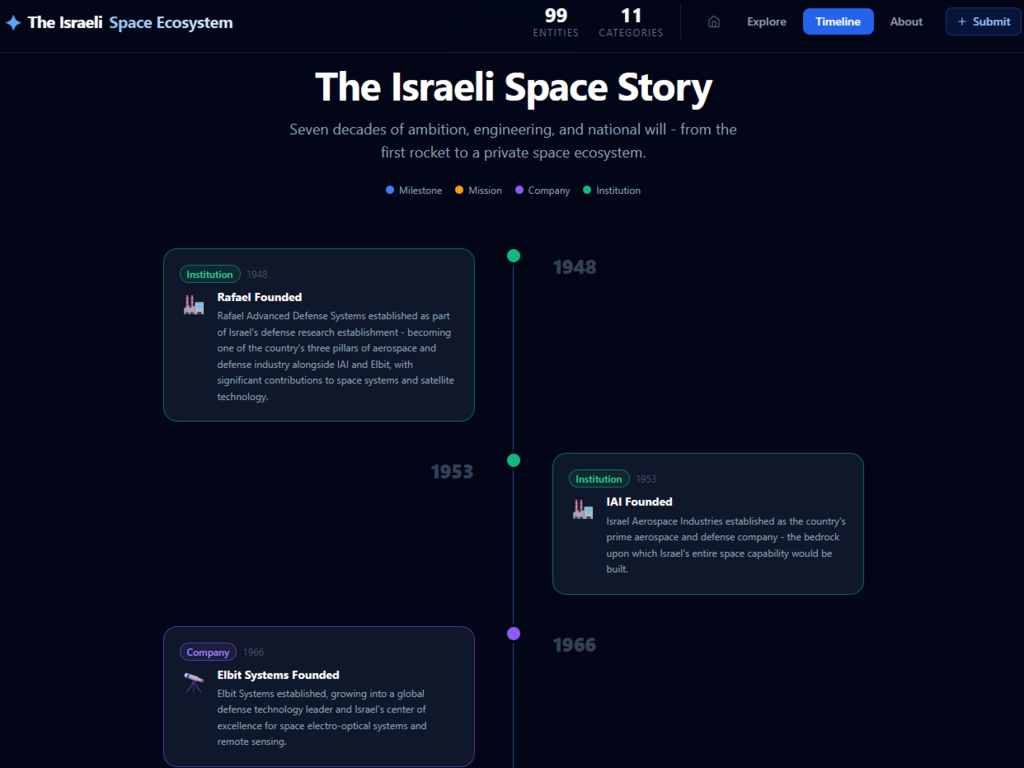
Shachar's map catalogues nearly 100 entities throughout the industry, and details the history of Israeli spacetech.
(Screenshot)
His aim is to provide a centralized resource for founders, investors and industry professionals seeking to navigate a sector that Shachar believes is growing faster than most people realize.
Shachar, who previously worked at a satellite data analytics startup and writes extensively about the global space industry, said the project grew out of his efforts to track developments both in Israel and abroad.
"In the last few months, I saw that we have huge potential in the Israeli space industry, but it's not really fulfilled," he said.
The map highlights an ecosystem that extends well beyond established defense and aerospace giants such as Israel Aerospace Industries, Rafael and Elbit Systems. According to Shachar, more entrepreneurs with backgrounds in those organizations are beginning to launch their own ventures, creating a growing network of startups across satellite technologies, launch systems, data analytics and other space-related fields.
Among the trends that emerged while compiling the database, Shachar pointed to space data analytics as the sector currently generating the most tangible commercial value.
Despite growing entrepreneurial activity, Shachar believes capital remains one of the industry's biggest constraints. While fundraising conditions have improved compared to previous years, he said many space startups still struggle to attract investment, even when led by experienced founders.
"On the one hand, much of the industry is evolving," he said. "But on the other hand, it's taking time for the capital to find the right companies to invest in."
That slow moving capital is cause for another concern, which is the “brain drain” effect: without enough capital in the industry, there are less opportunities for Israeli spacetech talent, resulting in them either switching industries altogether, or even moving to other countries in order to put their skills to work.
He hopes the platform can help solve these issues, while connecting companies, investors, researchers and talent in a rapidly expanding but still relatively disconnected industry.
"I think that one of the big sticking points in this industry today is [a lack of] collaboration," he said. "I just want people to know that they have a place they can go to and find this information."
Still, Shachar sees momentum building, which could carry the spacetech industry to greater heights.
"Israel could be a [spacetech] empire. In the same way that we're a leading cyber country - and maybe fintech and biotech - I think we could be the same in the space industry."



