










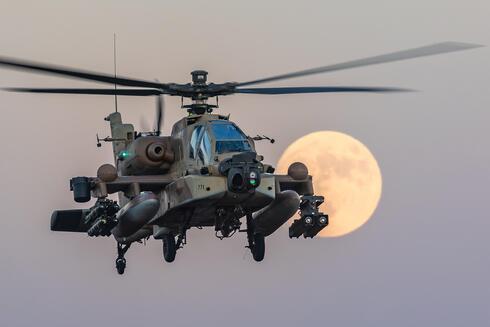
Israel loses $1 billion Apache deal after failing to find $288 million in funding
The Defense and Finance ministries spent months battling over the budget for 12 new attack helicopters, ultimately missing the final U.S. deadline and potentially jeopardizing other major IDF purchases.
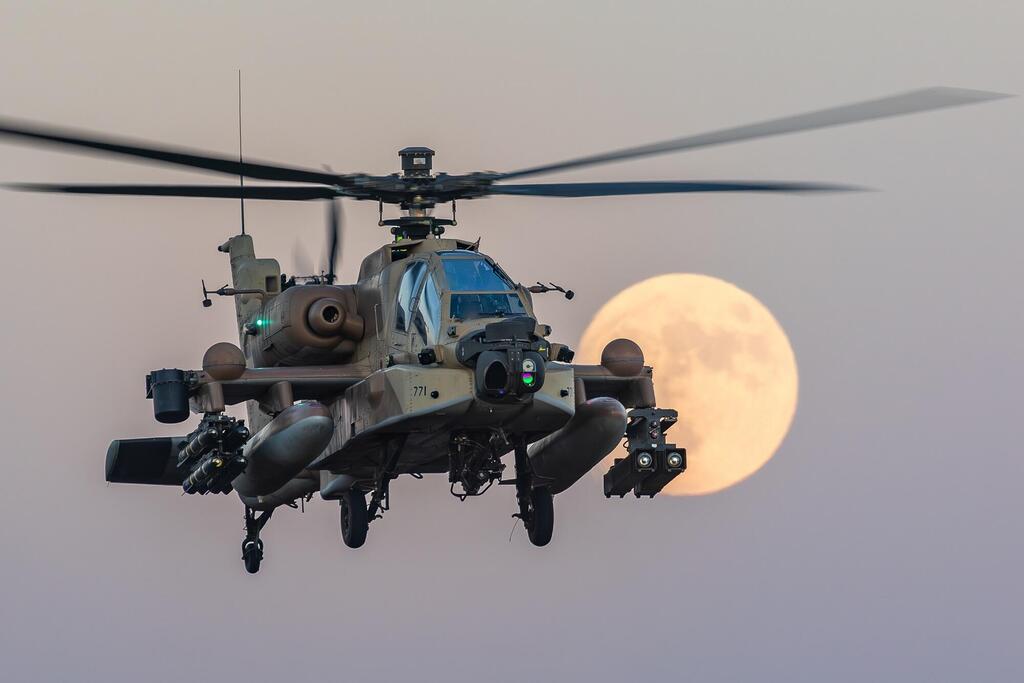
Amid an ongoing budgetary battle between Israel’s Ministry of Finance and Ministry of Defense, Israel has missed its final opportunity to order 12 Boeing-made Apache attack helicopters from the United States for the Israel Air Force.
The plan to acquire the helicopters was formulated in response to a key lesson from Hamas’s surprise attack on October 7, 2023, with the aim of improving the Air Force’s ability to respond rapidly to similar scenarios in the future. The acquisition was expected to cost approximately $1 billion, but no budgetary source was found for roughly one-third of the amount, or $288 million.
The issue has been the subject of prolonged discussions over the past year involving the Ministry of Defense, Ministry of Finance and the National Security Council at the Prime Minister’s Office.
“We received extensions from the Americans three times to resolve the matter, yet we failed to meet even the final deadline granted to us,” a senior defense official told Calcalist.
According to the official, the failure to complete the Apache deal also puts other urgent IDF procurement programs in the United States at risk because of the lack of decisions and funding from the Ministry of Finance. These include an order for two additional Boeing KC-46 aerial refueling aircraft, supplementing the six already ordered by Israel, as well as an expansion of the CH-53K transport helicopter procurement by six aircraft. That would increase Israel’s order from Lockheed Martin-Sikorsky from 12 to 18 helicopters.
The viability of these deals has been at risk for months because of the protracted budget dispute between the two ministries. One of the defense establishment’s main concerns has been the potential loss of production-line slots, which could result in delivery delays of several years and significantly higher prices.
Israel does not purchase these systems directly from the U.S. manufacturers. Instead, the acquisitions are conducted through government-to-government (G2G) agreements. As a result, the U.S. Department of Defense was waiting for Israel’s decision before placing an order with Boeing for dozens of Apache helicopters, including the 12 intended for Israel.
“After receiving three extensions and causing delays, try explaining the intricacies of the ‘numerator’ [the budgetary cap mechanism] to them. We found ourselves in a very embarrassing situation,” the senior defense official said.
The funding for these procurement programs was supposed to rely on an increase of approximately NIS 350 billion to NIS 400 billion in the defense budget baseline, as part of a multiyear plan covering 2027 through 2040. The proposal was rejected on the grounds that it violated the “Numerator,” a mechanism designed to assess the impact of government decisions on future state budgets and ensure that funding sources are identified.
“We tried to save the Apache deal until the very last moment, but the Ministry of Finance went to the Ministry of Justice and torpedoed it, symbolically and ironically, on the third anniversary of the October 7 massacre,” a defense official told Calcalist. “We have been thrust into an intolerable situation. Furthermore, next time, the Americans will think twice before agreeing to our requests to postpone order deadlines.”
The Ministry of Finance disputes this account. Its officials said that “the Ministerial Committee on Procurement approved the purchase based on the framework proposed by the defense establishment, a framework for which the Ministry of Finance had prepared the necessary funding. Shortly thereafter, the defense establishment altered the framework, contrary to its own commitment and the approval granted by the Ministerial Committee.”
The Finance Ministry further argued that “deviating from the agreed-upon framework violates statutory budget constraints, something that is not permissible.”
The dispute comes amid an unusually prolonged conflict between the Ministry of Defense and Ministry of Finance over the flow of funds into the defense budget. According to the defense establishment, the dispute has prevented the Ministry of Defense from securing funding for more than NIS 17 billion in orders placed with major Israeli defense companies, including Rafael, Elbit Systems and Israel Aerospace Industries.
The IDF and Ministry of Defense maintain that an additional NIS 40 billion will be required by the end of 2026, which would bring Israel’s total defense budget to NIS 183 billion.



