










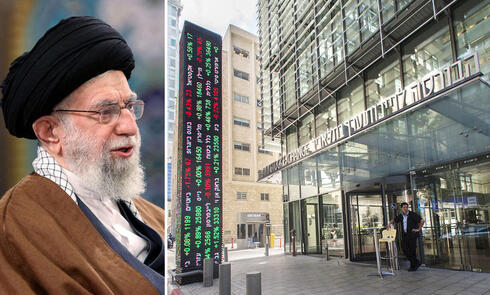
“If Iran’s status changes dramatically, the economic impact could be huge”
Analysts say war’s strategic outcome will determine Israel’s financial future.
The war launched by Israel and the United States against Iran, which began on Saturday with a powerful opening strike by the Israel Defense Forces, is expected to weigh heavily on Israel’s capital markets and broader economy in the near term, and potentially beyond.
Historical patterns suggest a complex dynamic. In past conflicts, the Israeli market has often delivered excess returns relative to global markets within a year after hostilities ended. More recently, the Tel Aviv Stock Exchange has been on a strong upward trajectory since the October 7 war, and also following the previous direct confrontation with Iran about eight months ago during Operation Rising Lion last June. During that campaign, Israeli equities rose even as fighting was ongoing, reflecting investor expectations that the operation would ultimately reduce the Iranian threat.
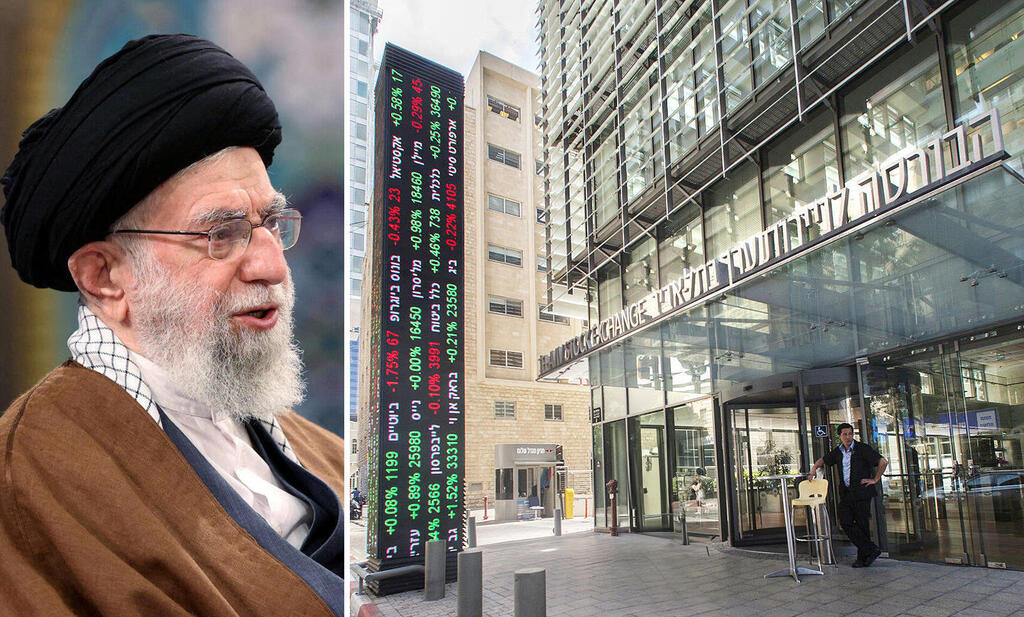
Investors are now asking whether history will repeat itself, or whether the current war represents a fundamentally different economic and financial scenario.
Amit Attar, Deputy CIO at More Mutual Funds, who is soon to become co-CEO, said the rally on the Tel Aviv Stock Exchange reflects investor expectations that a confrontation with Iran could ultimately reduce geopolitical risk.
“Since last June’s events, we have seen a very impressive upward trend in the local stock market, with January being particularly strong,” Attar said. “There is no doubt that part of the gains in recent months reflected expectations of progress in dealing with the Iranian threat, whether jointly with the United States or otherwise. In a certain sense, the market had already priced in a scenario of reduced Iranian risk, and now we are seeing that scenario begin to materialize.”
Asked about the outlook, Attar said the economic implications could be significant if the conflict leads to a lasting shift in Iran’s regional position.
“If we see a dramatic change in Iran’s status, this could substantially reduce Israel’s geopolitical risk,” he said. “That could mean less funding for Hezbollah and Hamas, greater regional stability, and increased foreign investment in Israel. We have already seen foreign investors returning to the Israeli market over the past year, including from Persian Gulf countries. If risk declines further, that trend could accelerate.”
At the same time, he cautioned that the market is no longer as cheap as it was several months ago.
“There is still room for gains, but investors must be much more selective,” Attar said. “The market has become more expensive. The path forward will not be linear, and volatility is likely.”
On the immediate outlook, Attar said short-term market reactions would depend heavily on developments in the coming days.
“A great deal can happen in the next 48 hours that could influence sentiment,” he said. “The key question is whether this represents a fundamental strategic shift. If it does, it could reshape Israel’s economic outlook for years.”
Aviel Azuelos, Head of Investment Department at Profound Investment House, said the economic impact of the war would depend largely on its duration and its effect on civilian life.
“In the short term, uncertainty has clearly increased,” he said. “Airspace, and possibly maritime routes, may remain closed for an unknown period, and missile attacks could significantly disrupt economic activity.”
However, Azuelos cautioned against making immediate, large-scale changes to investment portfolios.
“The fighting has only just begun, and it is too early to make dramatic adjustments,” he said. “Risk management measures should have been implemented in advance. Markets will likely react sharply when trading resumes, and if the conflict is prolonged or fails to produce the desired strategic outcome, we could see declines, particularly as foreign investors reduce exposure.”
He added that the war could also affect Israel’s fiscal position, potentially increasing government spending, widening the deficit, and affecting the country’s credit outlook.
Rafi Gozlan, chief economist at IBI Investment House, said the key issue is whether the war changes Israel’s strategic environment.
“The attack itself is not the goal,” Gozlan said. “The question is whether it alters the broader strategic picture. If it leads to a meaningful improvement in Israel’s security position, we could see continued inflows into the stock market and sustained investor optimism.”
However, he cautioned that gains may be more moderate than in the aftermath of previous operations.
“In recent months, the local market has outperformed global peers, supported by declining risk premiums and a strengthening shekel,” he said. “Much of the positive outlook has already been reflected in prices.”
Gozlan added that a decisive shift in Iran’s political or strategic posture would have the most significant economic impact, particularly through its effect on Israel’s risk premium and investment environment.
“Since the end of last year’s war with Iran, Israel’s risk premium has declined significantly, contributing to strong market performance,” he said. “Further gains would likely depend on whether investors believe the current Iranian regime’s long-term stability is in question.”
Tal Brockmann, founder and CEO of Finnovest, a digital investment advisory platform, warned that a prolonged conflict could damage economic activity.
“A campaign lasting months would inevitably harm the economy,” he said. “Consumption is a central pillar of Israel’s economic growth, and prolonged disruption would weigh on households and businesses. However, the economy enters this period from a position of relative strength.”
The economic impact will vary significantly by sector, analysts said.
Retailers could benefit in the short term from increased consumer stockpiling, while airlines such as El Al and Israir may suffer due to airspace closures. At the same time, reduced competition from foreign carriers could eventually boost demand for Israeli airlines.
Banks and insurance companies, which have significant foreign investor ownership, may face selling pressure if international investors reduce exposure to Israel. Residential real estate companies are also vulnerable due to disruptions in construction and economic uncertainty.
Defense companies, by contrast, are expected to benefit from continued global military spending.
“Defense firms have already seen strong demand, and that trend is likely to continue,” Brockmann said. “Geopolitical tensions and the global arms buildup are ongoing.”
Tourism, leisure, and consumer sectors may face declining demand as households reduce discretionary spending.
The IPO market is also likely to slow.
“Periods of uncertainty are very difficult for initial public offerings,” Brockmann said. “We will likely see fewer IPOs in the near term, though strong companies may still be able to raise capital. Historically, the IPO market recovers once stability returns.”
Recent market gains have attracted tens of thousands of new retail investors. Whether they view the war as a buying opportunity remains uncertain.
Gozlan warned against trying to time the market.
“It is a mistake to think in terms of having ‘missed the opportunity,’” he said. “Investing requires a long-term perspective and the ability to tolerate volatility. Trying to pick the perfect entry point often does more harm than good. Patience is essential.”



