










“Existential threat”: Shipping authority warns Zim deal endangers Israel
Regulator says post-sale company could collapse amid looming global downturn.
“The expected downturn in global shipping in the near future poses an existential threat to the new Zim,” warns the Administration of Shipping and Ports in its first official response to the proposed acquisition of Zim by Germany’s Hapag-Lloyd and the FIMI fund, a deal first revealed by Calcalist.
The Administration of Shipping and Ports Director Zadok Redker cautions in a formal position paper that the transaction could have far-reaching consequences for Israel’s maritime sector if completed.
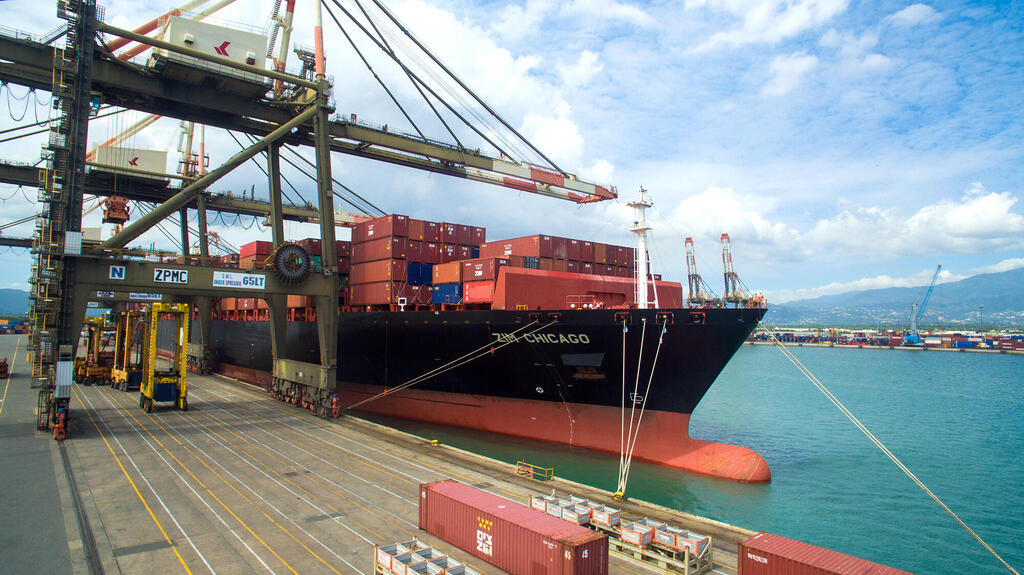
Under the reported deal, Zim’s international operations, including 99 chartered vessels, global trade routes primarily between Asia and the United States, customer agreements, and the Zim brand abroad, would be sold to Hapag-Lloyd and FIMI for more than $3.5 billion.
According to the Administration, once the international operations are transferred, a significantly smaller and weaker company would remain in Israel under FIMI’s control. This entity would include 16 vessels owned by Zim, the national shipping lines to and from Israel, the company’s headquarters in Haifa, and the obligations tied to the state’s golden share.
The Administration acknowledges that even after the deal, Israel would formally retain maritime independence during emergencies through FIMI’s ownership of the remaining fleet. Meanwhile, Hapag-Lloyd would strengthen its global standing as the world’s fifth-largest container shipping company, and Zim’s international activity would be integrated into the German carrier’s global network.
However, Redker warns of broader sectoral risks. The liner shipping industry is expected to enter a significant downturn following the peak years of 2021-2022, when soaring demand led to record profits and a surge in new shipbuilding orders. A substantial oversupply of vessels is already emerging and is expected to worsen once routes through the Bab el-Mandeb Strait and the Suez Canal fully reopen, replacing the longer detours around the Cape of Good Hope.
“This will lead to sharp freight rate declines, erosion of profitability, and a return to losses for carriers that lack sufficient scale,” Redker writes.
He argues that the “new Zim” would effectively become a small, local shipping company without global deployment or critical mass. It would not benefit from cross-subsidization, whereby profitable routes offset losses on weaker ones. In such a scenario, the anticipated industry downturn could become existential, with a high risk of insolvency due to declining revenues alongside high fixed operating costs.
“The collapse of the new Zim would have severe national implications,” Redker warns. “Israel would lose a national fleet available for emergencies. There would be no fleet that could be nationalized or operated during wartime. Israeli seafarers and naval officers would gradually disappear from the system, and training replacements takes many years. There would also be implications for essential maritime functions such as pilotage.”
He adds that rebuilding national maritime capabilities would require billions of dollars in investment and seven to ten years of personnel training.
In conclusion, Redker states that while the proposed split may formally comply with the requirements of the golden share, in practice it would leave the Israeli shipping company too weak to withstand the expected industry downturn.
“Unless protective mechanisms are established, such as state subsidies, government guarantees, supplementary revenue lines, or a formal safety net, there is a high probability that Israel will find itself in the near future without a fleet, without seafarers, and without independent maritime transport capacity, both in routine times and in emergencies.”
Despite the Administration’s bleak assessment, the FIMI fund, managed by Ishay Davidi, is said to be confident in its ability to stabilize the new Zim and return it to profitability.



