









BiblioTech
CTech's Book Review: Value is moving from producing output to validating it
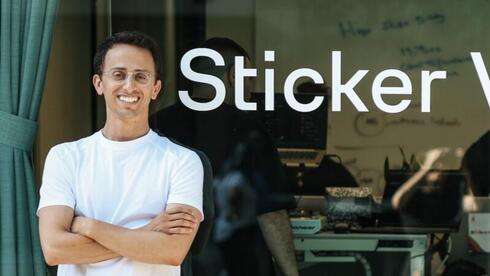
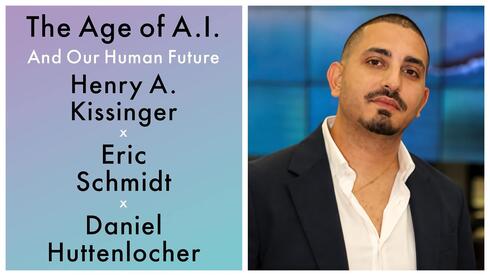
Guy Amar, Co-Founder & CTO at Group 107, shares insights after reading “The Age of AI: And Our Human Future”, by Henry Kissinger, Eric Schmidt, and Daniel Huttenlocher.
Guy Amar is the Co-Founder and CTO at Group 107, a technology and IT services company. He has joined CTech to share a review of “The Age of AI: And Our Human Future”, by Henry Kissinger, Eric Schmidt, and Daniel Huttenlocher.
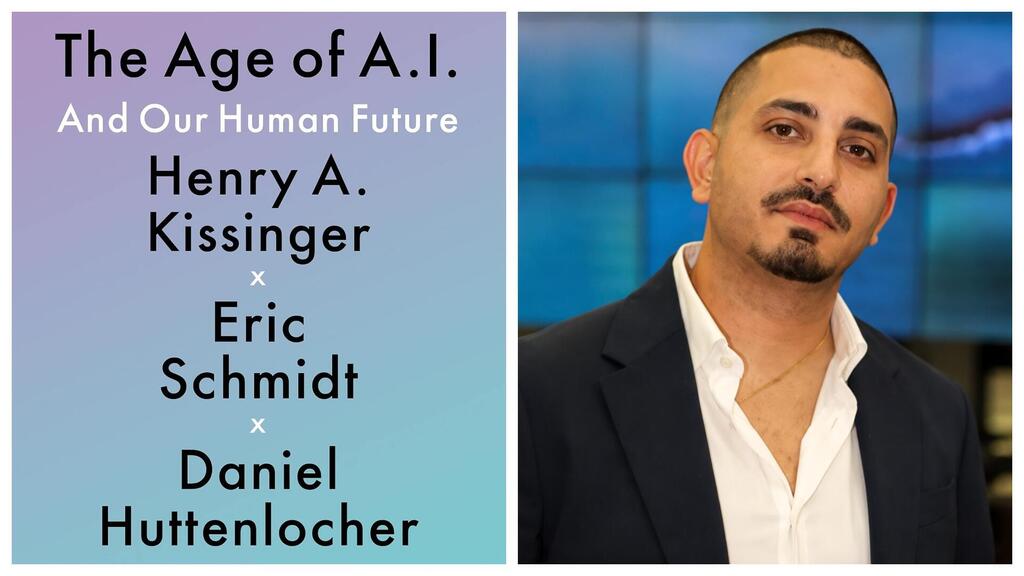
Title: The Age of AI: And Our Human Future
Author: Henry Kissinger, Eric Schmidt, and Daniel Huttenlocher
Format: Book
Where: Home
Summary:
Published in 2021, The Age of AI brings together an unusual trio: Henry Kissinger, in one of the last books he published before his death in 2023; Eric Schmidt, former CEO of Google; and Daniel Huttenlocher, Dean of MIT's Schwarzman College of Computing. It is neither a technical manual nor a business guide. It is a short, restrained essay that tries to place artificial intelligence inside the longer history of human knowledge.
The central claim is more specific than the cover suggests. AI is not simply a faster way of thinking. The authors present it as a third mode of knowing, alongside human reason and faith, one that produces useful knowledge through a process people cannot reconstruct. If that holds, a core assumption of the Enlightenment goes with it: the assumption that anything which can be known can also be explained. The book was written a year before ChatGPT made AI part of everyday life, and it anticipated many of the questions we are now dealing with, although parts of it read as distant from the practical reality of building with these systems.
Important Themes:
The clearest illustration in the book is halicin. In 2020, researchers at MIT trained a deep learning model to screen more than a hundred million compounds for antibacterial activity. The molecule it surfaced had not been developed as an antibiotic at all. It was an abandoned diabetes candidate. The model was not looking where chemists were looking, and it could not say why it looked there. The result worked anyway.
AlphaZero makes the same point in a domain with clean rules. Trained without a single human game, it produced chess strategies that grandmasters described as alien and could not derive from centuries of accumulated theory. The machine was not applying human judgment faster. It was operating outside it.
From there the book extends the same problem across domains. As systems become better at filtering information, ranking options, and shaping decisions, the question moves away from what the technology can do. It becomes a question about how people retain judgment and control when the machine may be seeing something they cannot.
What I’ve Learned:
The idea that stayed with me is not that AI reaches conclusions we cannot explain. It is what you are supposed to build once it does.
The book did not change the architecture decisions I make as a CTO as much as someone reading the cover might expect. What changed was where I put the question. Instead of asking only whether a model is accurate, I think about the verification mechanism I build around its inability to explain itself. Sources, citations, second-pass checks, and confidence scoring are not features you add after the AI works. The verification layer is a product in its own right. Development time spent on validation is not overhead. It is the asset that lets you sell the system to a customer who carries professional liability for the output.
We ran into this directly while building Summa, our AI-based auditing tool. The model analyzes journal entries and produces findings for auditors. At an early prototype stage, before the verification layer existed, it generated a finding that looked excellent. The reasoning was well written, the terminology was correct, and the anomaly sounded entirely plausible. Then we checked it against the source. The accounting context the model had relied on was not in the underlying data. The output was not wrong at the edges. It was wrong at its core, and it was more convincing than the correct output would have been.
That produced the two-stage process we use now. Every claim is checked against the source it says it relies on, and anything that fails the check is dropped. Even after those checks, the auditor signs off, not the model. The reason is not technological. It is about responsibility. When a model gets it wrong, there is no one to sue.
The same logic shapes how I think about developers. Writing code is becoming cheap. Defining what should be written, knowing where it will break in production, and recognizing a wrong answer that looks right are not. The strongest developers I work with read code better than they write it. They hold a mental model of the whole system, and they treat any output as untrusted until it has been verified. Value is moving from producing output to validating it.
Critiques:
My main disagreement is with the geopolitical framing. In the security chapters especially, AI is analyzed the way Kissinger analyzed nuclear weapons: through states, doctrine, deterrence, and treaties. That is a formidable analytical habit, and it is being applied to a technology that does not behave like a state asset. Most of the trajectory here is not being set in Washington or Beijing. It is being set by a handful of companies, by the open-source community, and by thousands of teams pushing models into business processes. That distinction is not semantic. It changes the answer, because interstate regulation does not touch most of the risk anyone encounters in practice.
I also think the book treats the black box with too much reverence. The inability to fully explain a model is a serious engineering problem, and it remains an engineering problem. There are tools for managing it: evaluations, source verification, human review, permission boundaries, and hard limits on what a system is allowed to do on its own. The book reads as a thoughtful observation of the phenomenon from a distance rather than something useful to a person who has to ship a feature on Monday. That is also part of its value. It pushes you toward questions that are easy to ignore when your attention is on the next release.
Who Should Read This Book:
Founders, CTOs, product leaders, and executives who want to think past the immediate capabilities of the tools they are deploying. It is not a technical guide, and in 2026 it cannot tell you how to build with the models available today. Its value is in forcing the question of what happens when machines produce useful answers that people cannot always explain.
For anyone building AI products, the hard part is no longer getting a model to produce an answer. It is knowing when that answer can be trusted.



