










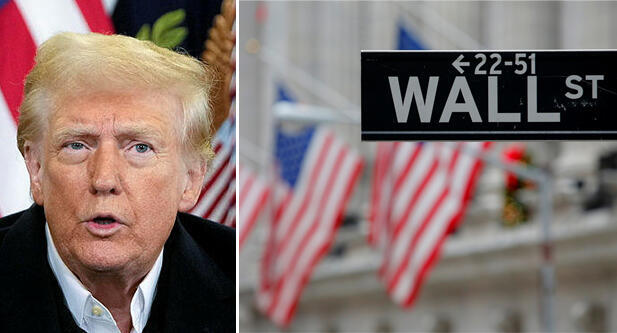
Nvidia, Intel and Boeing among companies at center of Trump trading disclosures
Critics question timing of investments tied to companies benefiting from administration policies.
Unlike previous presidents, including Barack Obama and Joe Biden, who largely avoided active stock trading while in office, President Donald Trump has remained highly active in the markets. After making only a few hundred investments at the beginning of his term, Trump carried out more than 3,700 trading transactions in the first quarter alone, according to documents published by the office of government ethics. The transactions included large purchases of shares in technology companies such as Nvidia and Dell, while holdings in Microsoft and Amazon were reduced during the same period.
According to the filings, the president purchased 2,346 corporate securities and sold 1,296 during the first quarter. The documents do not specify whether the securities were stocks or bonds, and the reported value of the transactions ranges between $220 million and $750 million, reflecting the broad disclosure requirements set by regulators.
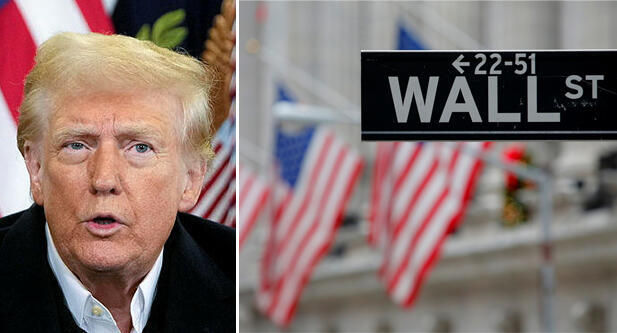
Analysts who reviewed the filings described the strategy as “buying the dip,” noting that Trump accumulated shares in software companies such as Oracle, Workday, and ServiceNow after their shares declined in February, a move that later benefited from the sector’s recovery. Other companies involved in transactions included Tesla, Apple, Meta, Visa, Citigroup, Boeing, Qualcomm, and GE Aerospace. Many of the CEOs or senior executives of these companies accompanied Trump’s delegation to Beijing last week for meetings with Chinese President Xi Jinping.
Although the ethics office said investment decisions are handled by external financial managers and that Trump is not involved in the process, some of the transactions have raised questions about potential conflicts of interest because of their timing and Trump’s ties to corporate executives.
One of the most notable investments involved Nvidia, whose CEO Jensen Huang is considered close to Trump and was personally invited to join the president’s trip to China. The documents disclosed 15 transactions involving Nvidia during the quarter. Trump’s advisers purchased at least $1.75 million worth of Nvidia shares, including purchases of at least $500,000 on January 6. A week later, the administration approved the export of the company’s H200 chips to China.
Alongside Nvidia, the largest transactions, valued between $1 million and $5 million, included investments in Apple, Workday, Uber, and Costco. At the same time, the filings showed the first major sales from the portfolio since Trump returned to the White House in January 2025, including sales of between $5 million and $25 million each in Meta, Amazon, and Microsoft shares.
A particularly notable company in the filings was Intel, which appeared in six separate transactions. Intel’s stock has risen more than 200% this year, while the U.S. government last year acquired a nearly 10% stake in the company.
Boeing also appeared frequently in the filings, with seven transactions, including purchases valued at between $1 million and $5 million. The timing drew attention after the White House announced over the weekend that China would buy 200 Boeing aircraft.
Oracle, founded by Larry Ellison, another prominent Trump ally, appeared in more than a dozen transactions, including the sale of shares worth at least $1 million on January 6. Roughly two weeks later, reports emerged that Oracle would receive a stake in TikTok’s U.S. operations under an arrangement backed by the administration.
Paramount Pictures, owned by Ellison’s son, and Warner Bros. Discovery, which Paramount is seeking to acquire in a $110 billion deal, also appeared in the documents. The fate of the acquisition currently rests with regulators. Trump also conducted 17 transactions involving Netflix, Paramount’s leading rival.
The filings further showed purchases worth hundreds of thousands of dollars in shares of Palantir Technologies shortly before Trump praised the company on Truth Social.
“A national security disaster”
The disclosures immediately drew criticism from Democrats. Senator Elizabeth Warren focused primarily on the Nvidia investments, accusing Trump of effectively lobbying for the company during his meeting with Xi Jinping.
“The president’s corruption is a national security disaster,” Warren said.
The Trump Organization rejected the criticism, saying its investments are independently managed by outside financial institutions.
“President Trump, his family members, and the Trump Organization do not participate in the selection, direction, or approval of specific investments,” the organization said in a statement. “They do not receive advance notice of trading activity and do not receive information regarding investment decisions or portfolio management.”
The organization added that transactions are conducted through “automated investment processes and systems operated by these institutions.”
Trump’s son, Eric Trump, also addressed the criticism on X, writing that the investments are managed externally and that “the claim that specific stocks are sold or bought at the behest of a family member is fundamentally false.”



