











Mind the Tech NY
"People fear many jobs will be lost due to AI, but many new ones will also be created"
Mikhail Gurevich, managing partner at Dominion Capital, said these things during a panel at the Calcalist and Bank Leumi New York 2026 conference. "The result of the AI revolution is layoffs and companies becoming extremely efficient. It allows companies to stay private for longer with the same amount of capital."
"A lot of people are afraid that a lot of jobs will be lost because of the AI revolution," said Mikhail Gurevich, managing partner at Dominion Capital, in a panel on Wall Street 2026, held at the offices of the Sullivan & Worcester law firm, as part of the Calcalist and Bank Leumi New York 2026 conference. He clarified, however, that "that's okay because so many new jobs will also be created because of AI."
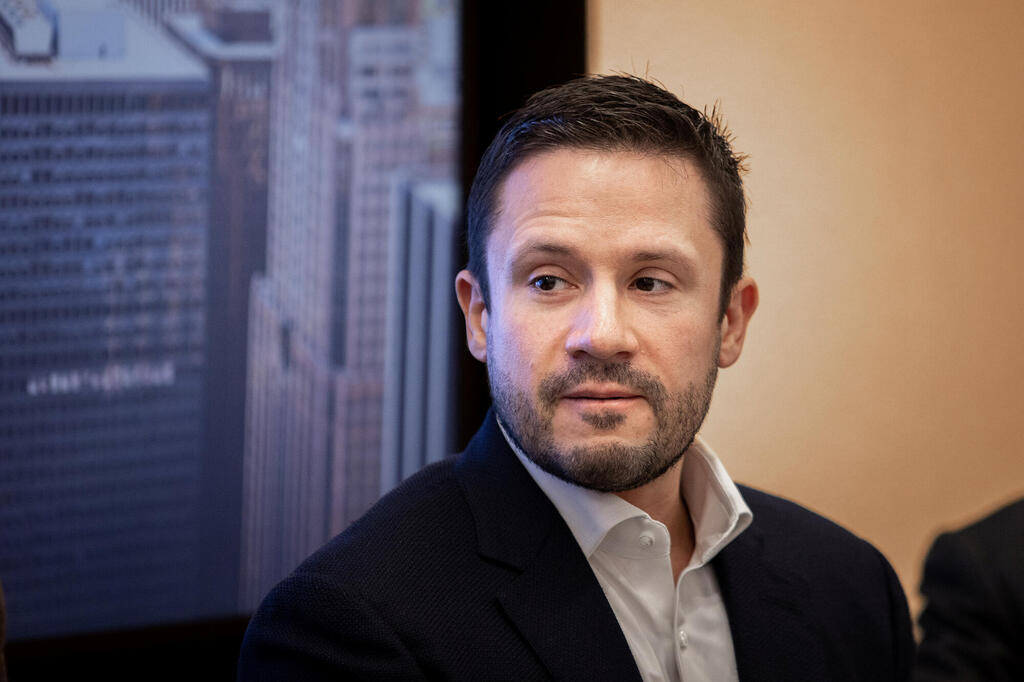
The panel, moderated by attorney Oded Har-Even, a partner at Sullivan & Worcester, focused on the impact of factors such as AI and crypto on the capital markets. Gurevich assessed how the AI revolution could affect IPOs in 2026. “The result of the revolution is layoffs and companies becoming more efficient,” he said. “It allows companies to stay private for longer with the same amount of capital.”

David Bocchi, co-founder and head of investment banking at AGP, distinguished between mega-IPOs and smaller IPOs. “There’s a huge appetite for large-cap IPOs,” he said. “The biggest talk in town right now is SpaceX. When it comes to companies looking to go public at a lower valuation, it’s very challenging. Regulatory constraints make it difficult to go public, there are valuation caps and limited access to capital markets. Basically, most small companies want to stay private or look for other exit options. The problem is that a lot of small companies don’t have the exposure they need to go public. They have a challenge going to the market and getting capital.”

Sasson Darwish, managing partner at BTIG, added in this context: "When you think about the average number of tech companies that issue, it's 27 per year. In 2021, the largest number of tech IPOs ever was recorded – 86 companies. Historically, in 2021 there were 1,200 unicorns, today there are 800. What can a unicorn do? Issue or be sold. But even if you have 100 companies that will issue, of all the unicorns today, only a few can issue. In terms of acquisitions, on average in the last 15 years there have been 15 unicorn acquisitions per year. So if you are a unicorn that wants to make an exit, the numbers show that there is a very small chance of that. Israel is not unique in this context, it is part of the ecosystem."
Roey Eliyahu, CEO and founder of Salt Security, told how he sees a possible IPO of his company. "What is the goal for me? To build a large, enduring company, and not something that is hype or a trend," he said. "To do that, you need to raise money. An IPO is a means to an end. It has advantages – money, it's easy to recruit employees because you can offer them shares, and because we sell to large companies, a public company is perceived as more stable. The other side is that the role of the CEO changes dramatically: after an IPO, it's more external facing, you have to shape the company's image, educate a larger market than your investors. There's also the overhead involved in an IPO, and that comes at a price because it comes at the expense of other things. From my perspective, there's now a big incentive to stay private for a longer period of time."
Eliyahu also shared what he sees, from the company's customer data, including airlines and large retailers, about how they are adopting and using AI agents: "Retail companies are starting to build customer support agents, who replace low-wage employees and handle customer complaints about a product or requests to return a product. The agents handle the minor cases, and more complicated cases are passed on to a human employee. Returns on Amazon are already completely automated. We are seeing the transition from agents who talk to agents who do."



