










How the US found and rescued an airman hiding in the Iranian mountains
After his F-15E was shot down, the wounded officer evaded Iranian forces for nearly two days before a massive rescue operation involving the CIA, drones, bombers and special operations forces reached him.
For nearly two days, a U.S. Air Force officer was alone in the Iranian mountains, badly injured and being hunted by forces that had come within hundreds of meters of his hiding place.
His F-15E Strike Eagle had been shot down by a shoulder-fired missile. His parachute had been damaged in the attack. He had fallen to the ground at an estimated 70 to 100 miles per hour, breaking his back, arm and shoulder and suffering additional injuries to his ankle, head and face.
Yet he survived the fall, climbed toward a 7,000-foot ridgeline and managed to remain hidden as Iranian forces searched for him.
What followed was an extraordinary U.S. military operation involving intelligence agencies, aircraft, drones, special operations forces and classified technology. About 92 American service members eventually went onto the ground inside Iran, hundreds more supported the mission from the air and thousands were involved more broadly. When the operation was finally over, two large rescue aircraft and several helicopters had been destroyed to prevent sensitive equipment from falling into Iranian hands.
The officer, identified only by his mission call sign, “Bravo,” described the experience in an interview with CBS’ 60 Minutes as a “modern-day miracle.”
But his account also offers an unusually detailed glimpse into what it takes to find and recover a downed airman in hostile territory, and how much technology and military infrastructure can be mobilized around a single person.
Bravo was the weapons systems officer aboard an F-15E Strike Eagle flying with its pilot, known as “Alpha,” under the mission call sign Dude 44.
On April 2, the aircraft was sent to strike industrial facilities connected to Iran’s missile and drone programs in a mountainous region south of Isfahan, according to Adm. Brad Cooper, commander of U.S. Central Command.
The area was close to facilities where Iran had stored highly enriched nuclear material, although Cooper said the nuclear site itself was not the target.
By that point, U.S. forces had flown roughly 13,000 missions during the war. American aircraft had established air superiority, but Iranian forces remained capable of threatening them.
“We had air superiority, but clearly we weren’t flying over Kansas,” Cooper said.
The threat arrived in the form of a relatively inexpensive weapon. The F-15E, a two-seat fighter worth about $30 million, was hit by a shoulder-fired missile that can cost roughly $100,000.
Bravo described the impact as feeling like “getting hit by a freight train.”
The crew initially tried to save the aircraft, but quickly realized it could not stay airborne. Alpha ejected both men.
“I will be thankful, to my dying day, for my pilot and crewmate, Alpha, for saving our lives and ejecting us,” Bravo said.
The two men came down about five miles apart.
Alpha's parachute worked as intended. Bravo's did not.
“At one point when I looked up and saw no parachute, that was the most terrifying thing I’ve ever seen,” he said.
As he fell, Bravo prayed: “Lord, your will be done. But if I’m getting through this, I need help.”
Military specialists later estimated that he hit the ground at between 70 and 100 miles per hour.
He was badly injured but conscious.
Bravo knew that remaining near his landing site could make him an easy target. He began moving away before Iranian forces could reach him.
When daylight arrived, he realized he was in a high desert valley surrounded by steep cliffs. His decision was counterintuitive: rather than stay low, he began climbing.
With a broken back, arm and shoulder, he made his way toward a 7,000-foot ridgeline.
Asked how he found the strength to keep going, he gave an answer that captured the stakes of his situation.
“Never let a lack of motivation put you on Iranian TV.”
Iranian forces were already looking for the two Americans.
Images of the wreckage circulated in Iranian media. An Iranian television presenter announced a bounty for the Americans' capture. Videos appeared online showing armed groups searching for the downed crew.
U.S. military sources told CBS that Iranian forces at one point came within several hundred meters of Bravo.
“There was clear intent out of the Iranian ground force to come find those two guys,” Gen. Dan Caine, chairman of the Joint Chiefs of Staff, said.
Cooper said U.S. forces were tracking about 1,500 Iranians within a 10-mile radius of the area.
The Americans found Alpha first.
Six hours after the F-15E went down, a rescue force launched a daytime mission involving two helicopters from a 21-aircraft package.
The helicopters came under fire.
“It was a gun fight all the way in and all the way out,” Defense Secretary Pete Hegseth told 60 Minutes.
The rescuers got Alpha out.
They could not find Bravo.
The rescue force withdrew.
The technology that had to find one man
The search for Bravo then became an intelligence problem as much as a rescue mission.
As darkness fell, Bravo managed to establish communications with American forces. He said he was injured but moving.
His next message was short: “God is good.”
The United States knew that he was alive. It still did not know exactly where he was.
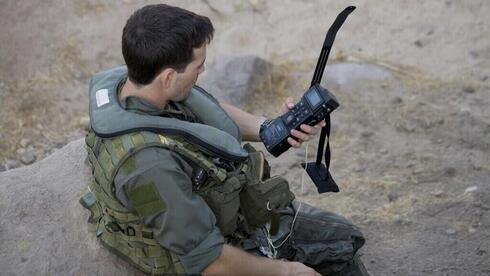
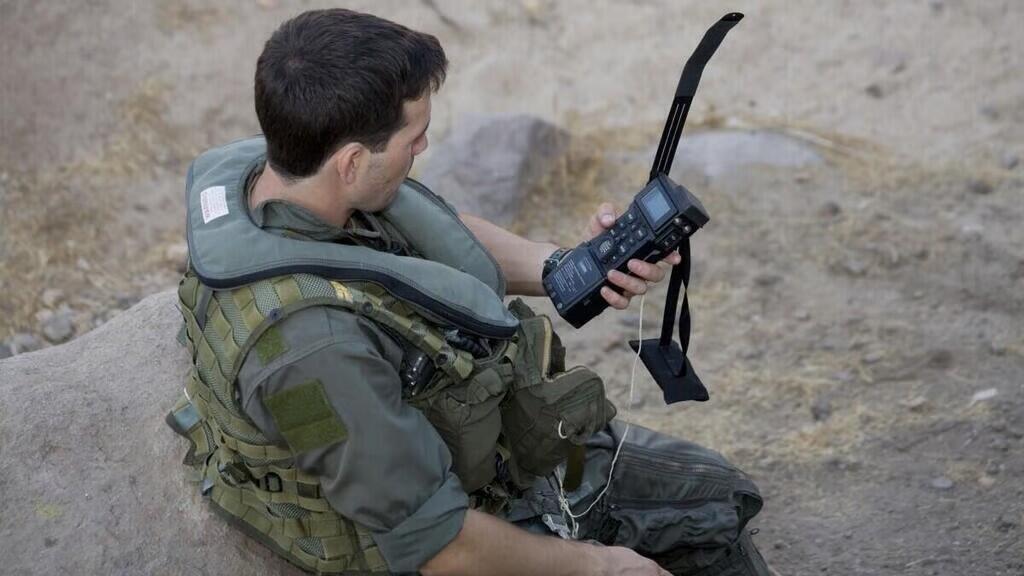
Earlier CTech reporting on the incident described the role of the Combat Survivor Evader Locator, or CSEL, a military device designed to help locate personnel isolated behind enemy lines. The technology was central to the broader effort to establish communications and locate a downed airman.
The rescue mission also brought the CIA into the search.
According to CBS, the agency conducted a multipronged deception operation designed to confuse the Iranian forces hunting Bravo while using classified technology to pinpoint his position.
The details of that technology remain undisclosed.
That secrecy is significant. Earlier reports surrounding the rescue had raised questions about an alleged CIA capability known as “Ghost Murmur,” which was described as helping locate the downed airman. Experts questioned whether some of the claims about the technology were technically plausible.
The new account does not resolve those questions. Instead, it makes clear that the recovery depended on a combination of intelligence, communications, deception and highly specialized military capabilities rather than a single piece of technology.
Before the final rescue force moved in, U.S. bombers and drones struck Revolutionary Guard forces near the area where Bravo was hiding, according to declassified footage shown by CBS.
The objective was no longer simply to find him.
It was to create a window in which rescuers could reach him and get him out.
The scale of the operation reflected the stakes.
About 92 U.S. service members went onto the ground inside Iran, according to Cooper. They were the first American troops to do so in 46 years.
Several hundred personnel supported the operation from the air. Another 3,000 to 5,000 people supported it more broadly.
The numbers raise an obvious question: Why send so many people into hostile territory to rescue one wounded airman?
Caine's answer was blunt.
“We would have sent more to go get the back-seater.”
Two large search-and-rescue aircraft landed on a makeshift airstrip in the Iranian desert. From there, smaller Little Bird helicopters were launched toward Bravo's position on the ridge.
Eventually, Air Force pararescue specialists reached him.
“The moment a PJ showed up to me on that ridgeline was one of the greatest moments of my life,” Bravo said.
He did not disclose what the rescuers told him.
His own first words were simpler.
“Let’s go.”
Reaching Bravo was only the midpoint of the operation.
The rescue force still had to get everyone out of Iran.
Back at the makeshift desert airstrip, the landing gear of the large rescue aircraft became stuck in the sand.
More than 90 elite American personnel were now stranded inside Iran, alongside the man they had entered the country to rescue.
A clandestine Air Force unit was brought in to extract them.
The United States ultimately destroyed the two stranded aircraft, each worth roughly $100 million, as well as the Little Bird helicopters. The purpose was to prevent sensitive technology from falling into Iranian hands.
The officer had survived the crash, evaded Iranian forces, been located through a combination of communications and intelligence capabilities and extracted from a remote mountain ridge.
But even then, the mission was not complete.
It took about 50 hours from the moment Dude 44 was shot down until Bravo was finally safe.
He was rescued as the sun rose on Easter Sunday.
Not long afterward, he called his wife in the United States.
“I was really proud of her and grateful for the strength that she showed,” he said.
Alpha has since returned to flying with the Air Force but declined to speak with 60 Minutes for security reasons. In a statement, he praised the personnel who carried out the rescue.
Bravo, meanwhile, does not want the episode remembered simply as the story of one injured airman surviving behind enemy lines.
“This is not a story about what I went through,” he said. “Instead, it’s a story of the teamwork, the training, of the faith, of the decisions and the leadership to do something that will live in history as an example of what America’s willing to do in order to uphold our promise and leave no man behind.”



