












Top 50 Most Promising Startups
“Despite all the noise, organizations struggle to extract real value from AI”
Unframe positions itself as a bridge between experimental AI agents and practical enterprise deployment, after being named the No. 2 most promising Israeli startup for 2026 by Calcalist and CTech.
Unframe’s model is built on a paradox. On one side are social media voices describing how individuals can now build products that, until recently, only large software companies could develop, fueling anxiety among Wall Street investors, who rush to sell shares in traditional software firms. On the other side is reality. A recent MIT study found that 95% of independent AI-driven projects fail when organizations attempt to implement them. In other words, the grand promises often collapse in the face of security issues, bugs, conflicts between different agents, and other challenges.
Unframe steps into this gap by offering organizations across industries the ability to build AI agent-based solutions tailored to their needs. The company commits to delivering a solution within just one week after completing the problem characterization process and guarantees that customers will only be charged if they are satisfied with the result. At present, however, there are no clearly defined criteria for what constitutes “satisfaction.”
“Despite all the noise in the software industry, large organizations struggle to adopt artificial intelligence technologies and extract real value from them. Although countless agents have been built, few have actually solved problems because they were not accurate or reliable enough, or because they failed to cover entire business processes. What remains is often a pile of useless tools,” explains Shay Levi, co-founder and CEO of Unframe.
Can you explain the method you developed to get all the systems working together in sync?
“Even though every organization has a variety of departments operating in different domains, the technological building blocks they use are quite similar. What we’ve done is create a set of core building blocks, think of it like Lego. We come to customers with these building blocks and assemble what they need.”
The level of confidence projected by Unframe may sound ambitious, but so far about 50% of its customers have declared themselves “satisfied” and paid for the projects delivered, a relatively high rate compared to standard enterprise software models, where customers decide whether to purchase after a trial period. In Unframe’s case, once a customer declares satisfaction after a pre-agreed usage period, the payment transitions to a standard SaaS model based on a fixed subscription fee. Although Unframe only began selling its software less than a year ago, it reports more than $10 million in sales and expects to reach $50 million in revenue by the end of 2026.
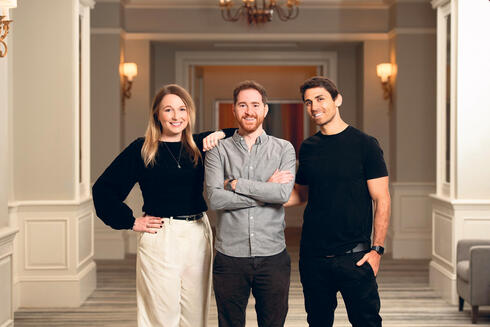
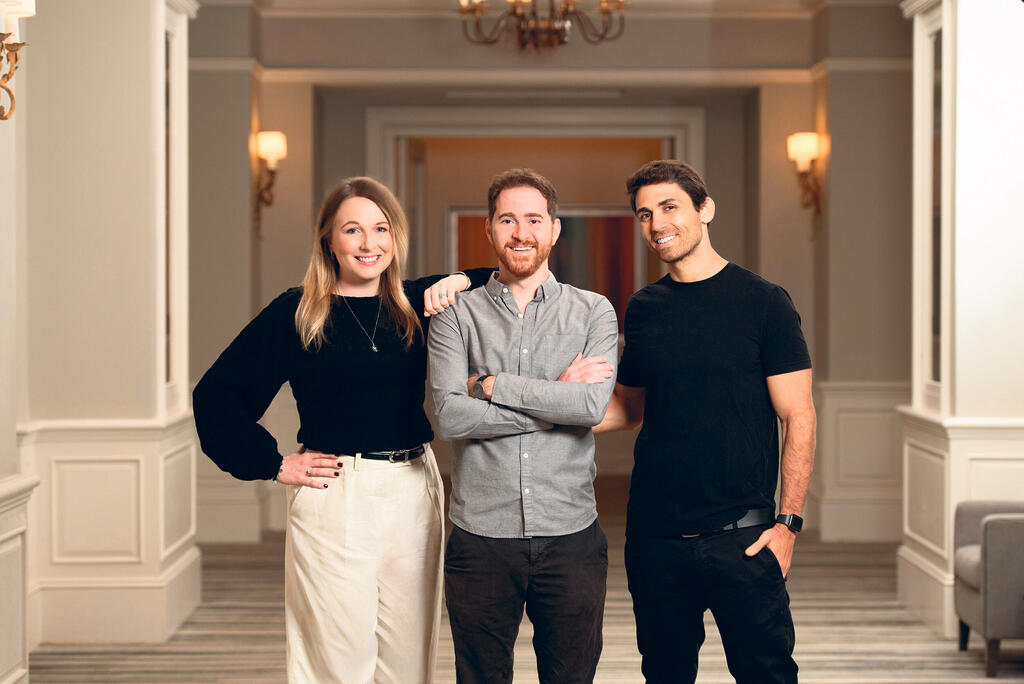
Levi (34) brings prior entrepreneurial experience. Before turning 30, he co-founded the cybersecurity startup Noname with Oz Golan, which became one of the symbols of the 2021 tech boom. The company raised $220 million and achieved unicorn status within a year, but was ultimately sold in 2024 to U.S.-based Akamai for $450 million, a significantly lower valuation than its peak. Levi, who served as Noname’s CTO, left shortly after acquisition talks began and, in 2024, founded Unframe alongside two other senior executives from Noname: Larissa Schneider, who serves as CTO, and Adi Azarya.
In the AI sector, where business models can quickly become obsolete due to new features introduced by companies like Anthropic or Google, investors are placing increasing emphasis on the experience of founders. This confidence is reflected in Unframe’s fundraising. The company has completed two rounds to date: a $12 million Seed round led by TLV Partners, followed shortly thereafter by a Series A led by Bessemer Venture Partners. Its investors also include Third Point Ventures, Craft Ventures, and the Israeli fund Cerca Partners, managed by experienced CFOs with access to broad industry data.
“We are growing faster than we expected. Although something happens every second, and as a CEO it can be exhausting, it’s far better than silence,” says Levi. He adds that by the end of the year, Unframe plans to hire 150 additional employees, on top of its current workforce of 120, to meet growing demand.
Ironically, the company’s growth model resembles that of monday.com, one of the firms seen as vulnerable to AI disruption. Unframe typically begins by working with mid-level managers on specific projects. As those projects succeed, additional departments follow, requesting their own AI solutions. As a result, much of the company’s growth occurs organically within existing organizations, rather than through costly efforts to acquire entirely new customers
When asked about the future of the software sector, much of which has lost significant market value over the past year amid concerns that AI could render traditional platforms obsolete, Levi takes a more measured view. “What we’re seeing in software company stocks today is an overreaction. Organizations need to focus on their core business, and if a company is trying to save $10-15 million by replacing something like Salesforce, it’s probably already in trouble.”
Although Levi and his partners hope their second venture will prove more successful than their first and are aiming for continued growth and a potential IPO, the company’s rapid expansion could soon attract significant attention. Potential acquirers range from software giants such as SAP, ServiceNow, and Salesforce, seeking to offer immediate AI solutions to customers, to consulting firms like McKinsey, which are helping clients transition into the AI era, as well as cloud providers aiming to deliver end-to-end solutions under a single platform.
Company ID
Sector: Enterprise software to support the transition to AI
Established: 2024
Founders: Shay Levi, Larissa Schneider, Adi Azarya
Employees: 120, of which about 60 are in Israel
Funding: $50 million in two rounds from Cerca, Third Point, Bessemer, TLV Partners, Craft Ventures, and others



