











"If there is no significant change, we will see a 25%-30% reduction in high-tech's workforce"
eToro Deputy CEO Hedva Ber warns that the strong shekel, rising labor costs, and the rapid adoption of AI are eroding Israel's competitive advantage, pushing companies to freeze hiring, move jobs abroad, and prepare for workforce reductions.
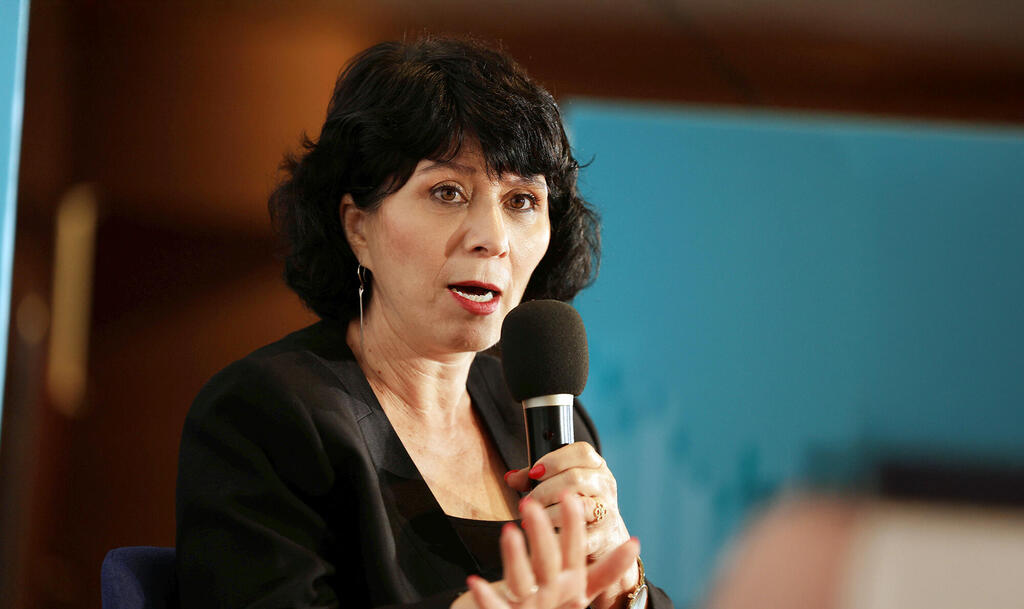
"I am very worried. The bottom line is that, under the current exchange rate, the high-tech locomotive is leaving the Israeli economy. If there is no significant change in policy and in the exchange rate, we will soon see a wave of layoffs and a reduction of about 25%-30% in the industry's workforce over the next six to twelve months. For the first time, the cost of employing a development worker in Israel is higher than in the United States, this shows the magnitude of the danger," said eToro Deputy CEO Dr. Hedva Ber in an interview with Calcalist reporter Sophie Shulman at the Financial Future conference by Calcalist and Migdal.
Is eToro deep into the AI revolution? How is it changing the way you work?
"We have defined an 'AI First' policy. For us, it is a requirement, not an option. In the world of development and coding, 90% of the code at eToro is now written by AI, compared with only 50% six months ago. This is an extraordinary change that is completely transforming the roles of programmers and QA teams. In customer service, 70% of customer inquiries are now answered by generative AI.
"We have also introduced AI to our customers. We have a digital assistant called 'Tori,' and users can ask it any question. In preparation for our meeting, I asked Tori whether it was worth investing in the upcoming IPOs of Anthropic and OpenAI. It replied: 'Note that you already have significant exposure to technology stocks, so take that into consideration. Historically, IPOs often experience a sharp jump on the first day, followed by underperformance and high volatility.' It presents the risks in an intelligent way that any customer can use."
Alongside the benefits, we are seeing companies part ways with employees. Will AI-driven layoffs continue, or is this simply an excuse used by companies that became bloated during the good years?
"AI will dramatically change the labor market. In the first stage, there appears to be less need for employees simply because each employee becomes significantly more productive. In high-tech, adoption is happening faster, which is why the effects are visible immediately. I fear that we will see substantial layoffs in the near future. For some companies, the technology is genuinely changing their business model. But even companies with strong revenues and profitability are likely to reduce headcount. This is the first and difficult stage.
"In the second stage, a new equilibrium will emerge. We will see workers moving into growing industries where demand exists. In Israel, for example, defense-tech is expanding dramatically, and some people may undergo professional retraining. In addition, talented technology professionals who find themselves outside the workforce may establish new, leaner companies. AI will make it possible to create 'one-person unicorns', today, you no longer need a massive organization to build a successful company."
In Israel, the problem is even more complicated because of the security situation and the strong shekel. What are you seeing on the ground?
"High-tech companies have frozen hiring in Israel. Some are already laying off workers, while others are significantly expanding their workforce abroad. This is a serious problem for the entire Israeli economy. High-tech employees are responsible for more than 30% of Israel's tax revenues, and the sector is the locomotive that pulls all the other cars.
"A survey conducted by the Growth Companies Forum shows that a development worker in Israel currently costs about 2.5 times more than a worker in countries such as Ukraine, Cyprus, or Georgia. Two-and-a-half times more. The strengthening of the shekel has effectively increased labor costs by about 20%, without employees receiving a single additional shekel in their paychecks. For the first time, the cost of employing a development worker in Israel has become higher than in the United States. At the same time, AI is reducing the relative advantage of Israeli workers and leveling the playing field. A worker in Cyprus or Ukraine is becoming far more competitive today than in the past."
As a former Supervisor of Banks, what are the solutions? The Treasury might say: 'Then let high-tech workers accept lower wages.'
"I think wages in high-tech will eventually decline, but that will happen only after companies lay off workers and reduce their operations in Israel. Once a company relocates operations and hires lower-cost employees abroad, it becomes very difficult to reverse that decision. Therefore, wage reductions are not a short-term solution. The strengthening of the shekel reflects strong market forces, but lowering interest rates would reduce the real interest-rate gap between Israel and the rest of the world."
Should interest rates be cut by half a percentage point?
"In my opinion, yes. Whether the governor cuts rates all at once or spreads the reduction over two or three moves is a tactical question. But if you want to create a substantial and rapid change, send a signal to the market that policymakers recognize the problem, and provide short-term relief, this is the necessary step. And it would have an impact on the entire Israeli economy."



