











"Within six months, Israel's high-tech sector could shrink by 25% to 30%"
Former banking supervisor Hedva Ber warned at the Eli Hurvitz Conference that the strong shekel is pushing technology activity abroad, while Bank of Israel Governor Amir Yaron signaled growing openness to faster interest-rate cuts as inflation expectations decline.
“As inflation expectations decline and approach the lower end of the target range, this justifies a more expansionary monetary policy at a faster pace,” Bank of Israel Governor Amir Yaron said on Tuesday at the Eli Hurvitz Conference on Economics and Society in Jerusalem.
The remarks appeared to signal a greater openness on the governor’s part to easing monetary policy and potentially lowering interest rates sooner than previously expected.
According to Yaron, the shift in the economic outlook has taken place over the past few days. “Since the last interest-rate decision, expectations for an agreement with Iran have increased,” he said. “These expectations have led to a sharp decline in energy prices. At the same time, Israel’s risk premium has continued to fall, the shekel has strengthened further, and these developments have lowered inflation expectations.”
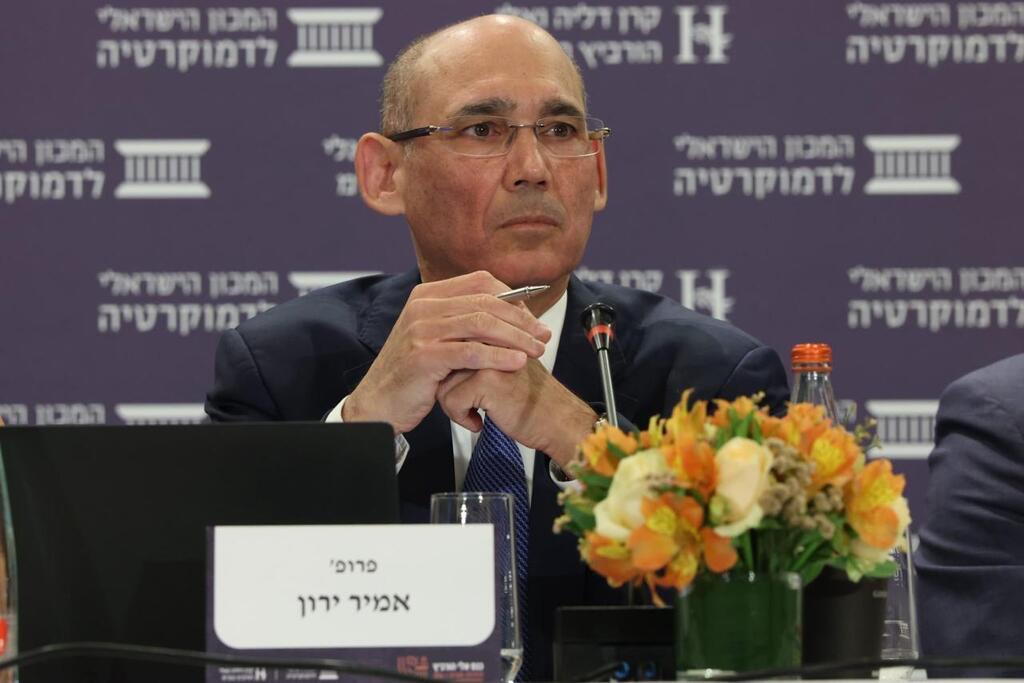
The governor added that “even though competition in the retail market remains insufficient, the cumulative effect of these developments can certainly contribute to lower inflation, and this is reflected in declining inflation expectations.”
In his speech, Yaron reiterated his view that high interest rates are not currently the main obstacle to economic growth, arguing that there are no signs of a credit crunch in the Israeli economy. Instead, he pointed to the shortage of workers as the primary constraint on growth.
Yaron also addressed the strengthening of the shekel, arguing that much of the appreciation is beyond the Bank of Israel’s control.
“The strengthening of the shekel is driven by three factors: a decline in Israel’s risk premium, the performance of U.S. equity markets and their impact on institutional investors, and the weakening of the U.S. dollar globally,” he said. “These are primarily financial factors.”
He also cited several structural factors supporting the currency, including import barriers, high pension savings rates in Israel, and tax incentives that favor investment in Israeli government bonds.
At the same time, Yaron acknowledged the pressure on exporters. “We understand the impact on exporters. We do not take it lightly. It is very much on our minds,” he said.
His predecessor, Prof. Karnit Flug, also addressed the exchange rate and defended the central bank’s position.
“The exchange rate is not particularly sensitive to interest rates,” Flug said. “In the past, the Bank of Israel intervened when appreciation was sharp and rapid, but the international atmosphere today is much less supportive of such interventions. The main solution is the removal of import barriers and an increase in imports, which would help weaken the shekel.”
Indeed, one of the dominant themes throughout the conference was the strength of the Israeli currency and its impact on the economy.
Dr. Hedva Ber, former Supervisor of Banks at the Bank of Israel and now Deputy CEO of fintech company eToro, warned of significant consequences for the technology sector.
“Within six months, Israel’s high-tech sector could shrink by 25% to 30%,” she said. “If an emergency task force is not established to examine all monetary and fiscal policy options, we will see more of the industry leave Israel. Some of it is already leaving today. High-tech companies have alternatives, and the locomotive of the Israeli economy is beginning to move elsewhere.”
Other speakers directly urged the governor to accelerate interest-rate cuts. Attorney Nimrod Sapir, chairman of the Investment Houses Association, said: “The economic conditions justify a rate cut. Once that is done, we can examine additional measures.”
Taken together, Yaron’s comments suggest a softer tone than in previous months and may indicate that the Bank of Israel increasingly believes conditions are falling into place for a reduction in interest rates.



