











Inflation and Iran’s “winds of war” drive interest rate hold
Bank of Israel Governor Amir Yaron says victory over inflation cannot yet be declared, citing services inflation and geopolitical risks.
"I already knew in the previous interest rate decision that we would be more or less where we are now in terms of inflation, and I said back then that 'if there are no changes, the committee will want to examine the impact of the interest rate on continued economic development.' We are exactly where we thought we would be, and in fact we incorporated and even brought forward the interest rate cut."
This is what Bank of Israel Governor Prof. Amir Yaron said in a conversation with Calcalist after the Monetary Committee’s decision to leave the interest rate unchanged.
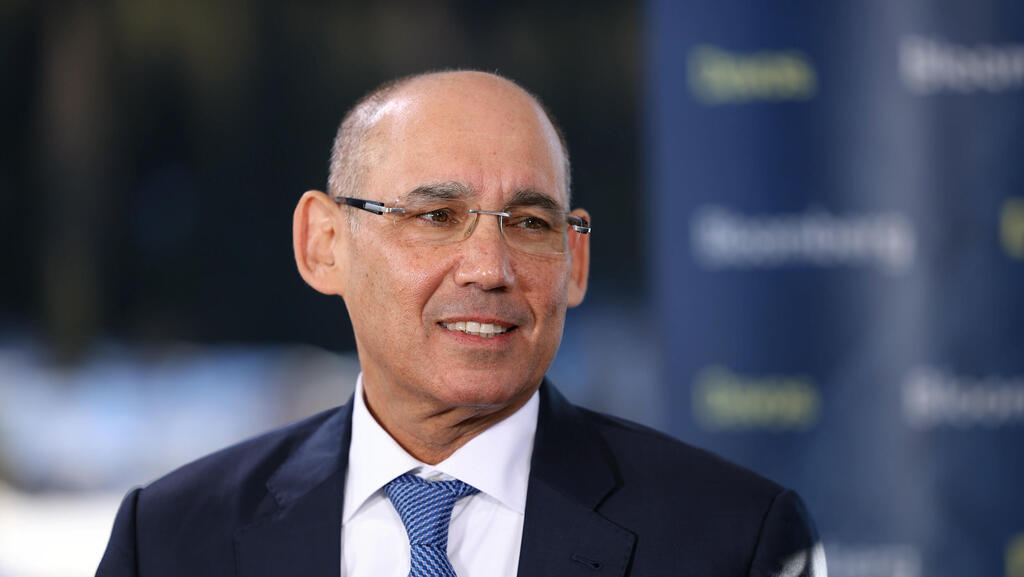
What should be examined before another interest rate cut?
"First of all, there are the winds of war. In addition, a significant part of the economic data certainly did not justify a third consecutive cut."
What data? After all, some say, including ministers, that "the decision contradicts the macro data."
"I say this wholeheartedly: the economy is strong and active. We have an economy that grew 4% in the last quarter, wages are rising at a relatively fast pace, and the labor market is tight. After two consecutive cuts, before we even consider geopolitics, it is right for us to pause and see what happens. We know that consecutive cuts have an effect that takes time to materialize. We want to make sure excess demand does not increase and accelerate inflation again, forcing us to reverse course. We’ve seen countries that began raising interest rates again after cutting them."
So is it because of Iran or because of inflation?
"First and foremost, it’s inflation. But when you add the winds of war, you arrive at the current decision."
What about the future path of interest rates?
"We expected that after the January index we would find ourselves around the midpoint of the target range, and that’s exactly where we are. We are where we thought we would be, and we even brought forward the previous interest rate cut. That’s why we now need to examine the impact of those cuts. The path we want is one guided by informed risk management, so that we do not create excess demand."
So you haven’t defeated inflation?
"Let’s put things in perspective. Wars typically lead to lost output and double-digit inflation. In light of the terrible events of October 7 and two years of war, we see an economy that is performing well, with inflation around the midpoint of the target range. Monetary policy has played a major role in that. But as we move toward a neutral interest rate, the risks must be carefully managed."
The decision last night not to lower the interest rate has both an overt and a covert layer. The overt layer is "Iran," and the covert layer is the perception that "we have not defeated inflation." The Monetary Committee and Bank of Israel officials used the headline of Iran to explain why they were forced to disappoint the public and halt the rate-cutting cycle. The economic logic is clear: a military conflict with Iran could weaken the shekel, disrupt supply chains, and raise the prices of energy and flights, potentially reigniting inflationary pressures.
However, a close reading of the interest rate announcement makes it clear that Iran is not the entire story. For its own reasons, the central bank chose to emphasize the Iranian threat, but behind that headline lies a clear assessment: inflation remains present.
Related articles:
- “If a rate decision is 100% clear, you’re probably late”: Amir Yaron on cutting interest rates
- "We all understand high-tech is our locomotive. Therefore, we must maintain Israel as an open, competitive economy"
- "Cutting interest rates too early would be like stopping a course of antibiotics halfway through, it could backfire"
The January price index, published last week, showed annual inflation at just 1.8%. To many, this figure symbolized a “complete and final victory” over the recent inflation wave, which explains the disappointment with the Monetary Committee’s decision. For months, the governor had repeated that “interest rates hurt, but inflation hurts more.” The public waited patiently for inflation to decline, and now that it appears to have been “defeated,” new reasons for holding rates steady are emerging, such as Iran and fiscal policy. Finance Minister Bezalel Smotrich gave blunt expression to this frustration, stating decisively: “There is no danger of inflation now.”
However, a deeper look at the data suggests that declaring final victory would be premature. The current inflation environment is unusual: deflation and inflation are occurring simultaneously. Data from the last quarter shows that tradable goods (primarily imports) recorded an annual price decline of 1.4%, a phenomenon last seen at the end of 2022. In contrast, inflation in non-tradable services rose in January and now stands at 3.2%, above the upper bound of the target range. The increase in services prices has been consistent in recent months.
The explanation is straightforward: the strong shekel makes imported goods cheaper, but services, haircuts, restaurants, housing, continue to rise in price. When examining Israel’s price structure in this way, the governor’s dilemma becomes clearer. On the one hand, Israel has an exceptionally high real interest rate, perhaps the highest among developed economies, contributing to the strength of the shekel, which could eventually harm exporters and employment. On the other hand, lowering interest rates could further accelerate services inflation.
The Monetary Committee’s announcement did not explicitly address non-tradable inflation, instead emphasizing the moderating annual figure. Yet the central bank clearly believes victory cannot be declared and highlights three primary concerns.
The first concern is geopolitical developments, primarily the possibility of conflict with Iran.
The second concern is “rising demand alongside supply constraints.” Behind this formulation lies an observable reality: the Israeli economy is expanding rapidly. Credit card usage is increasing, housing prices and rents are rising, wages continue to climb, and labor shortages persist. This combination, constrained supply and robust demand, could reignite inflation if interest rates are reduced too quickly.
One may disagree with the Bank of Israel’s analysis, but there is no doubt that this is how it perceives reality, and from its perspective, inflation has not yet been defeated.
The third concern relates to fiscal developments. Here too, the bank speaks cautiously. The 2026 budget deficit stands at 3.9%, relatively high, though not necessarily inflationary. If the budget is not approved and a continuing budget applies, the deficit could even be lower, as such budgets tend to be restrictive. However, the bank is concerned about less benign scenarios: that the deficit could widen before final approval in the Knesset; that security developments could significantly breach fiscal frameworks; or that a future government might pass an expansionary post-election budget.
Finally, one must address Smotrich’s confident response to the decision. He argued that “the decision is wrong and contradicts the macro data,” and insisted that “there is no danger of inflation now.” Smotrich is entitled to hold a different view from that of the Governor and the Monetary Committee, and he is free to express it, especially when similar arguments are heard outside the Bank of Israel. However, he overlooks the fact that, as a senior member of the government, he has influence over the committee’s composition. Currently, only one external member, Prof. Ori Heffetz, serves on it. If the Finance Minister seeks broader representation in rate decisions, he can promote the appointment of two additional external members.



