








Orbia nears $1.2 billion sale of Netafim to Spain’s MatHolding and Kibbutz Hatzerim
The proposed deal would bring the Israeli drip-irrigation company under new ownership after nearly a decade with Mexico’s Orbia. French investment group Tikehau Capital is expected to provide the financial backing for MatHolding’s acquisition.
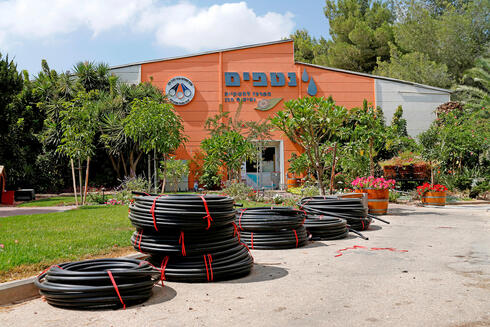
Mexico’s Orbia is expected to sell control of Israeli drip-irrigation company Netafim to Spain’s MatHolding by the end of the year, in a transaction that would bring the company back into the hands of its founding kibbutz and introduce a major European industrial group as its new owner.
Calcalist has learned that negotiations are at an advanced stage and that the deal involves the sale of 80% of Netafim’s shares. The transaction is based on an enterprise value of $1.2 billion. After deducting approximately $400 million in debt, the implied equity value of the company is about $800 million.
Under the proposed structure, Kibbutz Hatzerim will acquire an additional 10% stake in Netafim for $80 million, or approximately NIS 250 million. MatHolding and an investment fund that is expected to invest in the Spanish group ahead of the transaction will acquire the remaining 70%. MatHolding’s portion of the investment is expected to amount to approximately $560 million.
The French investment group Tikehau Capital is in advanced negotiations to take a minority stake in MatHolding, providing much of the financial backing required for the acquisition. Tikehau, which manages tens of billions of euros, is expected to invest hundreds of millions of euros in the Spanish company. The investment would help finance the Netafim purchase and give the fund exposure to the Israeli irrigation company.
Following the transaction, MatHolding and Tikehau are expected to hold approximately 35% of Netafim each, while Hatzerim’s stake will rise to 30%. The Matosas family and MatHolding Chairman Pau Relat are expected to retain control and management of the Spanish group, with Tikehau providing the capital needed to complete the acquisition and support the integration of the businesses.
MatHolding generated record sales of €429 million in 2025. But despite its strong performance, the privately held company is too small to finance the acquisition of Netafim on its own. Netafim, by comparison, generates annual sales of approximately $1.2 billion, making it substantially larger than its prospective buyer.
The transaction would also mark a return to a significant ownership position for Hatzerim. The kibbutz sold a 12.7% stake in Netafim to Orbia in 2017 for $240 million. It is now set to buy back a substantial portion of the shares at a considerably lower valuation.
Israeli kibbutzim once held approximately 40% of Netafim. Hatzerim owned about 33%, while the remainder was held by Kibbutz Yiftah and Kibbutz Magal. The latter two sold their holdings as part of the previous change in control, when the Permira private equity fund sold its stake to Mexico’s Mexichem, which later changed its name to Orbia.
Orbia acquired control of Netafim in August 2017, purchasing a 61.3% stake from Permira for $1.16 billion, a 12.7% stake from Hatzerim for $240 million, and Kibbutz Magal’s entire 6% holding for $116 million. The transaction valued Netafim at approximately $1.9 billion. Orbia beat six other bidders in the process, which was led by Netafim’s then-CEO, Ran Maidan.
The current proposed sale would therefore value Netafim at roughly one-third less than the valuation at which Orbia acquired control. The Mexican group’s decision to sell comes after years in which Netafim has faced growing competition and struggled to maintain its position in the global irrigation market.
From Chinese bidder to Spanish buyer
In October 2025, Calcalist revealed that Orbia had hired investment bank Evercore to find a buyer for Netafim. The company was initially marketed at an enterprise value of approximately $1.2 billion, equivalent to around $800 million in equity value after accounting for its $400 million debt.
At the time, Israeli private equity fund Fortissimo was among the interested parties. But the fund was unable to complete the transaction after seeking to raise capital from institutional investors. Negotiations subsequently stalled, with disagreements over the company's financial performance and the price.
A Chinese buyer then emerged. Haoyu Wang, a young Chinese billionaire who controls the privately held irrigation company DAYU, joined forces with investment fund HOPU to pursue an acquisition. Their discussions centered on a higher valuation of approximately $1.4 billion.
Wang intended to finance the purchase privately, rather than through DAYU, and potentially merge Netafim with the Chinese company at a later stage. During the discussions, he also traveled to Israel and met senior Netafim executives at the company's manufacturing facilities in Kibbutz Hatzerim and Kibbutz Magal.
The main obstacle was the prospect of U.S. regulatory scrutiny. Netafim generates approximately $250 million in annual sales in the United States, about a quarter of its revenue. Legal reviews indicated that a sale to a Chinese buyer would likely require approval from U.S. authorities, a difficult prospect given tensions between Washington and Beijing.
The possibility of excluding Netafim’s U.S. business from the transaction was also considered, but was ultimately set aside because of the tax burden it would create. The regulatory uncertainty helped pave the way for MatHolding to emerge as an alternative buyer.
A Spanish group with an established Israeli footprint
MatHolding is a family-owned industrial group based in Spain that operates in two main areas: water and irrigation solutions, and crop protection. Founded in 1935, the company began as a manufacturer of agricultural chemicals, particularly copper-based products used to protect crops against diseases and fungi. Over the years, the Matosas family expanded the business into water technologies, which have become a central growth engine.
The group employs more than 1,200 people and has commercial operations in more than 140 countries. Its 2025 sales of €429 million represented a record for the company.
MatHolding already has a substantial presence in Israel. In 2014, the group, through its subsidiary Regaber, acquired Dorot Control Valves from Shari Arison for NIS 105 million. Dorot became a central part of the group's water-control business. MatHolding later acquired A.R.I., a manufacturer of air valves and other products used to protect water pipelines and irrigation systems.
In 2018, the group also acquired U.S.-based OCV. The three businesses were subsequently brought together under Aquestia, MatHolding's water-technology subsidiary, which has developed into a significant international player in water management and flow-control systems.
MatHolding also has a long-standing commercial relationship with Netafim, serving as a distributor of its products in Spain. The two groups operate in overlapping markets, including precision agriculture and water conservation, and have familiarity with each other's products, customers and distribution networks. The acquisition would give MatHolding a much larger international platform in irrigation, while expanding its reach in Europe, Asia, the United States and particularly South America.
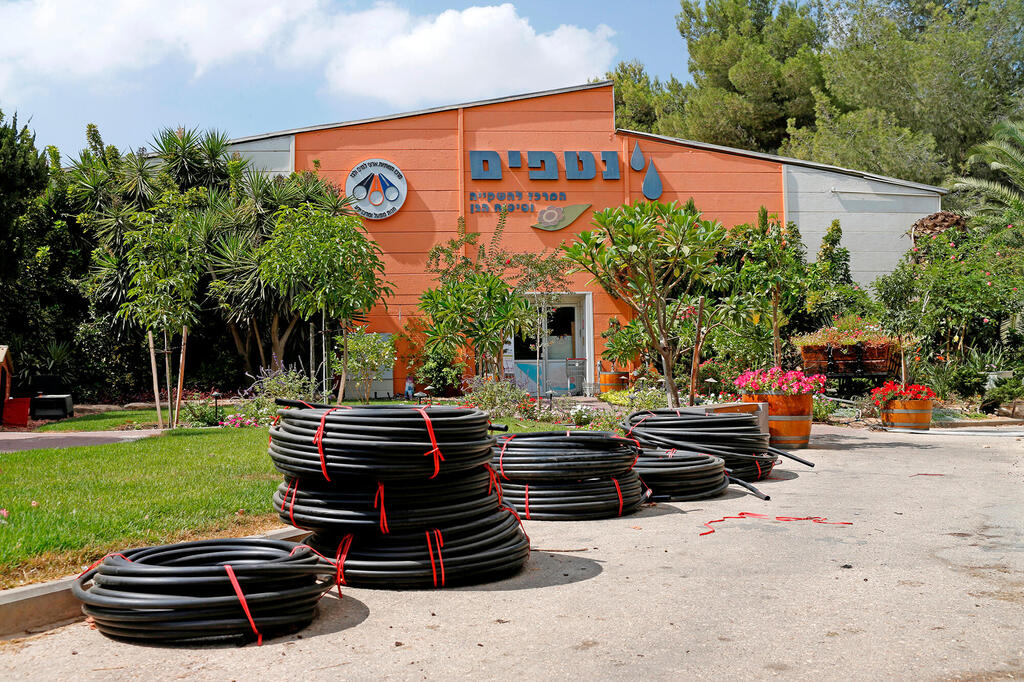
Netafim is the world's largest manufacturer of drip-irrigation systems, with annual revenue of approximately $1.2 billion and EBITDA of around $145 million. Led by CEO Gaby Miodownik, the company operates in 110 countries through 33 subsidiaries, runs 19 manufacturing plants and two recycling facilities, and employs approximately 5,000 people.
Its competitive environment has become increasingly challenging. Rivulis, which was built on the foundation of Plastro Gvat, has expanded its presence in the global market, alongside India's Jain Irrigation, Spain's Azud and a growing number of Chinese manufacturers offering lower-cost products.
Netafim has also faced questions about its performance under Orbia's ownership. The company accounted for only about 15% of the Mexican group's overall business, and the draft's reporting points to reduced investment in research and development as one factor weighing on its competitiveness. The proposed sale, at a valuation substantially below the one Orbia paid in 2017, would represent a significant markdown on the Mexican group's investment.