









AI won't replace workers, but it will change who succeeds
Executives and experts say the winners of the AI era will combine technical expertise with uniquely human skills that machines cannot easily replicate.
As the world of work has changed in recent years, particularly with the rise of generative AI, employers are rethinking the qualities and skills they value most in employees. For decades, technological expertise was the primary currency in the technology industry, but companies are increasingly placing greater emphasis on human advantages, soft skills and broader capabilities that complement technical knowledge.
In an era where AI tools can increasingly perform complex technical tasks, human skills are not replacing professional expertise but becoming an essential addition to it. The ability to communicate, collaborate, exercise judgment, think creatively and understand people is becoming a larger part of the modern employee's toolbox.
1 View gallery
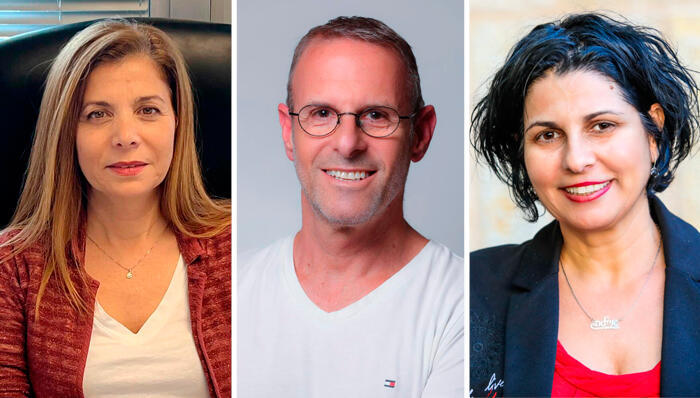
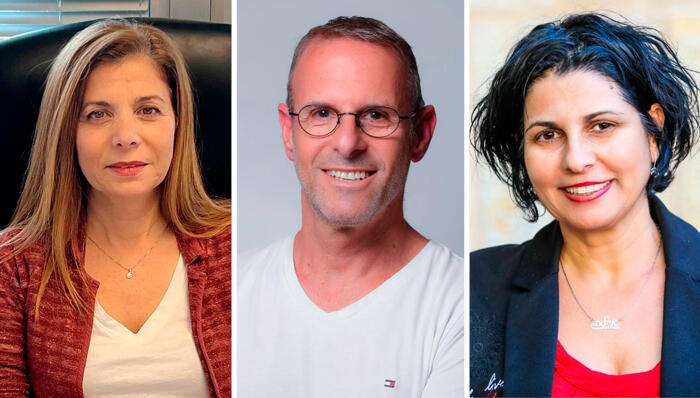
From right: Ayalla Reuven-Lelong, Eldad Rom, Efrat Shapira
(EQel, Guy Hamoui, Courtesy)
"AI will not necessarily replace you, but you may be replaced by someone in your profession who knows how to use AI platforms better," says Dr. Eldad Rom, an organizational psychologist and partner at Team8, who works primarily with founders and senior executives.
"Development managers tell me that if experienced developers do not adopt AI tools quickly enough, younger developers may overtake them. Today, we should think of every developer as a mini team leader, instead of managing five people, they may be managing five AI agents that write code and help design system architecture. The more skilled you become at managing these agents, the more effective you become."
Asked which new human abilities employees need to develop in the AI era, Rom points to creativity, critical thinking and adaptability.
"We need to become more creative because AI does not independently think out of nowhere or create ideas in the way humans do. It knows how to generate based on what it has learned. The more creative we are and the better we know how to work with AI, the greater our advantage will be."
He says critical thinking is becoming increasingly important because AI is creating an unprecedented flood of information.
"We need to know how to separate the wheat from the chaff. We also need the ability to adapt quickly because technological changes today happen every few months, and we need strong self-learning capabilities. People who are comfortable learning independently have a significant advantage."
Rom also emphasizes the importance of practical experience.
"There is a lot of value in doing things with your hands, a skill that develops through practice. This is an era where theoretical learning alone is limited and requires experimentation and trial and error. Some people have a fear of technology and change, but it is important not to be afraid and to try."
At the same time, he warns that the rapid adoption of AI also creates new organizational risks.
"Anyone can now create agents for themselves, but those agents are not always secure. This creates new attack surfaces and cybersecurity challenges that organizations did not face before."
The growing importance of human capabilities was also highlighted by veteran American software engineer Kent Beck, creator of the Extreme Programming methodology.
In a recent episode of "The Pragmatic Engineer" podcast, Beck discussed weaknesses he sees among software engineers, including a lack of emotional regulation and empathy.
Throughout his career, Beck said he realized that influence does not come only from technical expertise.
"Your ability to create change in the world depends on your ability to communicate with other people and understand them," he said.
These skills, he noted, were areas he previously underestimated.
Recent research suggests companies are already shifting their approach to hiring.
According to a study by technology and consulting company Cognizant and education company Pearson, based on a survey of 750 human resources executives and published in June, 69% of respondents said that for early-career employees, a broad interdisciplinary background has become more important than narrow professional specialization or a specific degree.
Almost all respondents said soft skills including curiosity, judgment and adaptability have become more important as organizations require greater flexibility, problem-solving ability and human decision-making.
Rom believes traditional hiring processes must evolve accordingly.
"I'm not sure resumes are still relevant in the same way. For years, LinkedIn profiles have partly replaced resumes because they allow people to present skills, projects and experiences that are difficult to capture in a traditional document."
He believes companies need to focus more on evaluating capabilities directly.
"Critical thinking, adaptability and independent learning can be assessed during the hiring process far better than through a resume. This is important because selection processes also need to change."
"In the past, it was easier. If someone came from a strong military intelligence unit and had a degree from a respected university, there were already systems that had filtered them for me. But if that candidate lacks creativity or the ability to learn independently, they may eventually fall behind."
Degrees matter less, learning matters more
Efrat Shapira, Senior Vice President of Human Resources at Ness, says companies are already seeing a fundamental shift.
"There is no doubt we are in the middle of a revolution and a major transformation. In development roles, technological knowledge and experience remain important, but the world is changing rapidly and new tools appear every day. Therefore, the ability to learn independently has become essential."
She says curiosity and willingness to adopt new tools are becoming critical.
"If learning something new requires taking a course, it may already be outdated because things change so quickly. What is required today is broader thinking, systemic vision and business understanding."
The role of developers is also changing.
"If yesterday a developer mainly coded independently, today they need to know how to work with AI tools, write effective prompts and think about the business consequences of what they build."
Shapira says companies are increasingly looking for employees who can bridge technology and business.
One example is the emerging role of the Forward Deployed Engineer, professionals who take existing AI models and tools and apply them to solve specific organizational problems.
"The role is evolving and takes a different form in every organization. We recruit and train employees, and we have built upskilling programs designed to take our current employees into the world of tomorrow."
The change is also affecting recruitment criteria.
"We still need a certain level of experience and knowledge, but we are looking for people with broader backgrounds, people who know how to develop and adopt tools, who can adapt, learn independently and build projects outside their formal work."
She says academic credentials are also becoming less decisive.
"A person does not necessarily need a bachelor's degree for me to recruit them for a development role if they have learned independently and can demonstrate the required abilities."
So what should people study?
"What you love," Shapira says. "The world is changing."
Rom agrees that the specific field of study matters less than the mindset people develop.
"It's not only about the degree you choose. It is about your ability to continue learning. What you study today will not necessarily give you an advantage forever because AI can also learn information."
The advantage will come from uniquely human capabilities.
"AI is excellent at analysis, but it does not know how to decide what is right. I see managers struggling with decisions because they have more information than ever before. But decisions require values, judgment and the willingness to take responsibility."
Rom says one of the most important skills in the AI era is the ability to remain comfortable without immediate answers.
"Among senior managers and people in complex positions, there is a growing need to tolerate not knowing and not rush to produce answers."
"Humans have always struggled with ambiguity and uncertainty, which is why we create anchors. But today we live in a world where every question appears to have an answer within seconds. The ability to remain with an open question long enough for something meaningful to emerge is becoming extremely valuable."
He warns that AI can create false confidence.
"AI provides answers with a great deal of confidence, but confidence does not necessarily mean correctness."
For employees and managers alike, he says the ability to sit with uncertainty is becoming increasingly rare.
"I want to see more people who are comfortable remaining with a question mark instead of immediately running toward the false certainty AI provides."
From jobs to skills
Ayalla Reuven-Lelong, CEO of global consulting firm EQ.el and an expert on the future of work, believes the fundamental shift is from occupations to capabilities.
"We have moved from a world of roles to a world of skills. Competitive advantage will no longer be determined only by what we know, but by our ability to learn, change and create value."
More than 15 years ago, Reuven-Lelong led a research process with Prof. Ilan Meshoulam and around 300 managers from Israel and abroad to identify the capabilities that would define success in the future workplace. The process produced the "Five Continents" model, which maps human capabilities required for success in the 21st century.
"Looking back after years of working with organizations and employees around the world, I can say with confidence that success in the AI era will depend less on what we know and more on our human abilities: lifelong learning, creativity, critical thinking, empathy, flexibility, adaptability and problem-solving."
According to data collected as part of the "Israeli Readiness for the AI Era" project led by EQ.el and Prof. Eliezer Shalev, only 18% of Israeli workers and managers currently demonstrate a high level of readiness for the AI era.
The research found that 18% demonstrate strong lifelong learning capabilities, 11% demonstrate the required level of creativity, and only 27% demonstrate optimal critical thinking abilities.
"Many executives and board members still view the AI revolution primarily as a technological revolution. But that is only half the story," Reuven-Lelong says.
"Within a few years, AI will become a basic workplace tool, just like computers, the internet and smartphones. The question will no longer be who uses AI, but who knows how to create more value with it."
"The real competitive advantage will come from human capabilities, learning faster, thinking better, creating, solving problems and adapting more quickly to change."



