










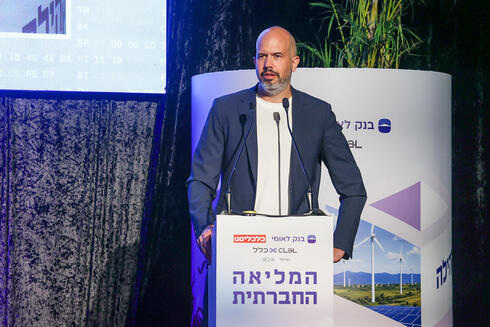
"High-tech must be central to the platform of any party that wants to lead Israel"
The founder of Anu Banu Idan Tendler said at the National Economic Conference that "high-tech is the greatest agent of social change in Israel"; according to him, "high-tech can be the melting pot that connects Israeli society, attracting Jews and Arabs, right-wingers and leftists, religious and secular."
The positive economic data recently presented by the Israeli high-tech industry could create a false impression, warned Idan Tendler, one of the founders of the Anu Banu initiative, in a speech delivered at the National Economic Conference of Calcalist, Bank Leumi and Clal.
Tendler began his remarks by saying that "this morning is a wake-up call for the State of Israel. Without strong high-tech, Israel will lose its most important asset." According to him, although Israeli high-tech companies raised more than $7 billion in the first half of the year, an increase of more than 50% compared with the same period last year, and three of the five largest exits in the country's history took place over the past year, the picture is misleading.
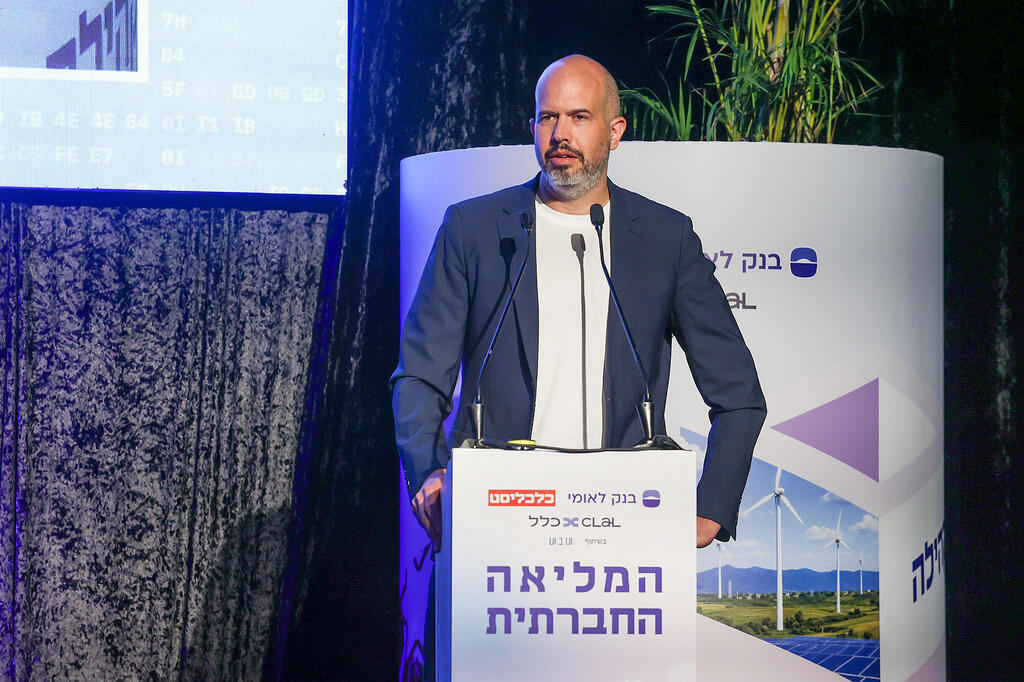
"This is just a smokescreen, high-tech is still in danger, and if Israeli high-tech is in danger, Israeli society is in danger," he said. He emphasized the direct connection between the industry's stability and Israeli society, warning that "if high-tech collapses, the entire Israeli society will be harmed."
Tendler referred to the widening social gaps created alongside the industry's growth over the years, saying: "Over the years, the development of Israeli high-tech has actually contributed to widening the gaps in the country. High-tech has achieved extraordinary successes, and they have created a new layer of wealth and opportunity, which is positive and important, but it has also increased the distance between those who are part of this ecosystem and those who are left behind."
He shared his personal experience as someone who grew up in Rishon LeZion and reached Unit 8200 only because someone in the army recognized his potential and gave him an opportunity. Tendler argued that the industry must take responsibility for creating equal opportunities for all parts of society, comparing the social role high-tech can play today to the historical role of the IDF as a social melting pot.
"The new social pioneering is in high-tech. The greatest engine of social change in Israel is high-tech," he declared.
Tendler described how high-tech can connect different groups across Israeli society: "Like the IDF of the past, high-tech can become the melting pot that connects Israeli society, bringing together Jews and Arabs, right-wingers and left-wingers, ultra-Orthodox, religious and secular Israelis. But this time, it does not necessarily require people to change who they are or abandon their culture. On the contrary, it includes everyone while connecting people from across Israel who want to work together."
He presented the activities of the Anu Banu initiative, which was established about a year ago with the goal of making social impact part of the DNA of Israeli high-tech by connecting thousands of technology professionals and hundreds of companies to solve social challenges.
Tendler described how the initiative's volunteers work on the ground to help reservists and people suffering from trauma return to the labor market, while supporting dozens of mayors and school principals in Israel's north and south. He highlighted collaborations with companies such as Nvidia, which are helping create employment opportunities in the Galilee and support the return of young families to communities such as Hatzor HaGlilit, Metula and Ma'alot. He also noted that the industry is helping integrate ultra-Orthodox Israelis into high-tech without requiring them to abandon their way of life, while creating opportunities for people from politically divided groups to work together.
Tendler emphasized the role of artificial intelligence as a key tool for reducing geographic and social gaps. According to him, "Artificial intelligence is not a threat to Israeli society; it is the greatest equalizer. If we bring this revolution to every place in Israel, we will bring down the walls."
He explained that making AI accessible to municipalities in the south, businesses in the north and young people in the periphery can provide them with a fast-track entry point into the labor market, an effort currently being supported by more than 3,000 volunteers from the technology industry.
However, Tendler sharply criticized what he described as the government's limited involvement in the sector. "Over the past four years, the government has barely dealt with high-tech. There is almost no involvement in high-tech in the latest state budget," he said.
"There has been a legislative blitz in the past week, and high-tech is almost completely absent. There is not a single law that provides benefits to entrepreneurs in the north or promotes English and physics education in the south. Why? We cannot take this industry for granted."
Ahead of the upcoming election campaign, Tendler called on all political parties to present plans for strengthening the industry and using it to create opportunities across Israel. He concluded with a call to technology professionals: "This is not just our business goal; this is our mission. This is our national responsibility."



