







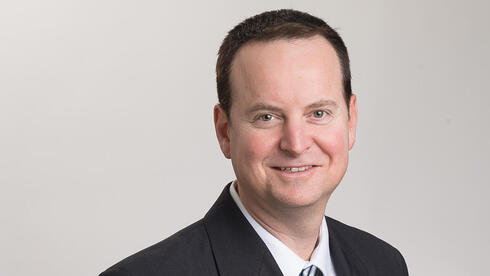



Amir Yaron: "We want to reduce dependence on Nvidia, but its presence in Israel is no coincidence"
The Bank of Israel governor says Nvidia's investment in Israel reflects the country's human capital and technological strengths, but argues that the economy should encourage more companies to grow. He also discusses the market correction, elections and interest rates.
The Bank of Israel kept its interest rate unchanged at 3.25% for the second consecutive month, in line with the expectations of most analysts. Following the decision, Bank of Israel Governor Prof. Amir Yaron discussed a range of current affairs, including the upcoming elections, the turmoil surrounding Nvidia and the return of CEO Jensen Huang to his position.
What is your take on the elections? What is the significance of one government versus another?
"We have worked with every government, and we will know how to work with any government. What matters is the budget, which is essentially a strategic plan. Any incoming government must approach the budget from a multi-year perspective, based on three pillars: a long-term reduction in the debt-to-GDP ratio; a multi-year defense budget, which currently accounts for a critical portion of total government spending and should be based on an updated threat assessment and maximum operational efficiency; and, third, accelerating the engines of growth. We are lagging behind in infrastructure, education and the incentives needed to bring additional segments of the population into the labor market."

What are the implications of maintaining a higher defense budget over time?
"Given the size of the defense budget, if we want to reduce the debt-to-GDP ratio while continuing to invest in all the areas I mentioned, we will probably need to increase government revenues. To minimize the burden on each individual citizen, it is therefore even more important to integrate additional population groups into the workforce. In my view, this is essential."
What would another round of elections, should one take place, mean for the economy?
"Any delay in this process [of forming a government] also affects the private sector, which is waiting for some degree of clarity. The private sector does not operate in a vacuum. We are capable of navigating whatever process unfolds, but there is a price to pay for this."
You have spoken extensively about the economic necessity of drafting ultra-Orthodox men into the military and integrating them into the broader economy. One possible political scenario involves a coalition comprising Gadi Eisenkot, Avigdor Liberman and the ultra-Orthodox parties. What is your view of the possibility of making concessions on this issue?
"There is a distinction between integrating ultra-Orthodox individuals into the labor market and the importance of their military service, including the alternative ways in which they can serve and the broader economic implications. We attach great importance to both. Those who enlist are also more likely to eventually enter the labor market, so this is significant. Furthermore, the principle of sharing the burden has implications that go beyond its economic value. It also affects how a citizen who may serve hundreds of days in the reserves views the situation."
How do you interpret the recent declines in the capital markets? Are they a correction or a crash? Are we heading toward a global crisis?
"We are in the midst of a technological revolution that is advancing very rapidly. As with almost every such revolution, it is difficult to predict how it will evolve. In this case, it is particularly difficult to assess whether the pace and scale of expansion will continue at the levels we have seen and anticipated so far.
"What we have witnessed in the markets is, among other things, a correction reflecting the uncertainty that often accompanies technological revolutions. At the same time, it is important to recognize that we are dealing with strong companies that have established products and generate cash flow. This distinguishes the current situation from 2008 or the dot-com era.
"However, if a more extensive and prolonged correction were to take place, it would naturally affect global economic activity and the Israeli economy, primarily through the wealth effect. We would likely see a decline in private consumption and downward revisions to growth forecasts. This is naturally a situation we are monitoring closely."
What is your takeaway from the Nvidia situation? Is it a good thing that the Israeli economy is so dependent on a single company?
"Nvidia is enormously important to the global ecosystem and the semiconductor industry. For the Israeli economy, it is a highly significant company, employing thousands of people here and investing substantial amounts of capital. But this is not happening by chance. What attracts Nvidia to Israel is the human capital, the dynamism and the creativity of the Israeli workforce.
"While there is no doubt that the CEO is a great supporter of Israel, Nvidia as an organization also recognizes the value of maintaining a presence here, independently of its CEO. At the same time, as a country, we naturally want to nurture this asset and encourage the growth of as many companies as possible, so that we can reduce concentration in the sector."
But as a general principle, doesn't this heavy dependence on one company concern you? As the government's economic adviser, would you not recommend taking concrete steps to address it?
"You saw that the Bank of Israel was the first to conduct analyses comparing GDP with and without companies that produce abroad. We also highlighted the differences in the deficit and debt-to-GDP ratios depending on whether GDP includes or excludes the output of these companies.
"When we reach the budget discussions, we should naturally also build in some safety margin. We entered both the war and the pandemic with a debt-to-GDP ratio of 60%, and that served us well. In this case, too, we should maintain appropriate buffers. This is not just something we have written about. Our analyses show that the two different measures of output can produce different pictures and have different implications in certain areas."
A word about interest rates. What ultimately tipped the scales in favor of leaving the rate unchanged? After all, inflation is approaching the lower end of the price-stability target.
"We have already cut interest rates five times, including three consecutive reductions. We are operating in an environment full of uncertainty, both globally and locally, across a wide range of areas, including politics, geopolitics and the markets.
"It is true that inflation is currently low, but by early 2027 it could rise toward the midpoint of the target. Forecasters expect inflation to exceed 2% over the coming year. We have also seen significant depreciation of the shekel, and central banks are very likely to raise interest rates. As a result, the interest-rate differential is expected to widen.
"All of these factors could create additional inflationary pressure. We are also seeing an economy with a low level of unemployment. Taking all these considerations together, the right course is one of caution and responsibility."



