










The new AI-era job market wants mathematicians, engineers and even philosophers
Israeli recruiters say technical depth, practical experience and analytical thinking are becoming more important as AI changes software work. Some employers are also looking beyond conventional technology degrees to philosophy and other fields that cultivate rigorous reasoning.
Hundreds of thousands of students entering universities and colleges this year will do so while grappling with a question that has become increasingly difficult to answer: What should they study today to remain relevant in the job market three or four years from now?
For years, the answer seemed relatively clear, at least for those pursuing careers in high-tech: computer science, software development and as much coding experience as possible. Artificial intelligence is now transforming not only the professions themselves but also the knowledge and skills employers seek. Coding alone is no longer the competitive advantage it once was. Practical experience is gaining importance, while a strong foundation in mathematics and engineering, alongside human capabilities such as critical thinking, creativity, analysis and problem-solving, is coming back into focus.
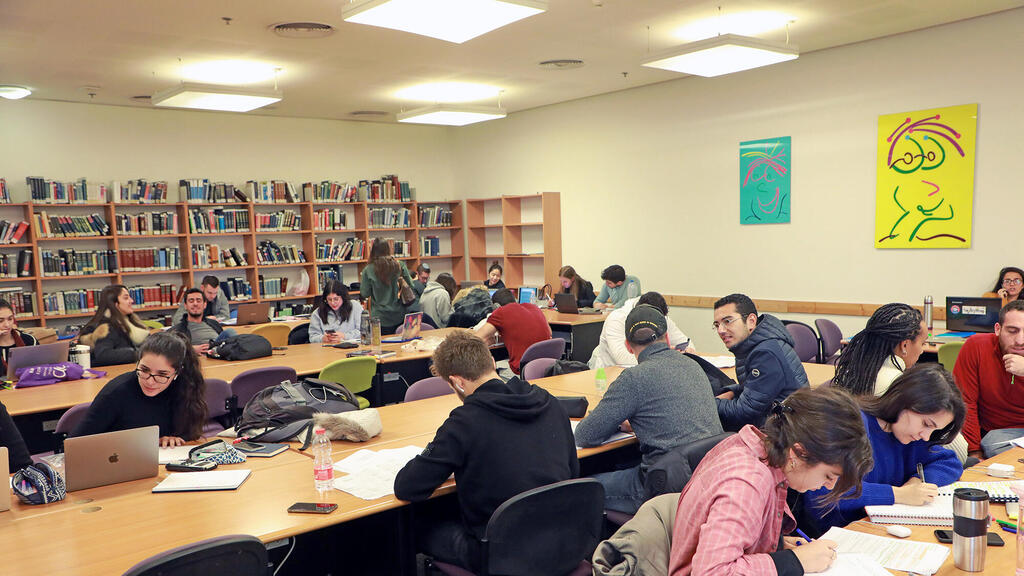
These changes are already beginning to show up in higher education. According to data from the Council for Higher Education (CHE) for the upcoming academic year, the number of undergraduate students studying mathematics, statistics and computer science fell by 7.4% over the past academic year, from 22,203 to 20,571. By contrast, the number studying artificial intelligence, data science and data engineering rose by 3.9%, from 2,174 to 2,259. Enrollment in engineering remained virtually unchanged. These figures exclude the Open University.
Data from the ISEF Foundation, which works to reduce social gaps through higher education and receives between 6,000 and 8,000 scholarship applications annually, point to a similar shift. The share of applicants seeking to study computer science and software fell from 14.8% of the foundation’s total applicant pool in the 2019-2020 academic year to 10.2% in 2026-2027. In the most recent year for which complete data are available, from 2024 to 2025, applications for computer science fell by approximately 9%, while applications for engineering rose by about 5%.
Rinat Buchholz, owner and CEO of Global Teams, a company that sources, recruits and manages global technology teams for Israeli firms, sees these changes reflected in the positions her clients are trying to fill. Global Teams operates in countries including Ukraine, Poland, Germany, Romania, Bulgaria and Spain, and works with companies in sectors ranging from autonomous vehicles and cybersecurity to agritech.
“Our clients are very diverse, so we can observe trends that apply across the board,” Buchholz says.
One trend is a shift away from narrow technological specialization toward a broader skill set. “There is a move away from sub-specialization; companies now generally seek ‘full-stack’ developers, professionals who, by leveraging AI tools, can address every aspect of system development. This encompasses not only the backend and frontend but also product and design elements, a shift that wasn’t the case just six months ago.”
A second trend is the growing preference for practical experience over academic credentials. “I see companies, even in conservative industries, seeking developers and engineers with hands-on experience, regardless of their formal education. There is a particularly high demand for developers with practical experience gained in classified military units. While such individuals have always been sought after, in the past, employers would check whether they had pursued a degree during their military service; if not, it was expected that they would work part-time while simultaneously completing an academic degree.”
Buchholz argues that prioritizing practical experience over a university degree can come at a cost, particularly when it leaves young developers without a solid engineering foundation. “When you hire a developer who finishes their military service at age 23, they lack the experience gained through academia; the absence of an engineering background is a significant drawback. To move forward and address a need that will only grow over time, there is a great demand for engineers. By prioritizing young candidates who forgo an engineering degree, we are essentially throwing a wrench in the works.”
In her view, future demand will extend beyond software developers and engineers to people with deeper mathematical and scientific training. “Anthropic notes that 80% of code is currently written by machines. Consequently, the core requirement has shifted toward defining problems, building models, understanding probability and uncertainty, and verifying the accuracy of the resulting outputs. These are not necessarily the strong suits of individuals who specialized solely in writing code. The people best equipped for these tasks are mathematicians and physicists. Universities must adapt to this evolving need.”
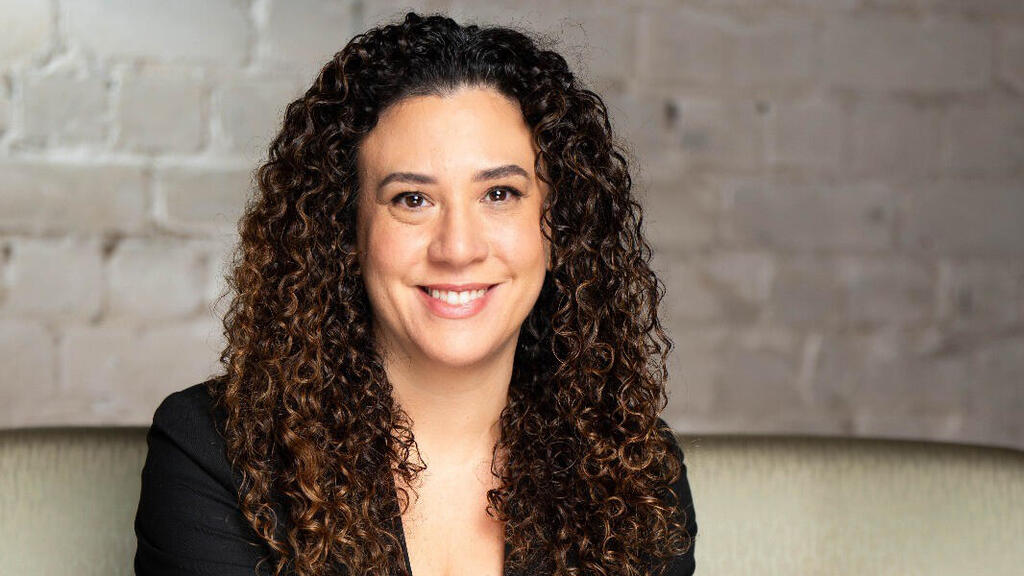
Anyone seeking to understand where the market is heading, Buchholz says, should consider mathematics, physics and engineering. “Anyone who wants to keep their finger on the pulse and understand where the market is heading needs mathematicians to work on the software side, and physicists to optimize the hardware, which is not yet sufficiently affordable or efficient. This is in addition to the need for engineers, who are the ones that build the systems. So, as a parent of a child with an aptitude for the exact sciences, I would steer them toward studies in engineering, mathematics or physics.”
Choosing a field of study, however, is only part of the equation. Buchholz advises students already pursuing degrees in engineering or computer science to build practical experience before they graduate by using AI tools to develop products that solve real problems.
“I advise any student midway through an engineering or computer science degree to start looking around, identify a need for a product that could make life easier, and begin developing it using AI tools designed for system development. They shouldn’t rely on the conventional path, searching for a job and gaining experience in the market, because that will be extremely difficult right now. Companies want to hear a candidate say, ‘I identified a pain point and solved it.’ If a student approaches a potential employer and says, ‘I spotted a pain point, built an application, and 800 people used it,’ that is the kind of capability employers are looking for. Such a candidate, even without a background in Unit 8200, will certainly earn extra credit.”
Wanted: a philosopher
Alongside mathematicians, physicists and engineers, Buchholz sees demand for skills rooted in fields that might appear unrelated to technology.
“I hear from industry leaders, including executives at Nvidia and Anthropic, that they are actively seeking individuals with a background in philosophy. One client mentioned looking for people who have studied the Talmud, as the study involves a level of rigorous, philosophical dialectical reasoning. Ultra-Orthodox individuals who have studied the Talmud and wish to enter the workforce bring with them creativity, analytical skills and problem-solving abilities.”
The humanities, which have seen student numbers decline in recent years, recorded a 10.9% increase in undergraduate enrollment in the 2025-2026 academic year, bringing the total to 10,429. The Council for Higher Education says it is too early to determine whether this marks a broader shift in the trend. At the same time, it is promoting the “Humanities 360” initiative, which aims to integrate humanistic knowledge, critical thinking and writing into curricula while encouraging institutions to update existing programs.
Data from the ISEF Foundation also point to growing interest in therapeutic and care-oriented professions. Social work was the only academic cluster in which the share of scholarship applicants increased throughout the period examined, nearly doubling from 3.2% to 6.1%. Applications for psychology rose by approximately 39% in the most recent full year.

Galit Caspi Cohen, CEO of the ISEF Foundation, attributes some of this growth to the three years of war and the resulting demand for therapeutic and other people-centered professions, which she says are less susceptible to replacement by AI.
Buchholz says universities are already responding to the changes. “I know that syllabi and courses at universities are being updated. The beauty of Israel is that we are leaders in terms of technological literacy; we are ‘early adopters,’ and this is naturally happening in academia as well. While it is true that academia is a more conservative and slower-moving institution, which is actually a good thing, as we want deep, thoughtful consideration regarding any new content introduced, they are, without a doubt, taking this extremely seriously.”
Even if universities adapt their curricula, a central challenge remains: how can graduates acquire the practical experience employers demand when entry-level positions are becoming harder to find?
“For the past two years, I’ve been arguing that Israeli high-tech companies should introduce internship or traineeship roles, much like law or accounting firms do, to give university graduates a chance to enter the workforce, even without prior practical experience. One could complete a three-year degree in computer science or engineering, followed by a one-year internship at a high-tech company. I tell every CEO I speak with that if they don’t hire these junior-level candidates, they are essentially shooting themselves in the foot.”
Universities also have a role to play, she says, by building partnerships with employers, granting academic credit for internships and enabling students to gain professional experience while completing their degrees.
Beyond technical skills
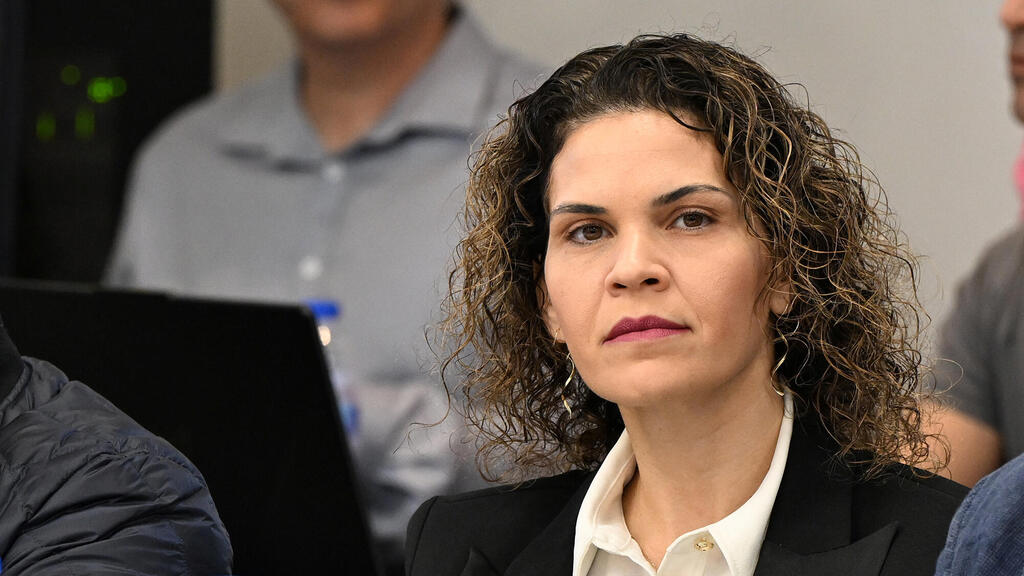
The Council for Higher Education is working to bring academic programs into closer alignment with the changing needs of the labor market. According to its director general, Dr. Maya Lugassi Ben Hamo, the Council has approved nine new programs in artificial intelligence, data science and data engineering through an expedited process. Six are due to launch in the upcoming academic year.
Academic institutions are also incorporating AI-related content and skills into existing degree programs, primarily in computer science and related disciplines.
To help students and graduates gain practical experience, the Council is promoting the “Academy 360” program, a NIS 200 million initiative that has already attracted 32 higher education institutions. The program aims to make practical experience and internships a structured part of degree programs while aligning curricula with labor-market needs.
“The connection between academia and industry is a prerequisite for remaining at the forefront of innovation; our goal is to create a continuous pathway where students, researchers and companies collaborate while studies are still underway,” Lugassi Ben Hamo says.
Her comments echo another trend identified by Buchholz: the growing importance of skills that are not necessarily technical. “Today, employers are looking for ‘soft skills’: teamwork, verbal communication, adaptability to change and conflict resolution. The objective is to incorporate these elements into the academic sphere. While it is easier to modify a syllabus than to develop frameworks for soft-skill training, this is a process that academia will need to undertake over time.”
These changes will take time, Buchholz acknowledges, but awareness of the need is growing.
The transformation may require more than adding new courses or degree programs. Caspi Cohen argues that universities should also reconsider how students learn. “The idea is also to create smaller learning groups, moving away from a single lecturer facing 300 students toward collaborative learning groups, project-based work, problem-solving, and a process of presenting and defending one’s work, with less reliance on a single AI-generated output.”



