










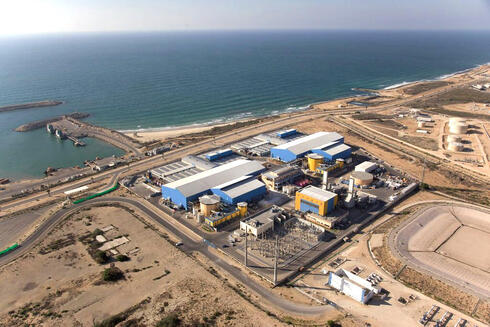
Five desalination plants are struggling. Israel won't say how it is making up the difference
The Water Authority says there is no shortage at the tap, but has declined to disclose key data on groundwater, the Sea of Galilee and contaminated wells.
Over the past two weeks, the Ministry of Energy and the Water Authority have boasted that the water sector is operating under immense pressure, amid an ongoing crisis that is shaking the system - all "without anyone feeling it at the tap." Yet behind the uninterrupted water supply are numerous unanswered questions that the Water Authority has failed to address.
On August 27, five desalination plants along the Mediterranean coast were suddenly shut down. A massive algal bloom disrupted their operations, and the problem continues to affect them. For more than two weeks, the plants have been operating at only partial capacity. Initially, authorities ordered farmers in the south to allow their fields to dry out, but they reversed the decision a day later following fierce criticism. Now, seemingly miraculously, no one is feeling the shortage.
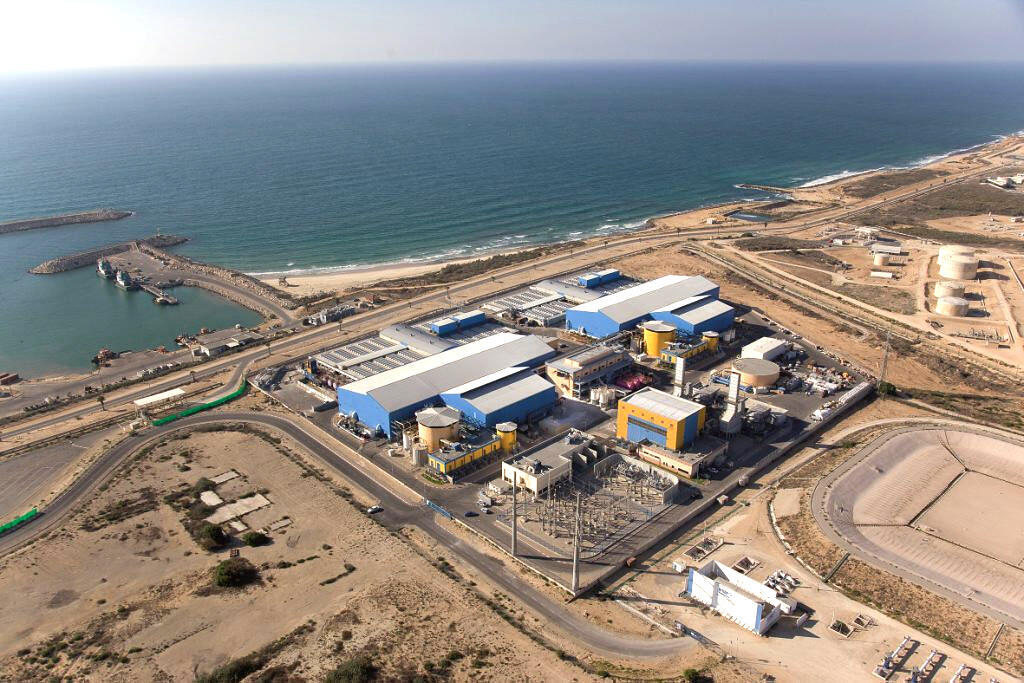
Yet it remains unclear to the public exactly how the state is bridging the resulting supply gap. About a week ago, Calcalist submitted a long list of questions about the handling of the crisis to the Ministry of Energy, which referred them to the Water Authority. The Authority provided only a partial response, leaving many questions unanswered. Even after public outrage over a secretive and opaque experiment involving a commercial company to eliminate the algae, the Authority did not provide a comprehensive picture of the situation.
One of the measures taken in response to the crisis was the reactivation of previously closed boreholes, including some that had been contaminated. The Water Authority did not disclose which wells were brought back into service, nor did it answer whether their use could affect the drinking water supply. The water may well be perfectly safe, but the public has not been told where the water flowing from its taps is currently coming from.
As for Energy Minister Eli Cohen, he personally oversaw the handling of media inquiries, limiting himself to two press conferences in which the professionals accompanying him were largely overshadowed and barely heard.
The cost of pumping
The Sea of Galilee is another source currently being used to supply the water sector. According to reports from the Kinneret Limnological Laboratory, a drop in the lake's water level below the "red line," as well as sharp fluctuations in water levels, can damage ecosystems and jeopardize water quality.
Yet the Water Authority has not disclosed how much water is currently being pumped from the lake, or the extent to which this pumping is contributing to the decline in water levels, measured in centimeters per week. It also did not answer questions about the potential impact on tourism and vacationers, or the extent to which pumping is depleting the lake following a severe drought year.
Regarding the risk of salinization, the Authority stated: "This is not the first time the Sea of Galilee's water level has dropped below the red line. In the past, such a drop caused no unusual damage to the lake. The theory that a drop in the lake's level could trigger an influx of saline water and cause the lake to become salty has proven incorrect."
2 View gallery

From right: Water Authority Director-General Yehezkel Lifshitz and Minister of Energy Eli Cohen
(Itay Dudi (Water Authority), Alex Kolomoisky)
Yet data on the volume of pumping and its consequences have not been released to the public.
A similar picture is emerging with groundwater. According to reports by the Water Authority itself, falling groundwater levels, particularly in the Coastal Aquifer, threaten water quality. Calcalist sought to determine how much water is currently being pumped from the Coastal Aquifer and the extent to which this pumping is contributing to falling water levels in its northern and southern sections.
The Authority responded that "to ensure water quality is not compromised, pumping wells are located primarily in the northern area, where groundwater levels are relatively high." It did not provide data on pumping volumes or changes in groundwater levels.
There is also an economic dimension. At a press conference a week ago, Minister Cohen said that potential damage to desalination plant membranes was estimated at several million shekels, describing it as a marginal cost for the water sector. However, the replacement of filters and membranes accounts for a significant share of desalination plants' maintenance expenses, alongside energy and chemicals, and represents approximately 11% of current operating costs.
While the state has announced that it will compensate the operators, the Water Authority did not clarify whether the replacement of membranes could ultimately affect water tariffs.
The extent to which the desalination plants were prepared for such an event also remains unclear. The Water Authority did not say whether the plants have "pre-treatment" systems designed to deal with marine pollution, nor did it specify what those systems consist of, their capacity or operating duration, or whether they were activated during the current crisis.
Despite the shortfall in desalinated water, there has been no significant public campaign urging people to reduce consumption, which could in turn reduce the need for additional pumping from groundwater sources and the Sea of Galilee.
In response to an inquiry from Calcalist, the Authority merely said that "the Water Authority asks the public to use water wisely." The request, however, has not been accompanied by a campaign urging consumers to reduce their usage.
The authorities emphasize that water continues to flow from the taps, but have provided little information about the price being paid to make that possible.
"The public should have been transparently informed about the water shortage and asked to cut back on consumption," a government official told Calcalist. "That was likely not done due to political considerations."
A crisis without a long-term plan
The lack of information extends beyond the immediate crisis. The Water Authority's master plan for the water sector has been sitting on the government's table for more than a year without approval. No answers were provided as to why the plan has not been approved or what the delay means for the water sector.
The same applies to the absence of a plan to rehabilitate the aquifer, a need that has become more pressing as the sector seeks alternatives to desalination.
Israel relies heavily on desalination for its drinking water, while many natural water sources have been neglected. The current crisis is exposing the consequences of that dependence.
The difficult questions are at odds with the reassuring picture presented by the minister and the Water Authority, which have emphasized the continued flow of water from household taps while providing limited information about the scale and consequences of the measures being taken behind the scenes.
The unpublished experiment
Inquiries from Calcalist and other media outlets appear not to have received the level of attention warranted by the circumstances. The limited responses provided by the authorities have, above all, left the public without a full picture of the crisis and its potential consequences.
This was particularly evident in the case of a hastily approved experiment involving the discharge of large quantities of chemicals into the sea. The Water Authority did not publicly disclose the experiment, and the Ministry of Environmental Protection also did not announce it.
BlueGreen's experiment to eliminate the algae using chemicals failed. On September 4, the company submitted another request for a permit to discharge even larger quantities into the sea. The reasons are unclear, but the request was withdrawn two days later.
For now, the Ministry of Environmental Protection says that "preliminary checks indicate no change in water quality attributable to the treatment operation." However, no official report detailing the experiment or its full results has been made public.
The current crisis raises broader questions. The consequences for Israel's natural water sources remain unclear, as does why many of them were neglected for years, leaving dozens contaminated by fuel and chemicals and out of use without rehabilitation.
Conversely, if the water sector can continue to function while desalination plants are operating at, at most, half their normal capacity, another question arises: Does Israel desalinate too much water under normal circumstances?
Climate change presents major challenges to the water sector, including in Israel, a country that may have come to regard its formidable desalination infrastructure as a safeguard against water shortages. But the current crisis has demonstrated that even desalination plants are vulnerable to natural forces. A single algal bloom can disrupt their operations or impose substantial costs on keeping them running.
As Mediterranean waters warm because of climate change, algal blooms could become more frequent. Israel therefore faces a question that extends well beyond the current crisis: Is the water sector prepared for a future in which the natural environment itself becomes a more serious threat to its most important source of supply?
For now, the public has few answers.



