










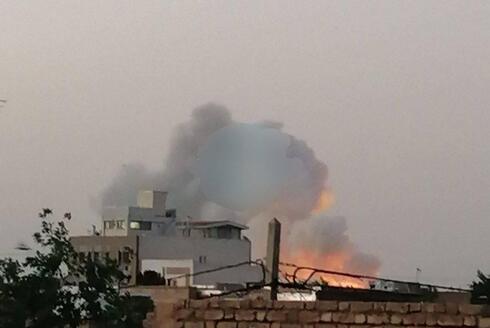
Israel-Iran escalation hits energy and trade arteries as petrochemical site in Mahshahr struck
Conflict once more expands beyond military targets, shaking oil, shipping routes, and regional financial markets.
The renewed escalation between Israel and Iran, which began last night and has continued into the morning, finds Tehran at a moment of deep economic weakness, but also at a point where the regime is attempting to project control at all costs.
Iranian reports of an attack on the Karun petrochemical facility in Mahshahr, alongside the Revolutionary Guards’ announcement of “Operation Nasr” targeting the Tel Nof and Nevatim airbases, highlight how the confrontation is once again expanding beyond military targets into economic, narrative, and global supply-chain dimensions.
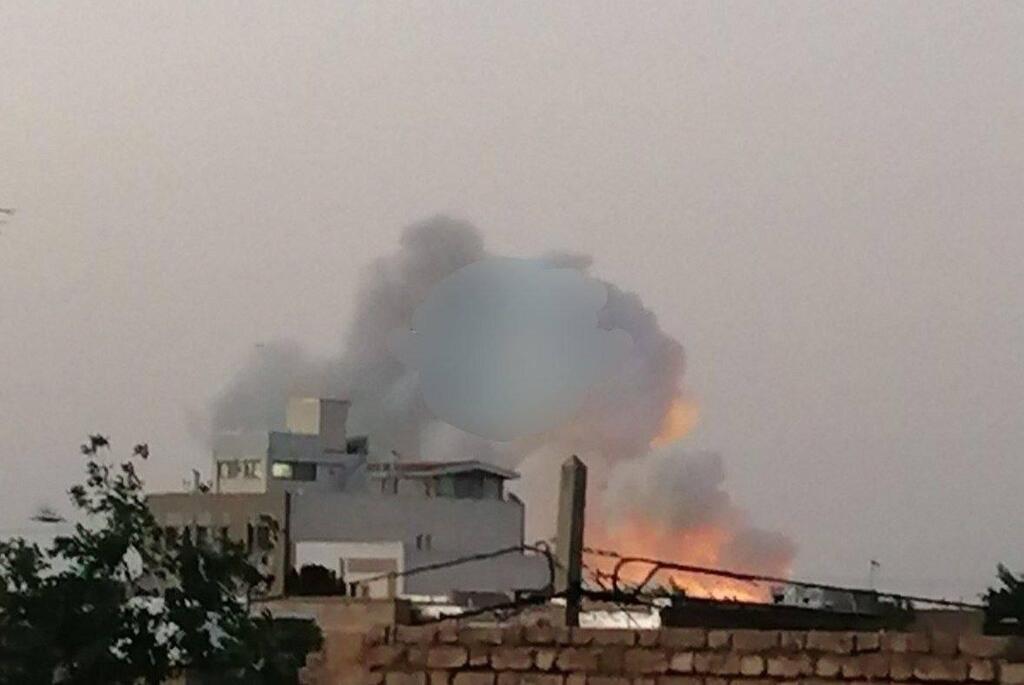
From Iran’s perspective, potential damage in the Mahshahr region is particularly sensitive. The area is one of the country’s key petrochemical hubs, close to the Persian Gulf and the Bandar-e Emam complex. Karun is not a marginal facility: it produces core inputs for the polyurethane industry, including TDI and MDI, used in insulation, automotive manufacturing, furniture, and sealing materials. It also produces significant quantities of nitric acid, a widely used industrial chemical that also has dual-use applications. Any damage to such a site is therefore not only a blow to civilian industry, but also a signal to Iran’s broader chemical and strategic production chain.
The wider economic implication is that the conflict is once again targeting Iran’s foreign-exchange lifelines. After oil, petrochemicals are one of the regime’s most important sources of hard currency. The sector functions as a financial artery that helps Iran partially offset sanctions pressure, sustain imports, and maintain industrial activity under tightening restrictions. Any disruption therefore reverberates far beyond the local facility, signaling vulnerability in one of the economy’s key remaining revenue streams.
This morning, pressure from Iran-aligned actors escalated further, with the Houthis in Yemen issuing a threat to effectively close the Red Sea to Israeli or Israel-linked vessels. The move risks turning the conflict into a two-front maritime squeeze: Iran in the east through the Strait of Hormuz, and its regional proxies in the west at Bab el-Mandeb. For global shipping markets, the implication is immediate, rising costs, rerouted vessels, and sharply higher risk premiums across two of the world’s most critical trade arteries.
Iran enters this escalation after months of structural economic strain: restricted port activity, pressure on exports, chronic foreign-currency shortages, and elevated volatility. In this environment, any escalation quickly feeds through to higher insurance costs, reduced tanker traffic, and broader financial instability. This morning, Iran’s local markets reflected the tension: the rial weakened to around 1.8 million per dollar (a daily decline of about 0.6%), while the Tehran Stock Exchange, which had recently rallied, fell by roughly 70,000 points.
In global markets, the central concern remains freedom of navigation and energy supply. Oil prices rose more than 4.5% this morning, with Brent crude hovering near $98 a barrel, as investors priced in the risk of broader disruption to shipping routes. This comes even as OPEC+ attempts to signal stability through higher production quotas, a move that has limited impact if physical transport, insurance, and safe passage are increasingly in question.
Gulf states, led by Saudi Arabia and the United Arab Emirates, are watching closely. While they may benefit in the short term from higher oil prices, they are acutely aware that prolonged instability would damage shipping, aviation, tourism, and foreign investment, ultimately offsetting any temporary gains.
The current escalation underscores once again that the Israel-Iran confrontation is no longer confined to the military sphere. It is increasingly being fought through the arteries of global trade, energy flows, and financial stability.



