










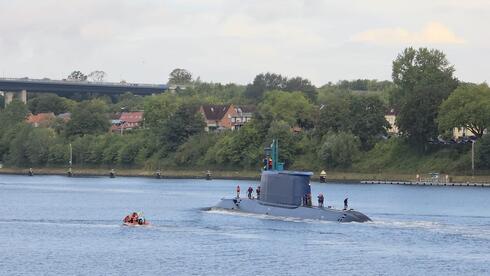
Israel’s largest submarine arrives as Navy prepares to expand fleet
The 74-meter INS Drakon completes a nearly month-long voyage from Germany as Israel reassesses its naval needs amid growing threats to freedom of navigation.
The Israeli Navy is set to receive its sixth submarine on Thursday, as the arrival of the INS Drakon comes at a time when Israel is preparing to significantly expand its naval forces.
The 74-meter, 2,600-ton Dolphin 2-class submarine has completed a 3,792-nautical-mile voyage of nearly a month from Thyssenkrupp Marine Systems’ shipyard in Kiel, Germany. It is the largest and heaviest submarine ever to enter Israeli service.
The Drakon is the final submarine in Israel’s Dolphin AIP series and will also serve as a bridge to the Navy’s future fleet of three Dakar-class submarines, which are being developed with Germany. Much of the Drakon’s technology and capabilities remain undisclosed.
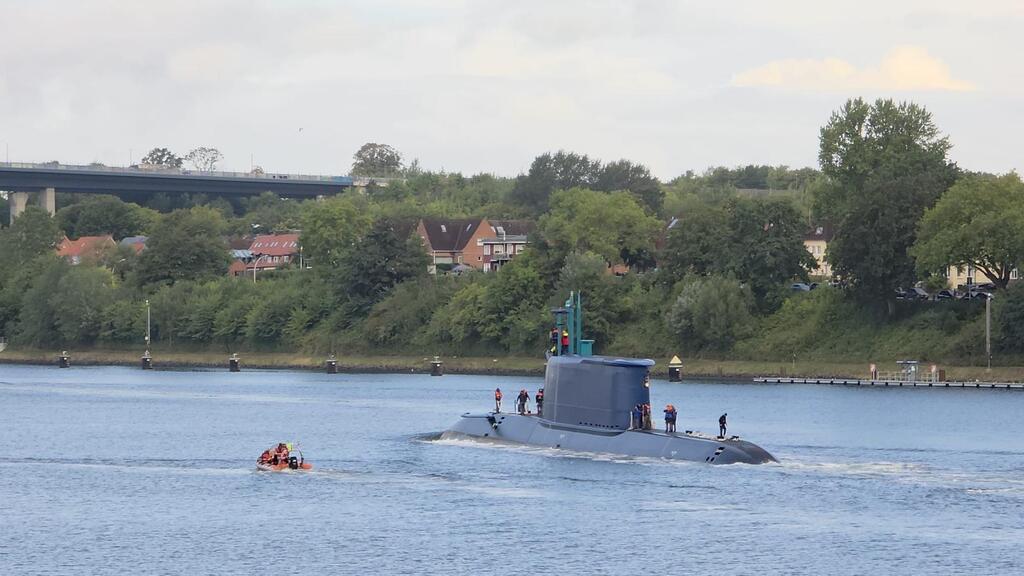
The Israeli Defense Ministry has described the vessel as containing “unique systems” and “groundbreaking technologies,” but has provided little detail about them. That leaves a substantial gap between what is known about the submarine’s physical characteristics and what is known about its actual capabilities.
The Drakon is the third and final Israeli submarine equipped with air-independent propulsion (AIP) in the Dolphin series. The technology allows the submarine to remain submerged for longer periods without needing to surface for air, a feature consistent with the Navy’s emphasis on long-range and covert operations.
Its journey to Israel was itself unusually sensitive.
The submarine left Kiel at the beginning of September and traveled toward Israel under heavy security. Its movements were kept secret and it traveled submerged through the Mediterranean, reflecting concerns that regional and global powers could attempt to gather intelligence about the vessel during its passage.
Even before that voyage, the delivery had encountered delays. Navy officials said the handover was pushed back by several months after Denmark and Norway prevented TKMS from carrying out tests in their deep waters. The shipbuilder instead had to take the submarine farther into the North Sea and conduct the tests in international waters.
The Drakon will not immediately become operational after arriving in Haifa. The Navy expects to spend two to three months installing Israeli systems, with the submarine becoming operational only several months later.
Its arrival comes as the Navy reassesses the size of the force it needs. Officials say other countries bordering the Mediterranean, including both allies and countries with which Israel has strained relations, operate significantly larger navies.
The Navy has also drawn lessons from recent disruptions to shipping in the Strait of Hormuz and the Bab el-Mandeb, where Iran and the Iran-backed Houthis have restricted freedom of movement and affected major shipping routes.
Israeli officials are concerned that similar threats to freedom of navigation could emerge elsewhere, including in the Mediterranean.



