










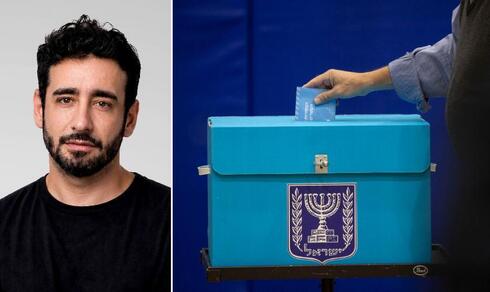
CHEQ CEO warns AI-powered bots could distort Israel’s next election
Guy Tytunovich says the combination of AI-generated content and increasingly sophisticated bots could make foreign and domestic influence campaigns significantly more powerful than in previous elections.
Guy Tytunovich, founder and CEO of CHEQ, a company that protects organizations against non-human online activity, says Israel’s upcoming election could face a new scale of bot-driven influence campaigns as generative AI makes it easier to create convincing fake content and operate armies of seemingly authentic accounts.
Earlier this month, police warned technology companies to prepare for bot attacks and fake news ahead of the election. How concerning is this?
“The police occasionally send out warnings: ‘Companies, beware: bots, attacks,’ especially around political events like elections. Every time, I tell them: ‘Regulation, gentlemen.’ Anyone can build bots, and it’s very easy, especially in the AI era. No one is lifting a finger to prevent dark forces from influencing public opinion. Our enemies are now going to flood Twitter and other platforms, including news sites that feature user-generated content such as comment sections or polls, with fake news.”
What can we expect to see in the upcoming election campaign?
“Over the last decade in Western countries, political outcomes have been shaped by influence campaigns that rely primarily on bots. In the AI era, this problem is far more acute. Consequently, in this election, votes will shift one way or the other due to fake content disseminated by bots.”
Do you anticipate that bots will actually shift parliamentary seats in the upcoming election?
“Absolutely. It will happen involving tens or hundreds of thousands of votes, and seats will shift because of one ‘poison machine’ or another.
“This is the first election campaign in Israel where AI plays such a powerful role. This technology is improving at a speed I haven’t seen in any other field: what was amazing six months ago is obsolete today. The ability to generate large-scale fakes and disseminate them via bots is vastly more powerful than it was during the previous election campaign four years ago. The impact of these tools on the current election will be, by a wide margin, the most severe in Israeli political history.
“We see billions of interactions daily from around the world. As a business, our primary market is the US, which serves as the ultimate litmus test: bot traffic on social media surges three- or fourfold a month before a political event. We aren’t quite a month out from the Israeli elections yet, so we haven’t seen a shift yet, but we expect it to happen any moment.”
What should we expect in the month leading up to the election?
“The first and most obvious sign is a spike in the percentage of bots within the traffic coming from news sites and social media. Take traffic to Disney, for example: if yesterday a certain number of users visited, with 20% being bots, suddenly you see 60% bots.”
What does it mean when there are more bots?
“It’s the first signal. We consistently see this pattern in Western political systems, including Israel’s. You have to ask yourself: why is there suddenly such a sharp rise in non-human activity?
“Since I don’t spend time on Twitter or Facebook, I can’t say exactly what they’re doing there, other than noting that they are far more active. Based on my experience in the defense establishment, this sharp increase revolves around public opinion manipulation, specifically through online comments, poll participation and leveraging the viral nature of social media to boost certain posts.
“In some instances, this is an internal affair, with one party targeting another, but in many cases, such as in the U.S., it is rarely domestic, stemming instead primarily from foreign influence, like that of China or Russia.
“Let me give you a few examples. Another instance involves polls, whether they are seat projections or surveys whose results are never even published. There is a well-known Israeli news site that posts daily polls without disclosing who commissioned them. These polls consist of two or three questions, and you don’t get to see the results at the end.
“The questions might be something like: ‘Do you think Ofer Winter’s announcement about forming a new party will hurt Bibi’s chances of establishing a right-wing government?’ The results aren’t made public, but the data goes to a specific entity, and there are people who want to ensure that entity receives a distorted picture.
“Another example from social media, which is by far the most significant use case, is exploiting the virality effect: publishing a fake news post. Today, it is incredibly easy to make such a post look credible using deepfakes. For instance, you could create a video where Bibi, using his own voice and likeness, admits he would vote for Yair Golan, and it would look completely authentic.
“If you want the post to reach hundreds of thousands of people, all you need to do is get a vast number of fake accounts, bots and AI agents, which look exactly like real users, to like, reshare, post and forward it. The algorithm detects that people are engaging with the post and decides it is worth promoting. As the virality algorithms boost it, more and more people are exposed to a false picture.”
Don’t social media networks have ways to detect inauthentic activity and deny it a platform?
“Some do. Google’s YouTube has a team and internal technology that do a decent job, though they can’t cover everything. Facebook also has an internal team, yet they fail to catch even a fraction of it.
“Then there is X, the global cesspool of content, where they don’t even really try anymore, ever since Elon Musk bought the company.
“In any case, preventing this phenomenon is extremely difficult. When you are YouTube, Google, Facebook or X, you are a sitting duck. The attacker knows exactly who they are fighting, and Google cannot hide. Consequently, it is easier for the attacker to succeed against them than against a moving target.
“They face a difficult task, one they are clearly failing to handle, and when it comes to news sites, most don’t even try.”
What is the impact of AI on this landscape?
“The impact is felt on many fronts. First, the democratization of technological capabilities: five years ago, creating bots required programming skills or paying someone who had them. Today, you simply need to know a language, like English or Hebrew. It is incredibly easy to build a bot army using AI.
“Second, the sophistication of the agents. An AI agent appears far more human-like than the bots of the past. AI enables the agent to mimic human activity, moving the mouse in a natural way and faking behavior, making it very difficult for companies to identify them as non-human users.
“Third, massive-scale content generation. It’s not just that the content sounds more coherent than machine translation. With the click of a button, one can generate 10,000 different posts, including video and text, and distribute them. It’s no longer a matter of copy-pasting the same comment over and over; instead, every post sounds completely original.”
The Central Elections Committee has announced that parties and politicians generating content using AI must label it. Will this have an impact, or is it merely a marginal issue?
“I want to believe that in Israel and Western democracies, it works, because people obey the law. Such a law can be effective, but it only applies domestically. If Qatar or Turkey wanted to distribute a video promoting a specific candidate tomorrow morning, they wouldn’t be subject to this regulation.”
Has this had a tangible impact on election outcomes, or does it primarily foster division, undermine democratic foundations and erode trust?
“I don’t know. I can say, however, that regarding non-political events, for instance, after October 7, we saw a vast number of comments and posts written to appear as if they came from Israelis, all aimed at damaging national morale.
“This might not shift two parliamentary seats from one side to the other, but it illustrates how foreign influence operates: posts, likely from Turkish, Iranian and Qatari sources, masquerading as Israelis writing defeatist messages like, ‘We’re done for; this is the end of the state.’
“We saw unequivocally that this wasn’t written by Israelis. Another example involved the promotion of Qatar. The Qataris used a wide range of methods to generate content designed to make the public like them, and it’s working. There are also attacks using bots to disrupt public order.”
As a user, how can I protect myself against such bots?
“That’s the biggest challenge. In my view, as with many situations where private citizens are at risk, the state needs to protect them to the best of its ability. Aside from being skeptical about everything they see online, there’s nothing a private citizen can do.”
Can I take a suspicious post, feed it into Gemini or ChatGPT, and ask whether it’s real, fake or bot-generated?
“Gemini and similar tools would never be able to tell whether it’s real or not. When Bibi said during one of the election campaigns that ‘the Arabs are flocking to the polls,’ would Gemini have been able to tell you if that was true? AI can’t help with most of these things. In most cases, ChatGPT itself cannot even identify content that was generated by ChatGPT.”
Google has SynthID.
“True, and Anthropic has released content featuring a specific type of digital watermark, yet we remain far from having the full capability to detect it. That said, X features ‘Community Notes,’ which are managed by AI. This system, too, is susceptible to bot manipulation: while users typically write factual statements backed by evidence, AI-era bots can mimic this process precisely to distort the Community Notes.
“The state and various websites have a duty to protect citizens, and regulation is the only way to achieve this. The state could mandate, through regulation, that any site hosting user-generated content adopt technologies capable of detecting fraud and non-human behavior. Such regulations are currently being developed in the U.S., though not yet in Israel.
“All that is required is for legislators or regulators to decide to address the issue. Once news sites and social media platforms are subject to such regulations, meaning that if Israel enacts them, companies like Facebook and X would be required to comply locally, and adopt the necessary technological solutions, the problem will be resolved.
“We simply need to compel these entities to ‘get vaccinated’ against the issue. It is a solvable problem.”



