








Israel’s quantum boom: Startups hit $500 million in funding in 2025
Five companies across the hardware-software stack position Israel among the world’s most dynamic quantum hubs.
Israel’s quantum computing sector is experiencing a breakout year. In 2025 alone, five Israeli quantum companies have raised almost $500 million, an influx of capital that places the country among the most active and diversified quantum hubs in the world. The companies - Quantum Art, Classiq, QuamCore, Qedma, and Quantum Machines - span nearly every layer of the quantum stack, from hardware and scaling architectures to control systems and error-correction software.
Quantum Art: A Hardware Bet With an Aggressive Roadmap
The most recent deal came on Wednesday, when Quantum Art announced a $100 million Series A, bringing its total funding to $124 million. The round was led by Bedford Ridge Capital with participation from Battery Ventures, Destra Investments, Lumir Growth Partners, Disruptive AI, Harel Insurance, and others, alongside continued investment from Amiti Ventures, StageOne Ventures, Vertex Ventures, Entrée Capital, and the Weizmann Institute of Science.
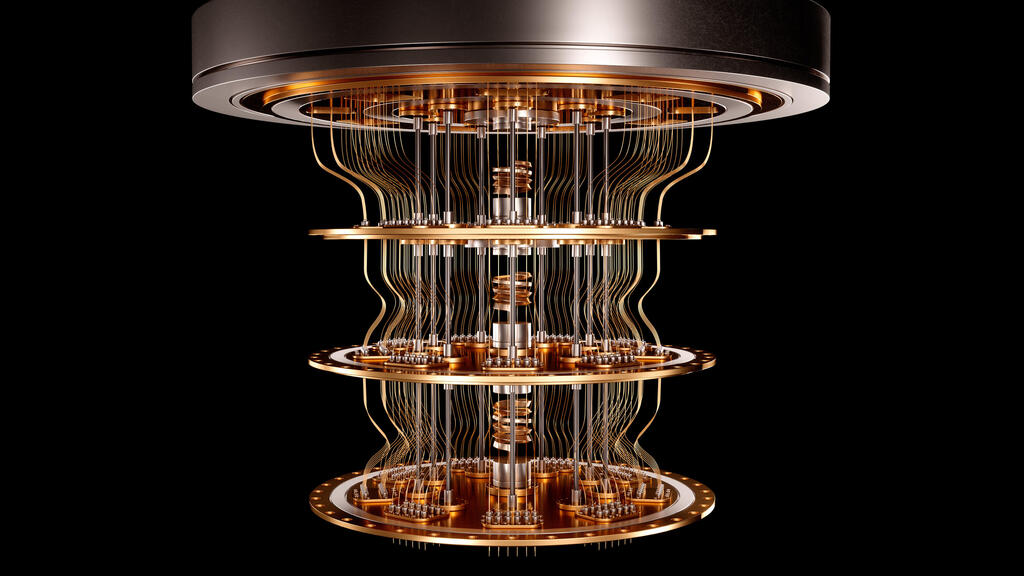
Founded as a spin-off from Prof. Roee Ozeri’s group at the Weizmann Institute, the company is led by Dr. Tal David (CEO), Dr. Amit Ben Kish (CTO), and Ozeri (CSO). It specializes in trapped-ion quantum computing, a field long known for precision but criticized for scalability. Quantum Art argues it has solved key challenges through proprietary techniques in multi-qubit gates, modular architectures, and robust error correction.
In June, the company unveiled an unusually detailed roadmap targeting Quantum Advantage by 2027 and a one-million-qubit system by 2033. The timeline includes a 50-qubit system next year; a 1,000-qubit “Perspective” line in 2027; an ultra-dense 12,000-40,000 qubit “Landscape” platform; and ultimately a fault-tolerant “Mosaic” architecture.
Classiq: Software as the Missing Layer
On the software side, Classiq raised an estimated $30 million in November in an up-round that included AMD Ventures, Qualcomm Ventures, IonQ, and major financial institutions such as Mirae Asset Capital, Bank Leumi’s LeumiTech77, and Quantum Eretz. The company has now raised more than $200 million to date, following a $110 million Series C completed just six months earlier and an additional $10 million investment from SoftBank.
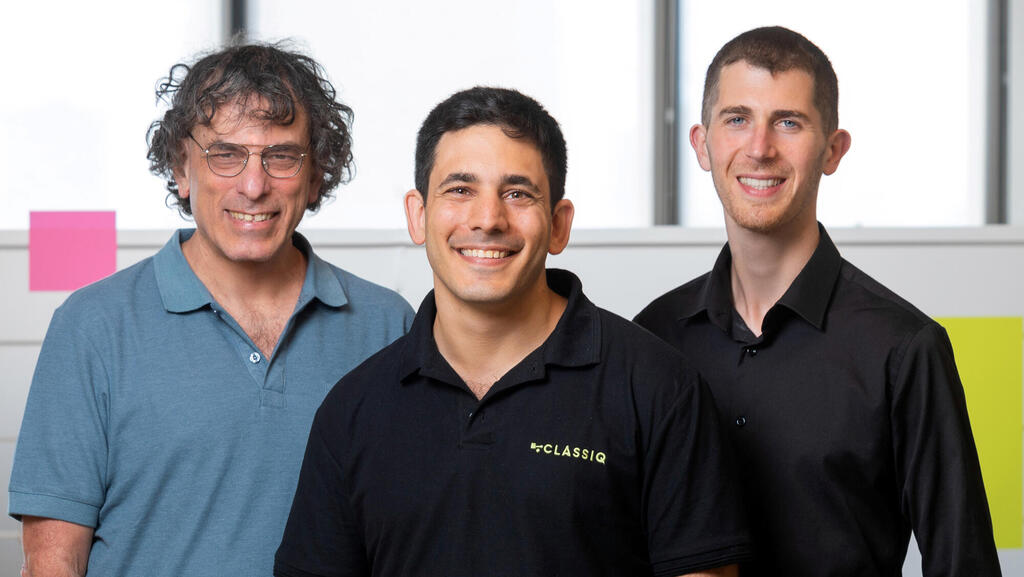
Classiq builds an operating system and development environment that translates high-level goals into quantum circuits, allowing organizations to build applications without deep knowledge of quantum physics. Its partnerships with NVIDIA, Microsoft, and AWS, and customers including BMW Group, Comcast, Rolls-Royce, Citi, Toshiba, and SoftBank, suggest that enterprises increasingly see value in preparing for quantum computing years before the hardware matures.
Founded in 2020 by CEO Nir Minerbi, CPO Amir Naveh, and CTO Dr. Yehuda Naveh, the company employs 100 people, three-quarters of whom are based in Israel.
QuamCore: The Race to a Million Qubits
In August, QuamCore raised $26 million in a Series A that brought its total funding to $35 million, including a $4 million grant from the Israel Innovation Authority. The round was led by Sentinel Global, with participation from Arkin Capital and returning investors Viola Ventures, Earth & Beyond Ventures, Surround Ventures, Rhodium, and Qbeat.
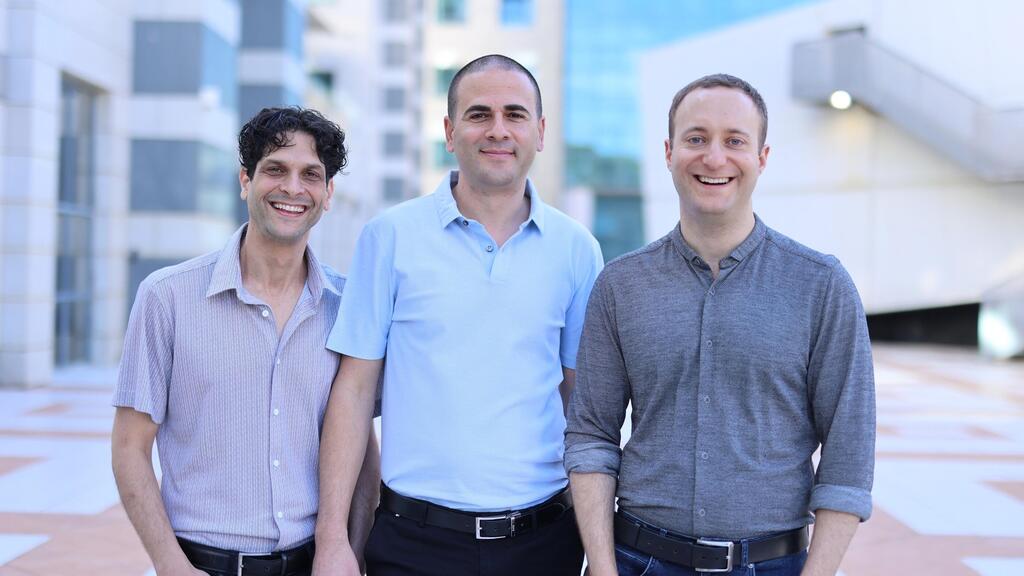
QuamCore claims to have developed a fully designed and simulated architecture for scaling superconducting quantum systems to one million qubits in a single cryostat, far beyond the ~5,000-qubit per-module limit achieved by Google and IBM. If validated, the approach would fundamentally rewrite assumptions about the physical limits of superconducting systems.
The company is led by CEO Alon Cohen, formerly of Mobileye’s EyeC Radar Group, and CTO Prof. Shay Hacohen-Gourgy and Chief Scientist Prof. Serge Rosenblum, both leading figures in superconducting quantum research at the Technion and the Weizmann Institute. Their combined academic work has appeared in Science, Nature, and other top journals.
Related articles:
Qedma: Fixing Quantum Computing’s Biggest Problem
Error rates remain the defining barrier to practical quantum computing, and Israeli startup Qedma has positioned itself squarely at this chokepoint. The company raised $26 million in July in a Series A led by Glilot+ with participation from IBM, Korean Investment Partners, and others.

Qedma develops software that identifies and learns the noise profile of each quantum device and adjusts algorithms to suppress and mitigate errors. The company claims its methods can enable quantum calculations up to 1,000 times larger than today’s hardware alone can support. That would dramatically reduce the overhead required for quantum error correction, which typically consumes up to 1,000 physical qubits for every single logical qubit.
The company traces its origins to a 2020 conversation between Prof. Netanel Lindner and Dr. Asif Sinay, later joined by Prof. Dorit Aharonov, a pioneer of the fault-tolerance theorem that proved large-scale quantum computing was theoretically possible. Their weekly discussions evolved into a startup aiming to build the “operating layer” that quantum machines currently lack.
Quantum Machines: Control Systems Become Strategic
The year’s largest raise came in February, when Quantum Machines closed a $170 million Series C, bringing its total investment to $280 million and valuing the company at an estimated $700 million. PSG Equity led the round with participation from Red Dot Capital Partners, Intel Capital, TLV Partners, Battery Ventures, and entrepreneur Avigdor Willenz.
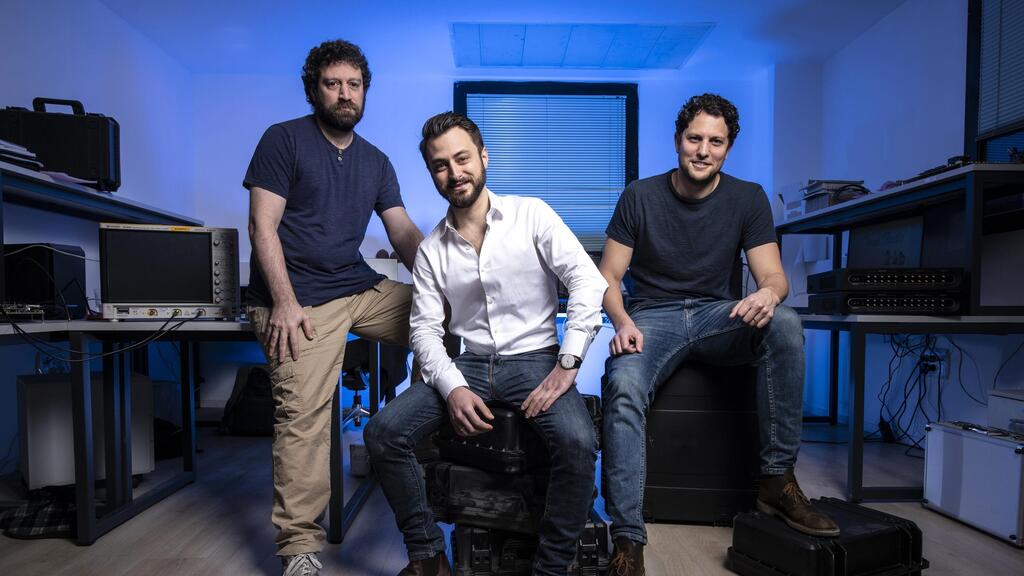
Quantum Machines builds hybrid control systems used across nearly every type of quantum hardware. Its technology has seen broad global adoption, including through a strategic collaboration with NVIDIA on DGX Quantum, which integrates real-time quantum control with high-speed classical computing.
The company was founded in 2018 by Dr. Itamar Sivan (CEO), Dr. Yonatan Cohen (CTO), and Dr. Nissim Ofek (VP R&D), all alumni of the Weizmann Institute’s Submicron Center.



