










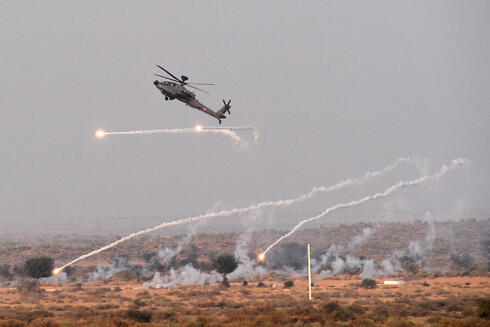
The Apache deal fell through. Two more major Israeli defense purchases are at risk
Israel missed the deadline to order 12 attack helicopters worth about $1 billion after three extensions failed to resolve a budget dispute between the Ministries of Defense and Finance. Two more major procurement decisions, covering aerial refueling and transport aircraft, are approaching with their funding still in doubt.
Had Israel not become a country reluctant to examine its own failures and shortcomings, the circumstances surrounding the missed opportunity to purchase Apache helicopters for the Air Force might well have been the subject of an inquiry. Over the past year, the U.S. Department of Defense granted Israel three extensions to the deadline for ordering 12 attack helicopters, aircraft the Air Force wants to acquire to improve its readiness for the range of threats it expects to face in the coming years. Yet even those extensions proved insufficient for the Ministries of Defense and Finance to secure the necessary funding. Ironically, the final window of opportunity closed on October 7, the third anniversary of the Hamas-led attack.
The failure to secure the Apache deal is a tangible consequence of the ongoing, unresolved budget crisis between the Ministries of Finance and Defense. The crisis extends beyond unprecedented debts owed to defense industries and delays to urgent weapons orders. It now threatens to exact a heavy operational price on the battlefield.
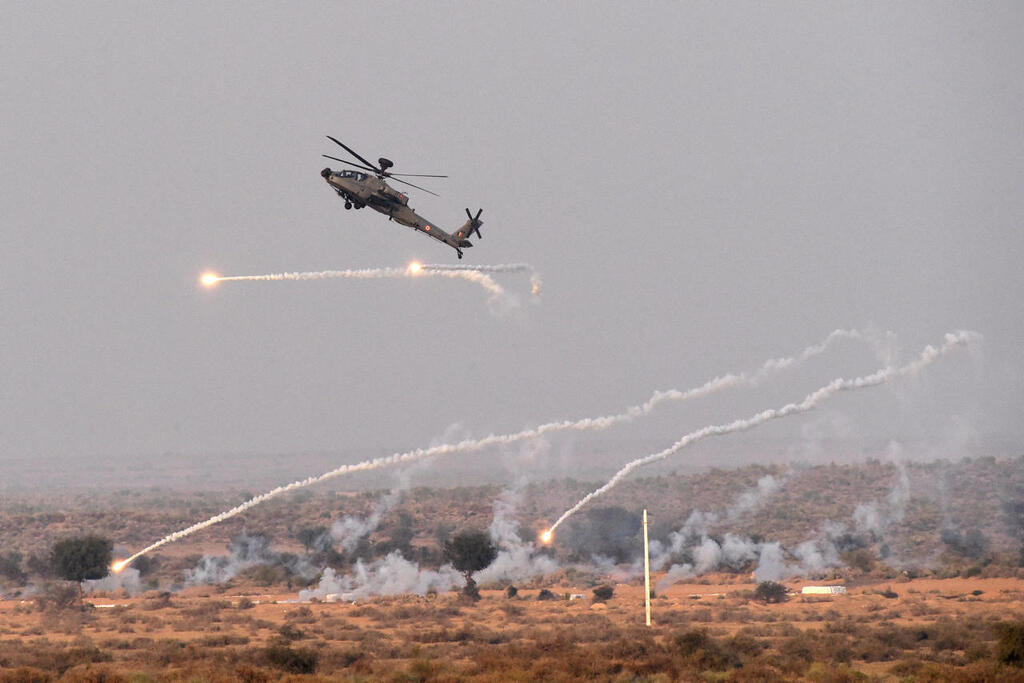
For now, at least, a senior security official warned Calcalist that the attack helicopters, intended to increase firepower and improve the Air Force's response time to surprise attacks by incorporating lessons from October 7, are likely to be offered to other countries, potentially including Saudi Arabia, Egypt or Jordan. The deal is valued at approximately $1 billion, and the Air Force, the Ministry of Defense and the National Security Council agree on the need for the purchase. The procurement plan was also included in a report by a committee examining the defense budget and IDF force buildup, chaired by Jacob Nagel, which was submitted to the prime minister and defense minister about two years ago, against the backdrop of the war and its impact on the state budget.
The Air Force's attack helicopter fleet consists of dozens of Apache helicopters, the oldest of which entered service more than 35 years ago. The most advanced models in the fleet were delivered about two decades ago, while the inventory has also been supplemented with used helicopters retired from U.S. Army service. In the years leading up to October 7, the Air Force and the IDF sought to significantly reduce the number of aging helicopters in the fleet. Maintenance costs had soared, becoming an increasing burden even as a growing share of aerial operations shifted to remotely piloted aircraft (RPAs).
"October 7 sharpened our understanding that in many combat scenarios, attack helicopters still hold a distinct advantage over RPAs," a former senior Air Force official told Calcalist. "There is a huge advantage in having a battalion commander on the ground able to speak directly with a pilot hovering over the combat zone to coordinate precise, high-intensity strikes, capabilities an RPA simply cannot match."
Aside from the name, the Apache helicopters at the center of the failed deal bear little resemblance to the models the Air Force has operated for decades. The AH-64E models are equipped with advanced radar, sensors and fire-control systems that enable them to detect, identify and engage targets at long range, including in adverse weather and poor visibility. According to manufacturer Boeing, they also provide aircrews with significantly improved situational awareness compared with older models. The helicopters can also operate in coordination with unmanned aerial vehicles (UAVs), receiving data from them and controlling aspects of their operations. This expands their capabilities for strikes, reconnaissance and close air support for ground forces.
"What happened here is more reminiscent of the conduct of a third-world country than that of a nation insisting on calling itself advanced," a senior officer familiar with the details said. "Planning for the helicopter procurement took more than two years. The sums and terms were agreed upon in a way that secured Israel a favorable slot on Boeing's production line, allowing for delivery within just a few years. Yet power struggles with the Ministry of Finance repeatedly prevented us from placing the order. It is a level of absurdity that uniformed personnel with decades of service have never seen before. If a commission of inquiry is ever established into the events of the past three years, this issue must be on its agenda."
The dispute between the Ministry of Finance and the Ministry of Defense centers on $288 million, roughly one-third of the deal's total cost, for which no budgetary source could be identified for the coming years because of constraints imposed by the government's "Numerator" mechanism. As a result, even though payments for the helicopters were to be spread over several years, the Ministry of Defense could not commit to the purchase without first securing a source for the full amount.
When Israel purchases helicopters or fighter jets from the United States, it conducts the transactions through the U.S. Department of Defense under standard government-to-government procurement procedures. The helicopters intended for Israel were to be included in the Pentagon's order from Boeing as part of its ongoing procurement plans for the U.S. military.
"An untenable situation arose: we were delaying the U.S. military's own procurement schedule because it was waiting for us, and the deadline was October 7," a senior defense official said. "Since we failed to place the order, the matter is closed and the deal has fallen through. If it is revived, the terms will be less favorable to us. The cost will be higher, and the delivery timeline will be longer." The official added: "This is the price of the mess no one wanted to clean up."
Two more deals at risk
Two other major procurement decisions are approaching, and their fate could mirror that of the Apache deal. In about two months, the deadline arrives for the Ministry of Defense to order two KC-46 aerial refueling aircraft, valued at approximately $500 million, to supplement the six already ordered from Boeing. A few weeks later, the deadline expires for expanding an order of 12 CH-53K transport helicopters by adding six more from Lockheed Martin's Sikorsky division, at a cost of around $1 billion. The aircraft are intended to replace the aging Yasur fleet, which has served the Air Force for more than five decades.
"If the Apache deal, which already had an approved budget, fell through because of the Ministry of Finance's Numerator constraints, the situation with these two deals is far worse, as there is no budgetary source for them whatsoever," a senior officer said.
Both purchases were advanced on the basis of a supplementary budget of approximately NIS 350 billion to NIS 400 billion within a multiyear framework announced at the end of last year. Prime Minister Benjamin Netanyahu is involved in discussions over funding intended to be added to the defense budget baseline over a period of more than a decade, beginning in 2027. Among other objectives, the plan is intended to bridge the gap that could emerge if annual U.S. security assistance to Israel, currently totaling approximately $3.8 billion, is reduced after the current arrangement expires at the end of 2028.
Under the emerging framework, which is expected to begin in 2029, the cash component of U.S. funding for Israeli armaments would gradually decline, with greater emphasis instead on industrial and research cooperation between the two countries' defense sectors. U.S. President Donald Trump has expressed opposition to distributing billions of dollars in American taxpayer money abroad, while Netanyahu, seeking to align with the White House, has argued that Israel must begin weaning itself off U.S. aid.
A team led by Ministry of Defense Director General Amir Baram has recently begun discussing the details of the new framework with the U.S. administration. No agreement has been reached, but the defense establishment is actively debating when the transition away from aid should begin.
"In the long run, there is no doubt that Israel needs to wean itself off security aid. It is capable of standing on its own two feet. But now, of all times?" a former senior Air Force official asked Calcalist over the weekend.
The emerging reality is that a significant portion of U.S. aid may no longer flow to Israel in the same way over the coming decade. At the same time, the plan to add hundreds of billions of shekels to the defense budget, on which the IDF has based its long-term procurement planning, is now in serious doubt.
About a month ago, Netanyahu summoned opposition leader Yair Lapid in an attempt to secure his support for reopening the state budget during the election period. The aim was to authorize the defense establishment to make financial commitments against the expected supplementary budget and place urgent orders worth tens of billions of shekels. Lapid conditioned his support on halting the transfer of coalition funds to ultra-Orthodox parties, and the meeting ended without a resolution.
"For nearly a whole year, we thought the money was just around the corner," a senior officer said with frustration. "After all, we heard the prime minister himself speak about it and urge the finance minister to advance the matter. Then, suddenly, nothing at all. It felt like a judo match where we'd been hit with an ippon."
The trouble is that the State of Israel has dealt this blow to itself. The current decision-making process bears little resemblance to the defense establishment's plans, which envision a decade of intensive procurement to replenish the munitions and key combat systems needed after the war and in preparation for future conflicts. Israeli elections are due to take place in about two weeks, while U.S. midterm elections are scheduled for early November. In the meantime, the country remains stuck in an unprecedented and dangerous deadlock.
"At best, funding to accelerate procurement won't be secured for another six months. By then, the entire world will be caught up in an arms race that is driving up prices and, more importantly, delaying delivery schedules," a senior defense source warned. "All this is happening while the Iranians are accelerating their missile production and preparing for an opportune moment to strike us."
Over the weekend, officials at the Ministry of Finance shifted responsibility for the complications surrounding the Apache deal onto the defense establishment. They claimed that the Ministerial Committee on Procurement had approved the deal based on a framework presented by the defense establishment, but that the latter subsequently changed the framework in violation of its own commitments and budgetary constraints.
Meanwhile, a dispute that began over how to finance the attack helicopter purchase has evolved into a more fundamental debate over whether the aircraft are needed at all. Senior Finance Ministry officials have begun challenging the Air Force's operational doctrine.
"We have heard from quite a few professionals who believe the era of attack helicopters is over," a senior Finance Ministry official told Calcalist, declining to identify those individuals.
"The defense establishment wants expensive, manned helicopters that will serve it for years to come, even though the battlefield has changed. It is now characterized by the expanding use of drones and unmanned aerial vehicles capable of performing the same tasks at a fraction of the cost," the official said. "The military and the Ministry of Defense are opting for the most expensive route to achieve their desired operational objectives, and it is unclear to us to what extent they challenged themselves to think outside the box."
Senior officers countered that the helicopter procurement followed a methodical planning process. "This is not the first time the Ministry of Finance has attempted to control the defense establishment through the flow of funds," a senior defense official said. "They would do better to attend to their own duties, securing funding for a prolonged war, and let the defense establishment perform its role and make its own professional decisions."



