










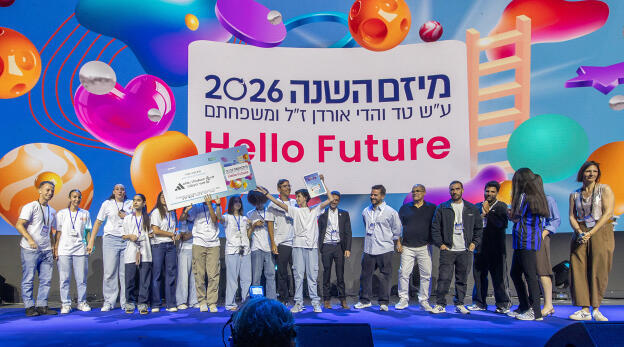
Unistream’s 2026 winner: Teen self-confidence-boosting hairstyling app
A third-year apprentice group from the Unistream Entrepreneurship Center in Kinneret is the winner of the annual competition of the Unistream Association. The app they developed to boost self-confidence by personalizing and styling teenagers’ hair was awarded the title of “Project of the Year 2026.” Second place went to a group of teenagers from Be’er Sheva with a development that turns polluting agricultural waste into fertilizer.
A third-year group of apprentices from the Robert Weiner Unistream Kinneret Entrepreneurship Center has won the Unistream competition, and their project was named “Project of the Year 2026.” The teenage girls from the Unistream Kinneret Center developed an app aimed at strengthening teenagers’ self-confidence through support, guidance, and personalized recommendations for hairstyling and grooming. The app provides tips, explanations, and practical tools that help users find a style that suits them and feel better about their appearance.
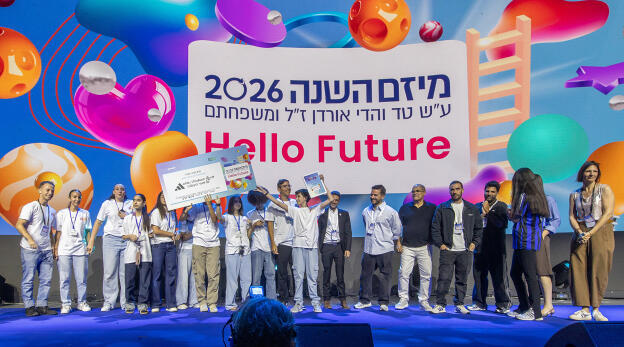
According to Gili Mor (17) from Kibbutz Kinneret, Naomi Ido (16) from Ashdot Yaakov, and Shira Kaplan (17) from Kibbutz Kinneret, all members of the group that developed the winning project: “We developed the app because of self-confidence issues we experienced ourselves. During adolescence, hair doesn’t always come together the way you want, and worrying about appearance significantly affects self-confidence,” the young women shared. “We decided to develop an AI-based app with the goal of improving self-confidence in everything related to appearance, which definitely affects our daily lives, emotionally and socially. The app includes a community for consultations, a feature that identifies hair type and provides personalized care and styling tips, and more. We truly believe in our project and plan to continue developing it,” they said.
8 View gallery
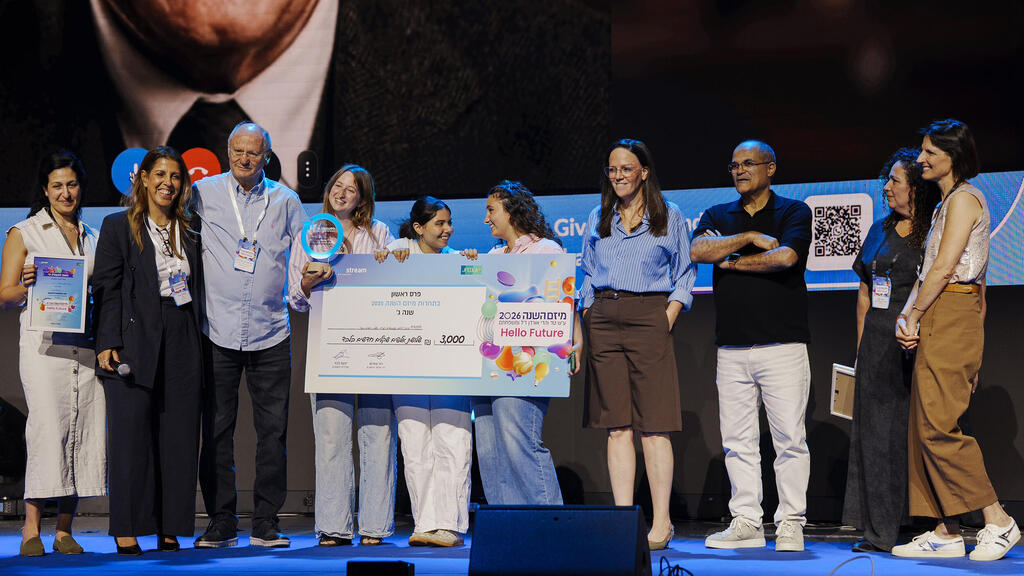
Winning project HAIRUP from the Unistream Kinneret Entrepreneurship Center
(David Buchar)
Second place went to a group of teenage boys and girls from the Unistream Be’er Sheva – Altshuler Shaham Entrepreneurship Center “ReLife” in partnership with the Ministry of Agriculture and Food Security with a development that turns polluting agricultural waste into fertilizer that revitalizes soil. According to Tzur Mirkin (16), CMO of ReLife: “We enable farmers around the world to turn organic waste into biochar fertilizer.” According to Yaara Rotem (17), CEO of the project: “Biochar is a form of charcoal that helps retain beneficial organisms in the soil. The process we use to convert waste is called pyrolysis - heating without oxygen.”
Third place went to teenage boys and girls from the Unistream Entrepreneurship Center in Or Yehuda, named after the late Ted and Hedy Ordan and their family, with the DrinCup project, an ecological system for washing reusable cups designed to replace disposable cups in businesses and public institutions.
In addition, winners were announced in several additional categories:
In the Audience Favorite category: a first-year group from the Unistream Kiryat Shmona and Eastern Galilee Center, in partnership with the Jewish Federation of Vancouver, won with the DUET project.
Year 2:
First place – Unistream Afula Entrepreneurship Center, named after Joan and Arthur Weisberg, with the AllergiesWarrior project
Second place – Unistream Netanya Entrepreneurship Center with the SafeHeat project
Third place – Unistream Segev Shalom Entrepreneurship Center, sponsored by Bank Hapoalim, with the Virtual Teacher project
First-year winners:
Unistream Or Yehuda Entrepreneurship Center, in collaboration with El Al, with the Flight Therapy project; Unistream Afula Entrepreneurship Center (Joan and Arthur Weisberg) with the EasyCart project; Unistream Eilat Entrepreneurship Center with the FRESH BOX project in partnership with the Ministry of Agriculture and Food Security; and Unistream Netivot Entrepreneurship Center (Morty Frank Center), sponsored by Bank Hapoalim and in partnership with the Jewish Federation of Philadelphia, with the FROSTSTEPS project.
NFTE:
First place – Yeshiva Atid Or Menachem Chabad Ashkelon in partnership with Energix Smart Straw
Second place – Moliv Derech Rav Temuchim Amal Jr. High, Muqeible, in partnership with Energix
Third place – Smart Safe Pack, Amal Tech Atarot, East Jerusalem, in partnership with Energix
SUN program (Unistream one-year track):
Group 1 – Kiryat Shmona Ort Danziger Educational Center, in partnership with the Vancouver Jewish Federation and the Shashua Foundation, with Map – Make A Pro
Group 2 – Al-Andalus Baqa al-Gharbiyye, in partnership with the Baqa al-Gharbiyye Municipality, with SafeStep
Group 3 – Haifa Neve Sha’anan, Haifa Municipality, in partnership with Philips IL, with Teachmake
Participants in the competition included groups from a wide variety of sectors, Jewish, Arab, Druze, Bedouin communities, secular, religious, and new immigrants, competing for the title of outstanding project, which also included a cash prize to support further development.
The competition was led by Rony Zarom, Chairman and Founder of Unistream, and CEO Ifat Bechor, and was attended by hundreds of business leaders, high-tech professionals, entrepreneurs, senior public and government officials, international delegations, and guests who reviewed the youth startup projects, selected the winners, and encouraged continued development.
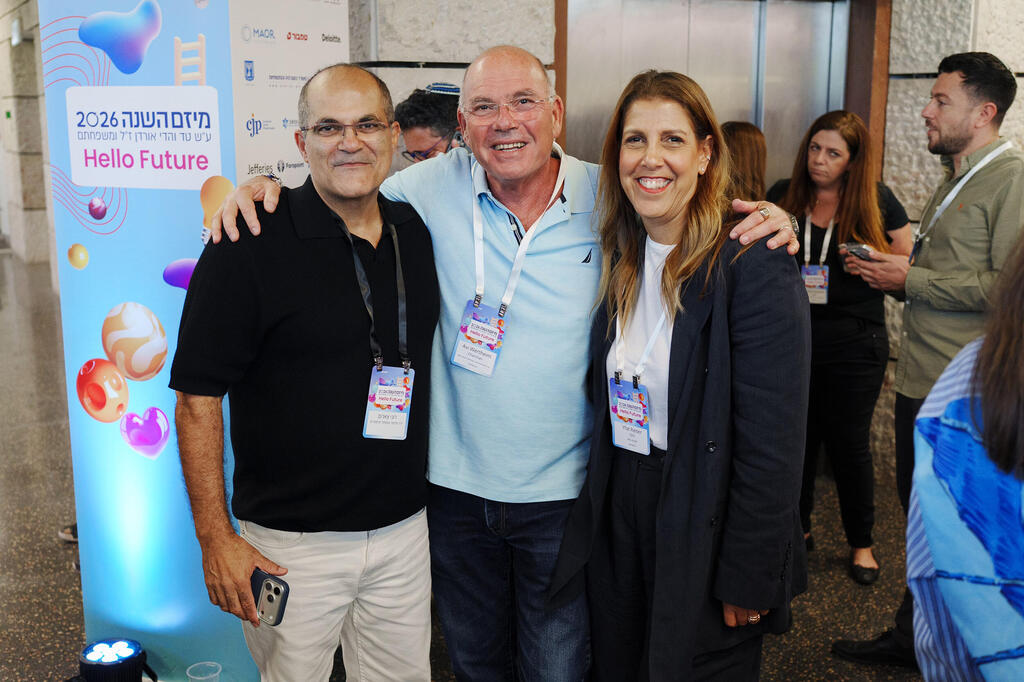
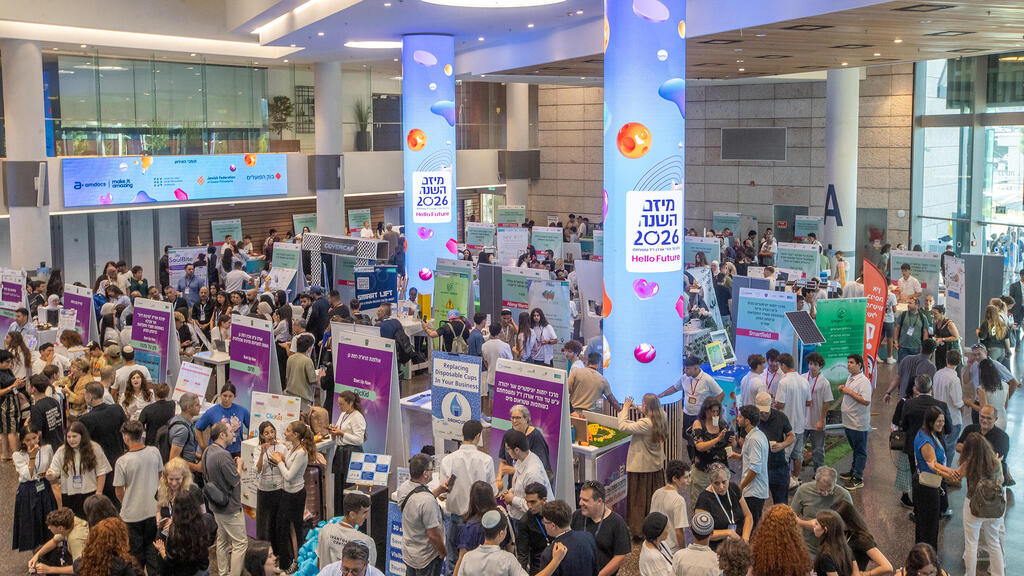
This year, more than 100 groups of young people from across Israel participated in the Unistream event at Expo Tel Aviv, from Eilat to Kiryat Shmona, from Rahat to Ramat Gan. The Unistream association trains young people in business and social entrepreneurship, and during the program they develop projects across a wide range of fields, most with a technological focus addressing everyday challenges faced by youth. The projects were presented to a panel of judges drawn from senior figures in business and the public sector.
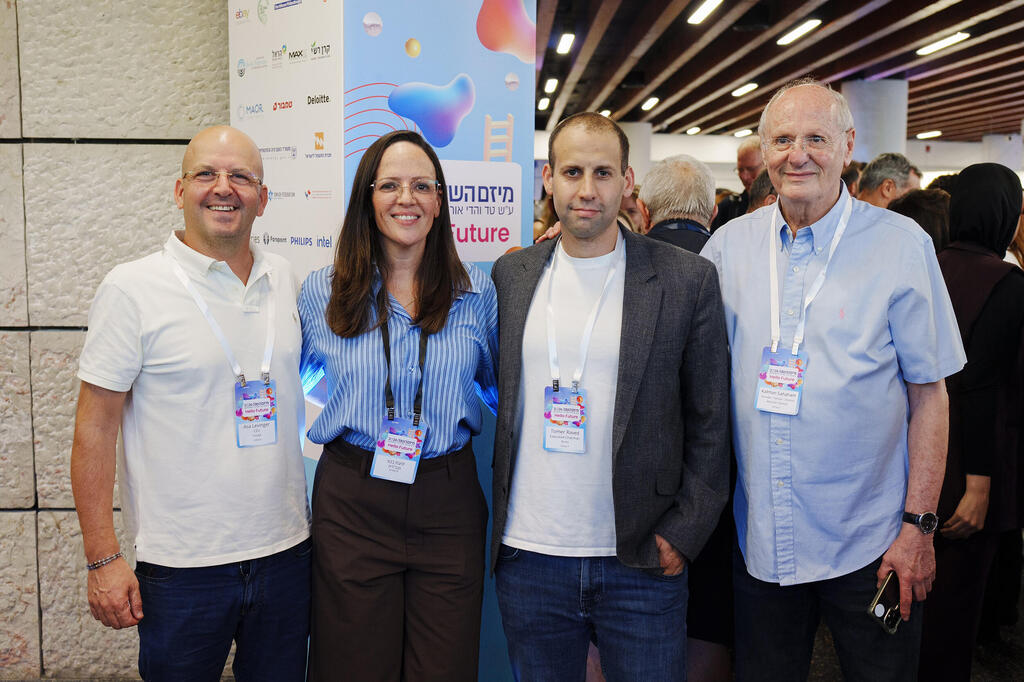
This year’s judges included Adi Hoorvitch Lavi, Vice President of Growth and Investments at Poalim Tech (Bank Hapoalim); Adi Kedar Yardeni, Head of Corporate Social Responsibility at Altshuler Shaham; Adi Vedrovnik, VP of Development at Calcalist; AIG CEO Yfat Reiter; Sarit Yochananof, owner of the Yochananof supermarket chain; Kalman Shaham, founder of Altshuler Shaham; Avi Wertheim, Chairman of Alony Hetz; Dvora Hasid, CEO of Maccabi Tivi; Michal Kisos-Hertzog, CEO of Discount Capital; Asa Levinger, CEO of Energix; Adiel Eluz, Deputy Mayor of Afula; Alon Barnea, Vice President of Afeka College; Amir Babala, former VP of Haat; Anna Pelkin, Director of TikTok Israel; Doron Arbely, Chairman of Israel Electric Corporation; Dror Bin, CEO of the Israel Innovation Authority; Dr. Alon Stopel, Chairman of the Israel Innovation Authority; Tomer Raved, Chairman of Bezeq; and others.
This year, the Unistream event was held in Hall 2 of Expo Tel Aviv, with an atmosphere ranging from a fast-paced startup showcase to a lively school playground. “Who walks around in shoes that heat your feet when you can wear cooling gel socks?” asks Emmanuel Chakol, presenter of Frost Steps, a cooling sock project. The 15-year-old Chakol, from Unistream Netivot, refuses to leave before finishing his pitch: “Our sock is designed for athletes, farmers, and soldiers. I came up with the idea because I play soccer and needed cooling for my feet to the point where I had to take breaks,” he says. According to 15-year-old Yael Levy, project manager of Frost Steps: “We invented these socks because there is no air conditioning for feet. One in five teenagers suffers from excessive sweating. We researched this, 77% of athletes suffer from heat, and 50% of performance is affected by sweating.”
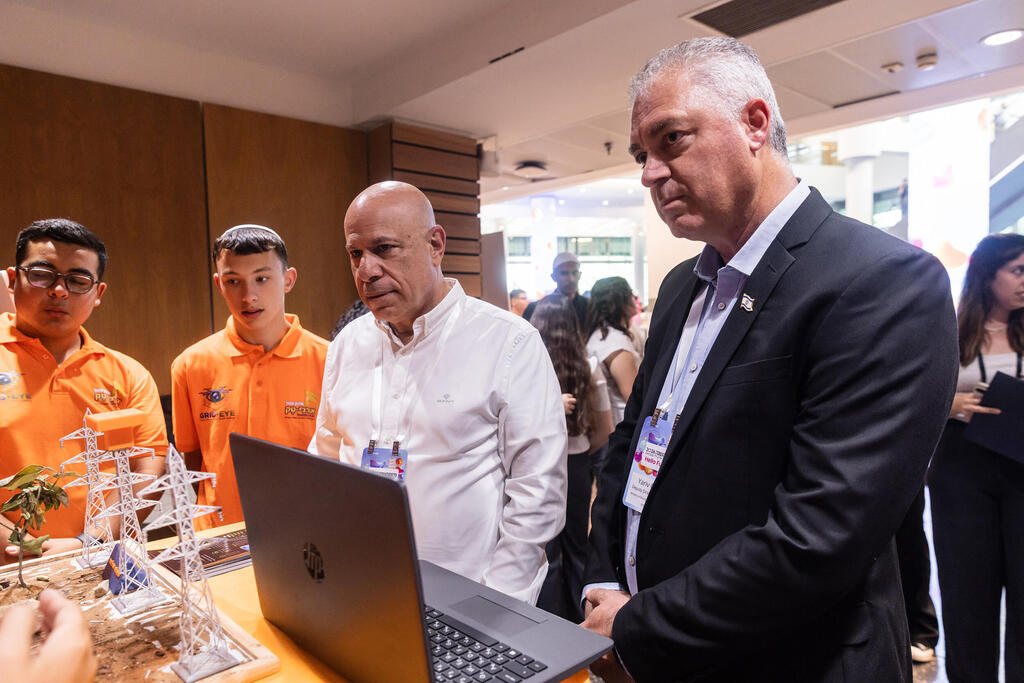
Alongside the Netivot entrepreneurs, a group of female entrepreneurs from Ramat Gan tried to attract attention: “We invented CLICKID, an app for parental guidance,” explains Gili Barzilai, a 15-year-old entrepreneur from Haroeh High School in Ramat Gan. “Many parents struggle to understand why their children behave the way they do. It’s a guide for different situations. You answer a questionnaire about your child, and when a difficult situation arises, for example, in a supermarket, it provides appropriate responses, from ages three to 18. It is developed with educational consultants.” Itamar Ziv, 15, presents EasyCart with his team from the Joan and Arthur Weisberg Center in Afula: “It’s a kit that attaches to a supermarket cart and helps people with disabilities and elderly shoppers. It has three features: a screen with a store map showing product locations, a grab bar for reaching high and low shelves, and an SOS button that calls for assistance.”
The projects are not random. They are developed based on real-life needs of the students and their communities. The Nova Watch project, developed by students from Adiga Middle School in Kfar Kama (in partnership with Chevron), illustrates this. According to 14-year-old Liyana Napsu: “Our watch is a smart device for Alzheimer’s patients that helps them manage daily challenges.” Her partner Samaya Suskha adds: “It provides medication and event reminders, includes a family-managed app, GPS tracking, scheduling support, and an emergency button. It also has facial recognition to help identify people. My grandmother had Alzheimer’s, so I wanted to help improve such situations.”
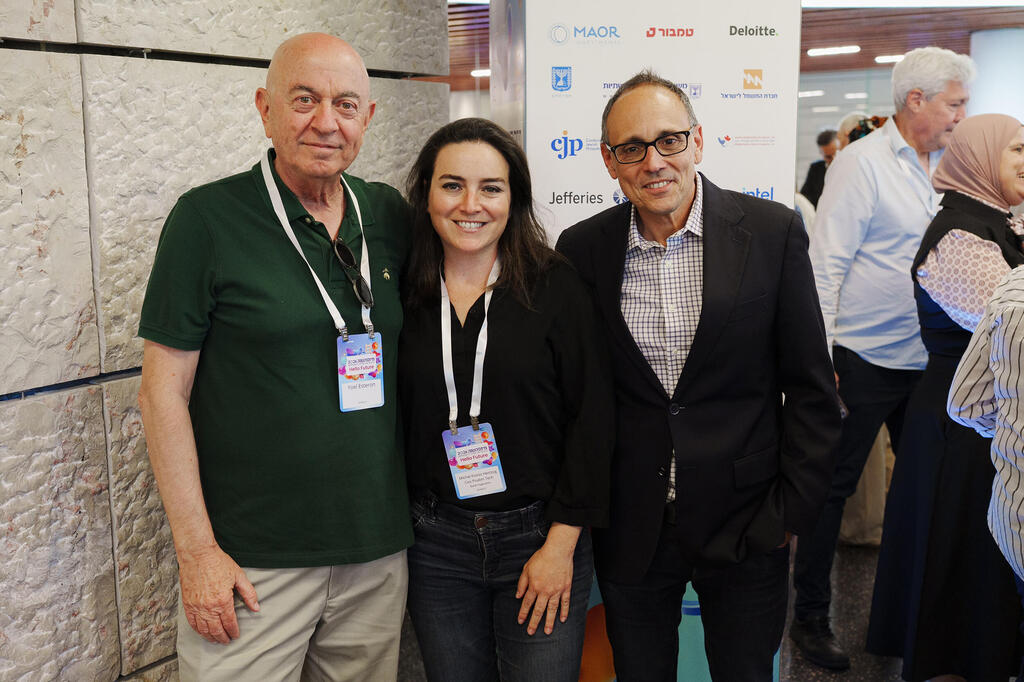
According to Rony Zarom, founder and chairman of Unistream: “In a world moving at extraordinary speed, in an era of artificial intelligence and constant change, our responsibility is to ensure that every young person in Unistream is equipped with tools, confidence, entrepreneurial thinking, and the belief that they can shape the future.”
He added: “The national situation creates uncertainty and fatigue. Unistream’s challenge is to maintain energy, leadership, and motivation. The youth are tired after years of instability. Even basic conditions in places like Kiryat Shmona have not yet recovered. Our goal is to support them and help restore momentum despite the challenges.”



