










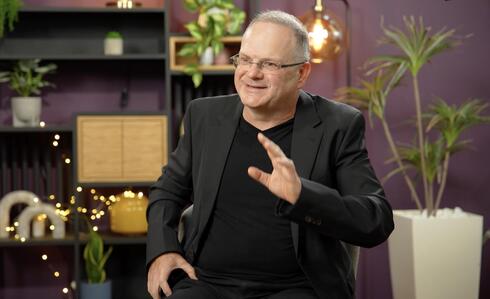
Gil Shwed: “I don’t see the economic models that justify AI investments on this scale”
The Check Point executive chairman questions the economics behind the hundreds of billions of dollars flowing into AI infrastructure, even as he sees enormous potential in the technology.
“The investments being made by the world’s major tech companies are on a scale we have never seen before, and, as of now, I don’t really see the economic models that justify them.”
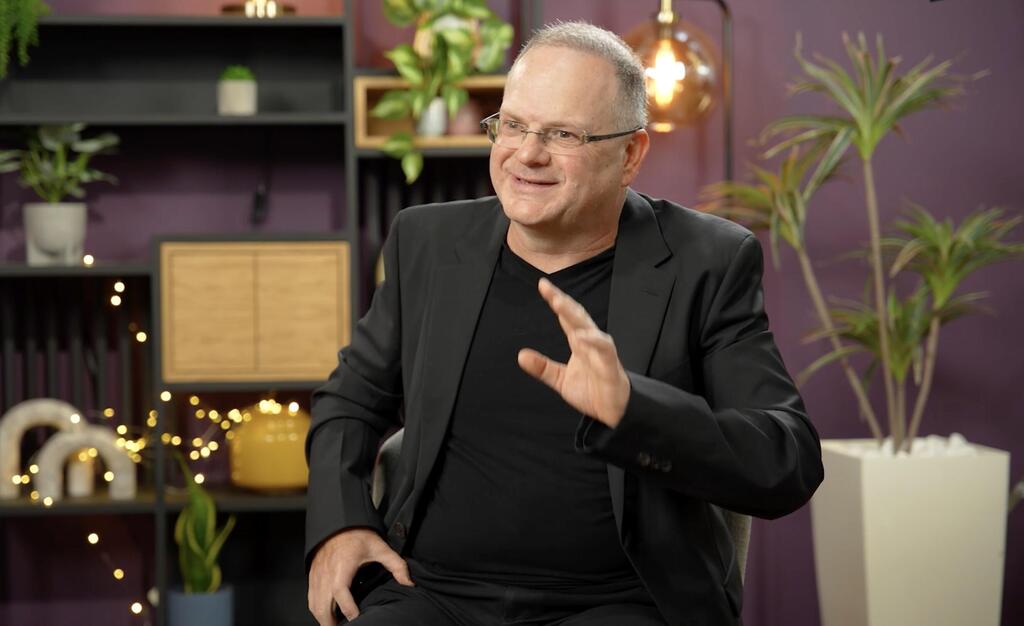
That is the assessment of Gil Shwed, executive chairman of Check Point, in the 400th episode of Calcalist’s Money Engines podcast, in a conversation with Shay Salinas and Uri Greenfeld.
Shwed co-founded Check Point in 1993 alongside Shlomo Kramer and Marius Nacht and is widely credited with pioneering the modern firewall. He became the first recipient of the Israel Prize in the field of technology in 2018 and served as Check Point’s CEO for 30 years, one of the longest tenures among CEOs of Nasdaq-listed companies. At the end of 2024, he handed over the reins to Nadav Zafrir and became executive chairman.
In the interview, Shwed discusses why the enormous sums flowing into AI have yet to demonstrate their economic value, what the technology means for software developers, why he believes a future of mass unemployment is unlikely, and how AI is transforming the cybersecurity industry.
You have witnessed several technological revolutions. Where does AI rank among them?
“In my lifetime, we have already seen three or four technological revolutions: the personal computer revolution, which made computing accessible to everyone; the internet revolution; and the mobile revolution. Each transformed not only the technology industry but also the way we live.
“Today, we might consider AI the most significant of them all, perhaps even the greatest. But we can only make that judgment in hindsight. We will know in 10 or 20 years.
“Back in 1993, I was among the few who saw the internet coming and predicted that it would be revolutionary, yet few others understood it. It did not become an integral part of our everyday lives until the 2000s. Mobile technology followed a similar trajectory. It took six years for the smartphone to become something everyone had.”
The world’s tech giants are expected to invest $800 billion this year in electricity, processors and data centers, with the figure projected to exceed $1 trillion next year. What is your assessment?
“I’m certainly no economics expert, but from where I stand, I don’t see the return on investment at this stage. That is cause for concern, although it is also typical of technological revolutions. In the early stages, it is often unclear how the economy will ultimately reorganize itself around a new technology.”
The dot-com era also saw massive investments in infrastructure, yet many of the companies involved did not survive. What is driving such enormous investments today?
“Part of it comes down to human belief. Suddenly, a computer becomes an intelligent entity that you can communicate with very easily, using everyday language, and everyone looks at it and says, ‘Wow, this is huge.’
“I meet with CEOs, corporate boards and policymakers, and they all see the potential because they are experiencing it firsthand, perhaps even more directly than they experienced the internet. What matters most in technology is how easy it is to use. Once you have a completely standard, text-based interface, it becomes universal.
“But that does not change the fact that the economics ultimately have to work. Today’s investments still need to prove their worth.”
But this time, many of the investors are companies with enormous cash flows.
“Some are, and some are not. The biggest players in the field are investing tens or even hundreds of billions of dollars, with much of the money coming from investor capital and debt rather than their own cash flow. Google, and perhaps to some extent Microsoft, are notable exceptions, as they can invest using their own cash flow.
“But for companies such as Anthropic and OpenAI, as well as thousands of others, the money comes from investors. These business models still have to prove themselves. I strongly believe in the potential, but I think it will take time.
“During the dot-com crisis, many major companies disappeared. Nearly three decades later, the internet is thriving, but the ultimate winners turned out to be different companies from many of the early pioneers. Some survived, Amazon among them. In search, Yahoo disappeared while another player emerged and grew far beyond anyone’s initial expectations. Just look at what Google has become.
“I’m proud that Check Point is one of the few companies to have survived for more than 30 years while maintaining its technological leadership. In our industry, most, if not all, of the players that existed in the 1990s have effectively disappeared.”
Related articles:
Are the executives you meet more concerned about the risks or optimistic about the opportunities?
“By and large, the executives I meet, particularly senior leaders at large commercial organizations and banks rather than necessarily those in cybersecurity, are more optimistic about the potential. They see enormous promise in AI, and I think rightly so.”
How is this revolution affecting software companies?
“There is tremendous potential to automate coding, but that also represents a massive threat.
“People often assume that a software company’s core capability is its technical ability to develop software. That is not quite accurate. A software company’s real strength lies first and foremost in understanding a market and knowing how to solve problems. Only then does it translate those solutions into technical language through programming.
“In reality, only about 20% of a software company’s workforce is involved in software development. The other 80% work in areas such as support, marketing and sales.
“Software development is undergoing a radical transformation. It feels highly threatening to those working in the field, but it also holds enormous potential. Instead of being bogged down in the grunt work of coding, repeating tasks they learned at university, developers can focus on expressing their ideas while the programming process itself becomes 10 to 100 times faster.
“We have seen similar shifts before. In the 1980s and 1990s, articles predicted that application generators would make programmers obsolete. There were even companies in Israel, such as Magic Software, working in this area. That prediction did not come true. Today, there are far more programmers than ever before. They are simply working in higher-level languages.”
What will happen to programmers?
“If you started out as a programmer and eventually became a team leader, managing five developers, then 20 and then 30, you gradually stopped writing code yourself. Now, instead of managing human employees, a manager might find themselves managing agents.
“You still have to direct them, give them instructions and consult with them. Suddenly, you can do the work not with a team of five people but with 10, 50 or perhaps even 1,000 agents that you have to direct and manage.
“That creates a massive multiplier effect. It raises a very interesting question: will the competitive landscape require the same number of programmers, or even more, to accomplish far more? Or will we ultimately need fewer?”
What if, in five years, AI can replace managers and marketing professionals who understand customer needs?
“AI can assist with all these tasks and do a fantastic job. It can also lead us toward much more advanced ways of working.
“I strongly believe in scientific, quantitative approaches. You come up with an idea or a product, interview customers, understand their perspective, test it and measure the results. People talk a good game about this today, but in practice, it rarely happens, largely because there are not enough resources or personnel to conduct interviews, run tests, synthesize findings and analyze the results. Often, there simply is not enough patience.
“I might tell a developer that I want to explore three different user-interface alternatives, but when the deadline arrives, we end up going with whatever we have. This happens in every industry. Even when you are writing a newspaper headline, eventually you have to publish what you have.
“With AI, however, I can patiently request five different alternatives and test them against both human feedback and assessments by AI agents.”
Do you use AI this way yourself?
“When I was CEO, I began experimenting with this three or four years ago. Before sending an email to 7,000 employees, I would share it with five staff members and ask them to read it and explain what they understood.
“If I had five key messages and they grasped three, I knew I had done a decent job. If they understood only one, or took away entirely different points, I realized I had not communicated successfully.
“Today, I can take the same text, feed it into ChatGPT and ask, ‘What did you understand?’ If it repeats my main points, the feedback loop is closed, and the process is much shorter. By the way, it is perfectly fine to get annoyed with ChatGPT. It will not take offense.”
Some warn that productivity gains will not trickle down to workers but will instead accrue to shareholders. What is your view?
“There will be changes, for better or worse, and some will be painful for particular sectors, just as they have been during every technological shift.
“But if you look at history over decades, a century or even millennia, people today live much better lives, enjoy longer life expectancies and have more opportunities. Technology is a powerful enabler, providing both access and opportunity.”
What about work itself?
“If we no longer need to work 10 hours a day, but instead four, five or six, I am not sure that is such a bad thing.
“I started working at age 12 and have been doing so for more than 40 years. My entire life was defined by leaving home in the morning and returning in the evening. About two years ago, I changed the balance of my life and became an executive chairman. I still go to the office almost every day, but I now enjoy a degree of freedom I never had before.
“If we have more free time, we will spend more money, and that will drive the economy.
“You will not have a scenario in which one million people create AI and consume goods while another eight million are unemployed. That simply will not happen. It is unsustainable because those eight million people need to survive, and the one million would have to support them.”
A 20-year-old asks what they should study, or whether they should pursue higher education at all. What would you tell them?
“Many people argue that studying computer science may no longer be necessary because programming is being automated. But computer science is not the same as programming. Much like mathematics or physics, it is a way of thinking and understanding how things work.
“It is also important to understand economics and human psychology, but I would still recommend studying computer science. That does not mean university curricula do not need to change. The fundamentals, however, remain relevant.
“When I was 12, 46 years ago, I had my first job at a Jerusalem-based company that was trying to develop AI software for machine translation. The concepts behind neural networks already existed then. Since that time, computing power has increased a millionfold, and we have seen the emergence of new models and transformers. Yet the underlying science remains the same.”
What about the education system?
“The curriculum, both at universities and, even more critically, in schools, needs a dramatic overhaul.
“Students should learn basic economic concepts, such as calculating interest and returns on investment, deciding which loan to take, financing a home and managing a budget. We teach mathematics at a level far beyond what is needed for these tasks, yet very few people know how to perform these calculations and make sound financial decisions.
“That is particularly striking because these are the very decisions that can leave people working for 20 or 30 years to pay off a mortgage. I am talking even about professionals, including economists and people working in the capital markets. When I ask them how to calculate the internal rate of return, or IRR, they just stare back at me, completely lost.
“AI can spark a revolution here. Every student could have a private tutor, an AI agent that adapts to their pace and understands their needs, allowing them to learn without being afraid of making mistakes. A human teacher could oversee the process and provide emotional support.”
Elon Musk recently suggested that, within a decade, governments might distribute money to citizens because there will be an abundance of wealth. What role should governments play in this revolution?
“I am no prophet. Nor do I believe governments are unnecessary today. Quite the contrary. Their traditional responsibilities remain: education, public order, the rule of law, democracy and values.
“Companies are not particularly good at upholding values. Their primary focus is advancing their own businesses. Protecting workers’ rights, the right to privacy and the right to fair competition is the role of regulators.
“I believe in a free market. I am not being sanctimonious or claiming that companies are bad. But everyone has a specific role within the system.”
What should policymakers do?
“I have never asked for direct government support for the industry, but the government needs to invest heavily in education. That is the first priority.
“Second, the government should use AI to drive transformation across every sector, focusing on automation and better services for citizens. The government employs a vast number of people, all of whom could use AI tools.
“From what I can see, healthcare is currently the sector making the greatest effort in this area. I strongly believe in measuring the return on investment of any initiative, and I think the returns here will be highly positive.”
Where does Israel stand?
“In terms of the scale of the high-tech sector relative to the population, including the number of startups and the size of the workforce, I believe Israel ranks first in the world.
“The military plays a role, but it is not the whole story. Part of it goes back to the early days of Zionism. People arrived with knowledge and capabilities, seeking to build something entirely new. That, in essence, is a startup.
“We lack natural resources, but we have a certain spirit. When a problem arises, we solve it, often by improvising.
“In my lifetime, we have transformed from a low-cost country into a high-cost one. Today, Israel ranks second or third globally in terms of high-tech costs.
“For countries such as China and India, the challenge is creating jobs for 1.5 billion people. Our challenge is figuring out how a population of 10 million can carve out its place in the world. AI is moving squarely in the direction of enabling a small number of people to produce an enormous amount.
“It will not be easy. We will all have to transform ourselves. We are going through that process at Check Point, too, but I think it suits the Israeli character.”
What is happening in the cybersecurity industry?
“The shift is dramatic. As in the broader software industry, development has suddenly accelerated. In cybersecurity, however, the change is even more intense because threats are evolving just as rapidly.
“An attacker who previously relied on a few basic tools can now deploy an agent capable of doing 100 times more. In the past, identifying software vulnerabilities was the domain of a small group of experts. They would uncover one flaw after another, but at a relatively slow pace, which was nevertheless enough to sustain a substantial defensive industry.
“Suddenly, AI tools have increased that capacity a thousandfold. A company might previously have reported two vulnerabilities a year. Now, with AI, it might uncover 100 in a single day.
“That presents a major challenge because we must defend against a vastly larger number of vulnerabilities. At the same time, we can harness AI to our advantage, automating processes that were once handled by highly skilled professionals. The technology offers enormous potential, but it also poses a significant challenge.”
Who is responsible when someone uses AI tools to carry out a cyberattack?
“Both sides have responsibilities. It is not one or the other. Any tool available to humans can be used for good or bad purposes.
“The creator of a tool should do everything possible to make malicious use difficult and unattractive, sometimes even by restricting whom they sell it to. But if you choose to use a tool to do something bad, the responsibility lies entirely with you.”
What about regulation?
“I have heard Bill Gates discuss the need for regulation, asking why we regulate transportation, aviation and medicine but not this.
“I would point out that the global economy has advanced over the past 50 years thanks to software. That happened in part because software was not subject to the same kind of regulation as those industries. If Microsoft had needed regulatory approval for every version, we would not have Microsoft as we know it today, nor would we have software at the level we enjoy now.
“I understand the need for regulation, but it can also stifle innovation. If we subject software to the same kind of regulation found in other industries, we risk returning to a dark age in which progress slows to an agonizing crawl.”
What about AI in the defense sector?
“Even in the military sphere, imagine a scenario in which robots do the fighting instead of our children and friends dying in wars. This raises highly complex philosophical questions, but it also has the potential to do a great deal of good, not just harm.
“Instead of sending a soldier into a house in Gaza, for example, you could deploy a robot or a drone to carry out part of the task.”
In the full episode, available on podcast platforms and YouTube, Shwed also discusses how the Israeli economy has evolved over the past 30 years and offers a thought experiment about regulation in the medical sector.



