










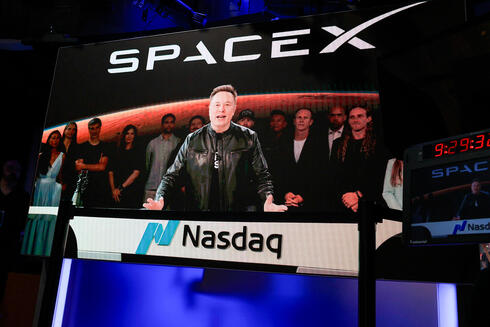
SpaceX's IPO was never about the numbers
The record-breaking IPO pushed SpaceX above a $2 trillion valuation, enriched Elon Musk by hundreds of billions of dollars, and demonstrated that investors may be betting more on the entrepreneur than on the company's financial performance.
The largest and most talked-about FOMO-driven IPO in history has been successfully completed. No one can look at the numbers revealed in SpaceX's prospectus and confidently assign a valuation based solely on traditional financial models. When it comes to Elon Musk, almost any valuation can seem reasonable, too cheap, or too expensive at the same time.
The story here is not the current technology, nor the company's revenues and losses. It is the person behind, and at the helm of, the company. It is no coincidence that many of the headlines leading up to the IPO focused on the possibility that SpaceX founder and CEO Elon Musk could become the world's first trillionaire.
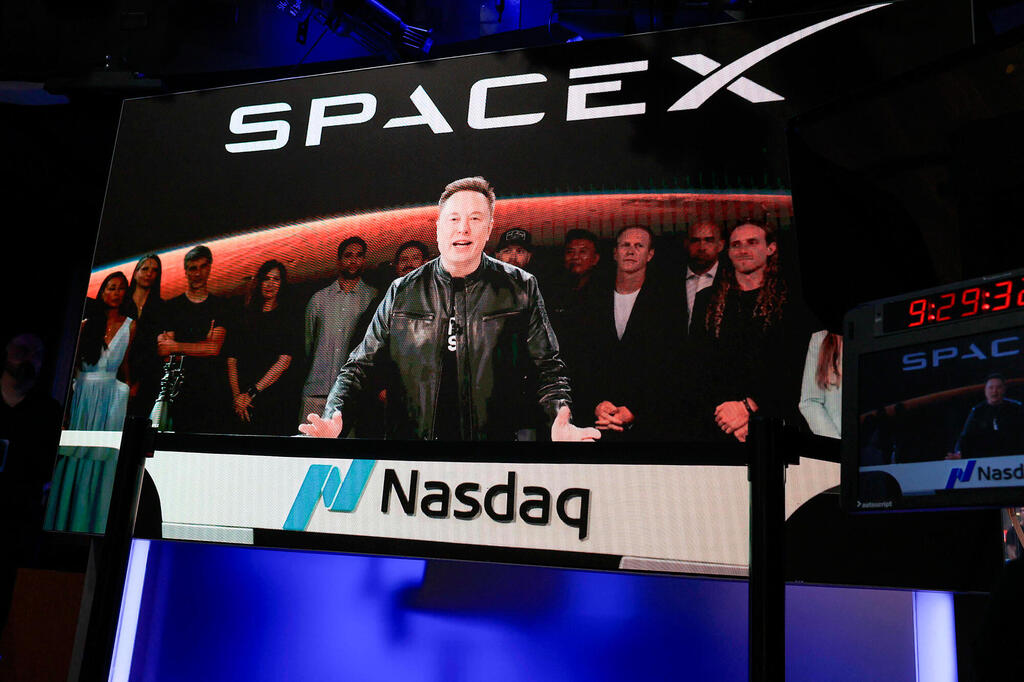
In most companies, founders and controlling shareholders benefit from value created by the business and gradually become wealthier as the company grows. In SpaceX's case, the relationship is arguably reversed: the company benefits from the value created by Musk himself. It is unconventional and innovative, much like a rocket that does not simply reach its destination, but returns to its launch site intact.
Musk, despite having Asperger's syndrome and often appearing indifferent to social conventions, seems to possess a remarkable understanding of the relationship between people and their money. The man who brought the world Tesla, the "iPhone on wheels," which became one of the world's best-selling electric vehicles and one of the favorite stocks of retail investors, has now packaged his broader vision for the future inside SpaceX.
Moreover, according to market speculation, Musk could eventually seek deeper integration between Tesla and his broader business empire. For many investors, the question becomes simple: why not place a few dollars on someone who may one day be viewed as a modern-day Leonardo da Vinci?
While analysts and economists on Wall Street sift through spreadsheets and AI models trying to determine the value of a company whose operations span communications satellites, artificial intelligence, data centers, social media, rockets, and spaceflight, Musk pursued a different strategy.
He allocated a significantly larger portion of the offering to retail investors than is customary. Musk understood that even if institutional investors hesitated at a valuation of roughly $1.7 trillion for a company that has accumulated $41.3 billion in losses over its lifetime and lost nearly $5 billion in 2025 alone, retail investors would help fill the gap.
SpaceX initially allocated 30% of the offering to direct public participation, an unusually high percentage. While some technology companies occasionally reserve shares for retail investors, allocations typically range between 5% and 10% of the offering. Ultimately, roughly 20% of the IPO ended up in retail hands, but that was enough to create the effect Musk wanted.
Trading platforms also accommodated several unusual requests. Musk effectively dictated the IPO price rather than allowing underwriters to determine it through traditional book-building. He also persuaded major index providers, including Nasdaq and Russell, to relax certain eligibility requirements for SpaceX shares.
Only the S&P 500 has so far resisted changing its rules.
Participation requirements were also dramatically lowered. Whereas IPOs typically require large minimum investments to limit participation to wealthy investors, SpaceX shares were made available through platforms such as Robinhood, Schwab, and Fidelity with minimum purchases as low as $2,000.
The prospectus also contains numerous provisions that underscore Musk's continued dominance. Even after taking the company public, he retains more than 80% of the voting power and effectively controls board appointments. In practice, while public shareholders may participate in the company's profits and losses, Musk continues to run SpaceX much as he did when it was private.
The IPO largely lived up to the extraordinary expectations surrounding it.
SpaceX raised $75 billion at a valuation of approximately $1.7 trillion. When trading began on Friday under the ticker SPCX, the stock opened at $150 per share. It quickly climbed nearly 30%, reaching an intraday high of $176 before closing at $161.
Roughly 500 million shares changed hands on the first day, a volume comparable to Facebook's debut in 2012.
At the closing price, SpaceX's market capitalization stood at roughly $2.1 trillion, making it one of the ten most valuable companies in the world and placing it around seventh place globally. Tesla, meanwhile, ranks around tenth.
Musk's SpaceX stake is now worth approximately $800 billion. Combined with his Tesla holdings, valued at roughly $280 billion, his net worth is approaching $1.1 trillion.
That makes him worth more than the next several billionaires combined and gives him a fortune larger than the annual economic output of countries such as Taiwan, Ireland, or Sweden.
The question now is what comes next.
The IPO was driven as much by emotion as by financial analysis. Many investors were buying into the Musk narrative as much as the underlying business. A 19% first-day gain is certainly respectable, but it is not unprecedented. Several recent IPOs have delivered even more spectacular debuts. AI chipmaker Cerebras, for example, surged 108% on its first day of trading, while design software company Figma jumped 250%, a record that remains unmatched.
Some investors bought SpaceX shares because they wanted to participate in Musk's vision for humanity's future in space. Others were undoubtedly seeking the quick profits often associated with high-profile IPOs driven by fear of missing out.
Another unusual aspect of the offering was the lock-up period. Traditionally, insiders and early investors are prohibited from selling shares for six months after an IPO. SpaceX introduced a more flexible structure, allowing employees and certain smaller shareholders to sell portions of their holdings much earlier. Musk himself remains subject to a one-year lock-up.
This flexibility could create near-term selling pressure, potentially weighing on the stock before the company's next earnings reports, which will represent another important test of its relationship with Wall Street.
As a private company, SpaceX has displayed significant financial volatility. It has swung between profitability and multi-billion-dollar losses. Its capital expenditure requirements are enormous and unpredictable. Revenue growth remains strong, around 35% annually, but perhaps not strong enough to fully offset investor concerns about losses and the difficulty of forecasting future performance.
Meanwhile, Anthropic and OpenAI are already preparing their own blockbuster public offerings. Both likely benefited from SpaceX's successful debut.
While retail investors may feel a stronger emotional connection to Musk than to OpenAI's Sam Altman or Anthropic's Dario Amodei, institutional investors may find the business models of the AI giants easier to understand and value.
Just as investors sold other technology stocks in recent weeks to free up cash for the SpaceX offering, attention could shift toward the next wave of AI IPOs as those listings approach. The biggest question is whether SpaceX's debut was the culmination of an extraordinary moment, or merely the beginning of an even larger race for investor capital.



