










The hidden winner in Wiz’s historic $32 billion deal
IBI Capital, Israel’s largest equity plan administrator, poised for revenue boost.
Last week, the path was cleared for the largest exit in Israeli history after European Union regulators approved the sale of Israeli cybersecurity company Wiz to U.S. technology giant Alphabet, Google’s parent company, for $32 billion.
In addition to the four founders, Assaf Rappaport, Yinon Costica, Roy Reznik and Ami Luttwak, who are each expected to receive approximately $3 billion before taxes, another beneficiary of the deal is investment house IBI.
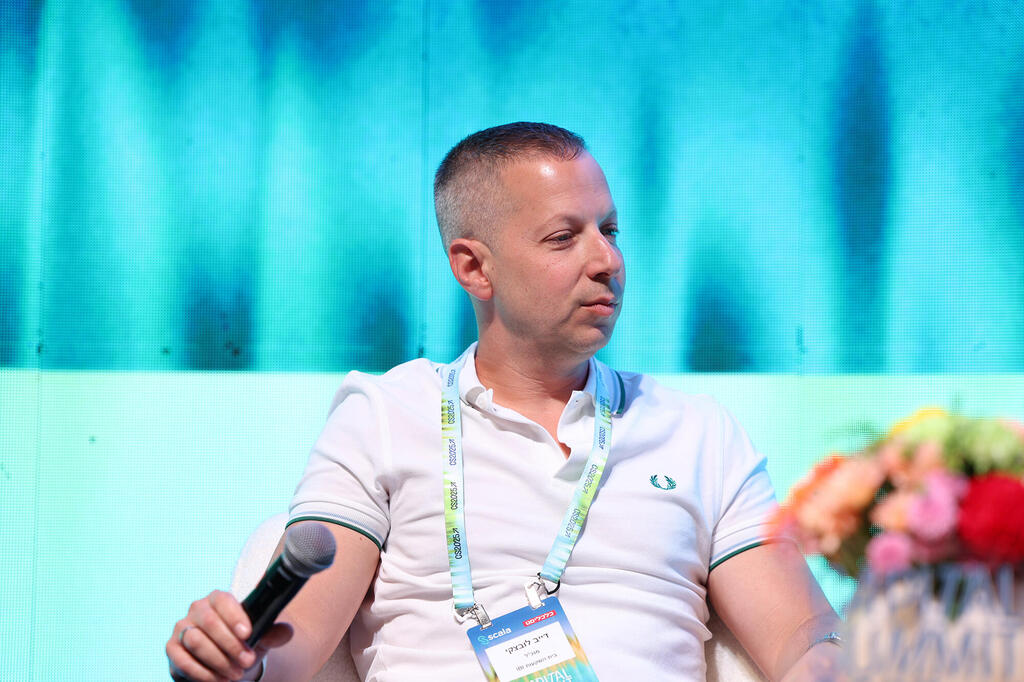
IBI, managed by Dave Lubetzky, operates a subsidiary called IBI Capital, which provides a broad range of services primarily to high-tech companies. Among other activities, it manages employee equity compensation plans. The subsidiary, headed by Tal Dori, provides trustee and operational services for employee stock option plans, transaction support services for mergers and acquisitions, valuation and analytical services related to such deals, and wealth management services for entrepreneurs and employees who receive significant proceeds from exits. For these services, IBI Capital charges various types of fees.
IBI Capital is the largest employee equity plan administrator in Israel, managing options for more than 160,000 employees across 2,500 active equity compensation plans at numerous technology companies. Among them is Wiz, for which IBI Capital administers the option plan covering 1,800 employees.
Wiz employees, nearly 1,000 of whom are based in Israel, are expected to exercise options totaling approximately $3 billion, including retention bonuses. This represents significant revenue potential for IBI Capital.
This likely contributed, among other factors, to a rise of just over 6% in IBI’s share price last Wednesday following EU approval of the Wiz-Alphabet deal. The stock was also supported by changes in the MSCI indices, which increased demand for IBI shares. Over the past 12 months, IBI’s stock has surged approximately 78%, bringing the investment house’s market value to NIS 5.2 billion.
At this stage, it is difficult to precisely quantify the revenue the Wiz transaction will generate for IBI Capital. However, given that this is the largest exit in Israeli history, and that employees are expected to exercise options at a scale comparable to other major exits, it is reasonable to assume the deal will support the subsidiary’s continued growth. Revenue generated from the transaction could reach tens of millions of shekels.
According to IBI’s most recent financial reports, for the third quarter, IBI Capital generated revenue of NIS 193.5 million in the first nine months of the year, a 75.6% increase compared with NIS 110.2 million in the corresponding period last year. Segment profit totaled NIS 53.1 million, representing a more moderate increase of 7%.
IBI Capital has become one of the investment house’s key growth engines. In January-September 2025, the subsidiary accounted for 18.3% of IBI’s total revenue, a record level. By comparison, in the same period of 2024, the subsidiary contributed 14.8% of total revenue, continuing a clear upward trend. In 2022, for example, when IBI Capital generated NIS 87.3 million in revenue, it accounted for 13% of IBI’s overall revenue.
On a trailing 12-month (TTM) basis through September 2025, IBI Capital’s revenue reached NIS 262 million, representing 19% of IBI’s total revenue. In light of the subsidiary’s accelerating growth, the market estimates that IBI may pursue a public offering of IBI Capital within the next two years.
There is a clear correlation between IBI Capital’s performance and developments in Israel’s high-tech sector. According to data presented in IBI’s 2024 annual report, the most recent full-year report published, Israeli high-tech fundraising totaled $9.6 billion in 2024, compared with $6.9 billion in 2023. The number of deals increased from 393 in 2023 to 453 in 2024. Meanwhile, 116 exits were recorded in 2024 compared with 101 in 2023, with total exit value rising to $17 billion from $10.9 billion the year before.
According to data from various industry sources, 2025 has been even stronger.



