










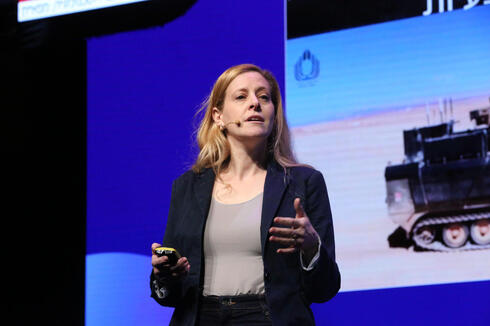
Israeli defense official: “We are working on using the brain to communicate with drones”
Dr. Alona Barnea, Director of the Neurotechnology Division at the Israel Ministry of Defense Directorate of Defense Research & Development, outlines Israel’s hybrid intelligence vision linking humans and AI in security systems.
“Hybrid intelligence and security, this is the topic I deal with and will discuss today. When we talk about security technologies, we usually think of interceptors, but my work focuses on connecting humans to technology: how to link complex systems to people and how to enhance the capabilities of those who operate them. DDR&D deals not only with the questions of tomorrow, but also with the long term, the development of a future technological infrastructure. We have witnessed a slow revolution that has recently gained momentum: humans remain with largely the same capabilities while technology advances at an extraordinary pace. We believe that the future of security is created at the meeting point between the two.”
These remarks were made by Dr. Alona Barnea, Director of the Neurotechnology Division at the Israel Ministry of Defense Directorate of Defense Research & Development (DDR&D), at Calcalist’s Tech TLV conference held in collaboration with Leumi.
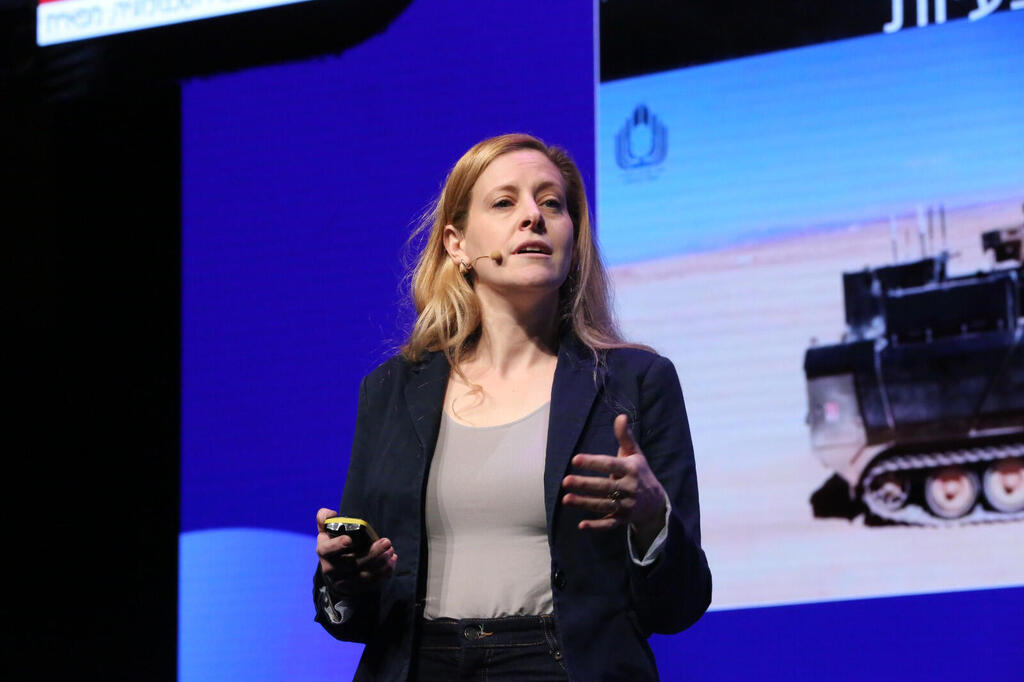
“Our focus is on the brain, neuro-AI connections, and various interfaces. We examine a technological continuum, not only what happens before entering combat, but also how to improve people’s functioning afterward. For example, researchers are working on using the brain to communicate with drones, yet the same technology can also be used to control a prosthetic limb through neural signals. Within operational systems, we are studying how drone operators can use brain interfaces, how a single person can manage a swarm of drones, and even how to build systems that will manage other systems. In these frameworks, part of the intelligence is human and part is artificial, this is hybrid intelligence: combining the strengths of both.”
“There are three main areas in which hybrid intelligence contributes:
- Monitoring human performance, identifying overload and determining when tasks should be redistributed;
- Creating digital twins of people to support decision-making and trust;
- Brain-machine interfaces, developing intuitive tools based on eye movements and muscle signals to operate systems.
The future of security will not be written solely in algorithms and code, but in the integration of machines and humans.”



