









The 9-to-5 is fading. AI is making work a 24-hour operation
As flexible schedules and hybrid work blur the boundaries of the traditional workday, AI agents are taking the transformation further by continuing to work after their human colleagues go home.
This year marks the 100th anniversary of one of the decisions that helped define the modern workplace. In 1926, Henry Ford introduced a five-day, eight-hour workweek in his factories, helping establish a model that was later adopted around the world.
A century later, that model is increasingly being challenged.
Technology, COVID-19, hybrid work, a new generation of workers and, now, artificial intelligence are eroding the boundaries on which the traditional workweek was built: when people work, where they work, how many hours they work and, increasingly, who, or what, does the work.
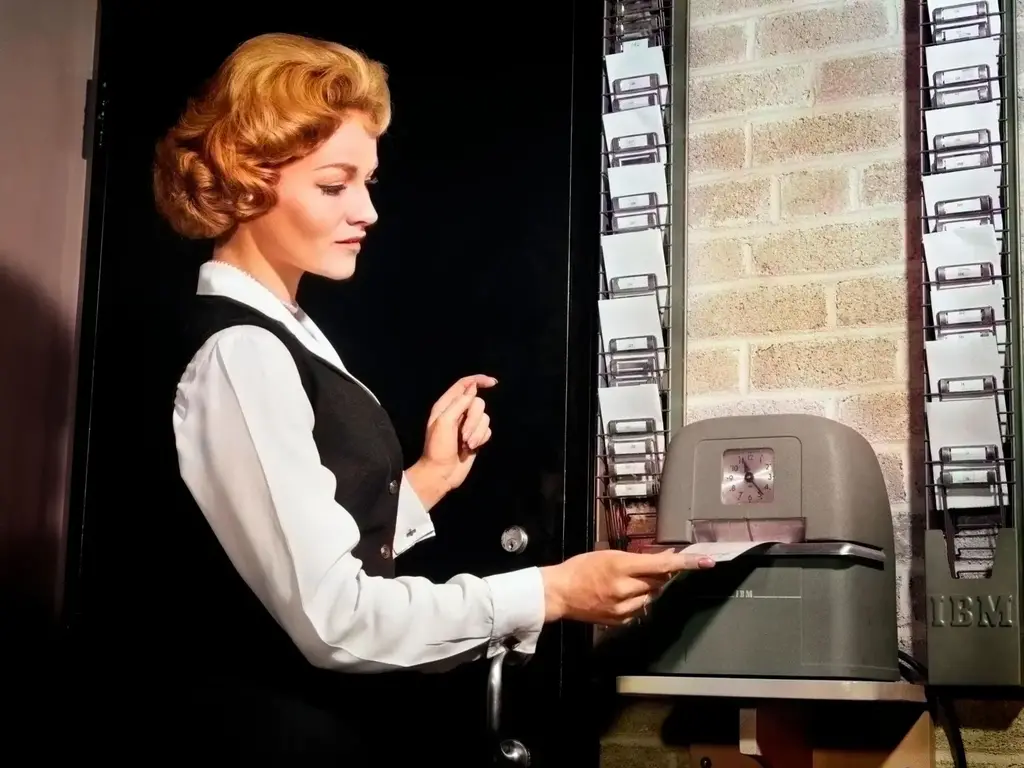
Materials being published around the world ahead of the centennial describe the emergence of "microshifts", short periods of work spread throughout the day and tailored to the task, family commitments and the hours when a worker is most focused. The flexibility gives employees greater freedom to organize their time around their lives. But it also makes the boundary between work and life increasingly difficult to define.
AI is taking that transformation a step further. The question is no longer simply when and where humans work, but how much of the work they need to do themselves.
AI tools can already handle some routine tasks, while increasingly sophisticated agents can continue working after their human counterparts have gone home. If Ford's innovation a century ago was about placing a limit on the amount of time people worked, the technology of 2026 raises the possibility of a workplace where work itself never stops.
Sharon Steiner, chief human resources officer at Fiverr, has watched that transformation unfold throughout much of her career. She began at IBM, later worked at Galileo and startups, and joined Fiverr in 2012.
"The change doesn't happen in one day," she said. "It sounds like 9-to-5 has given way to something very amorphous, due to technology and after the pandemic. First of all, there are a lot of places that do maintain these working hours, and beyond that, a lot of young people are even working fewer hours a day, and there is a tendency to create multiple jobs for themselves."
That fragmentation is not limited to younger workers. Employees increasingly combine full-time jobs with freelance work, side projects or ventures of their own, she said.
"People today are looking for multiple jobs and many workers, not just young people, work at a workplace and have another project on the side, freelance work, or are setting up ventures and projects for themselves. Therefore, they limit their working hours to very specific hours."
Steiner attributes some of this behavior to uncertainty in the labor market.
"People are looking for employment stability. The world today is very unstable, not only in high-tech," she said. "Employees can arrange their work at other times. It is common for an employee to come in, work from nine to three, go home to their family and open a computer at eight in the evening to complete a few more hours."
Globalization has reinforced that trend. Employees working with colleagues and customers in other countries often have to work outside conventional local hours, she said.
The result, in Steiner's view, is not so much a balance between work and life as a blend of the two.
"In our worlds, there is no longer a life balance, everything is mixed. I call it life blend," she said. "You have to reach a goal and the employer cares less about when and how it happens."
Fiverr still puts significant emphasis on physical interaction. Steiner said the company maintains a model in which roughly 70%-80% of employees' time is spent in the office, with the remainder at home.
"We believe that people are social animals and ideas and things happen from a meeting, hallway conversations, meetings, and not everything can happen via Zoom," she said.
But hybrid work and flexible hours may soon look like an intermediate stage in a much bigger transformation.

The next "worker" entering the organization is not another human being. It is the machine.
"We are lucky to be in the midst of the change where resources are becoming not just human resources but machine resources," Steiner said. "AI is coming in and it's no longer human resource management but resource management."
Steiner sees the evolution of human resources as a reflection of the changing workplace: from wages and working conditions a century ago, through employee rights, talent management and employee experience, to the hybrid workplace created by the pandemic.
Now comes another phase.
"I am a Chief Human Resources Officer (CHRO) and lately I have been calling myself Chief Resource Officer, because the agent was added and suddenly the employee has someone working for them 24/7," she said. "The AI does not rest for a moment, and with developers, the human has become the weak link because they need to eat and sleep and have time off, but the agent continues to work."
That does not mean humans disappear from the process. Their role changes.
"The developer or analyst can go home and the agents continue to work all night, and what is left for the person is to manage and integrate these resources," Steiner said. "Human judgment is not redundant, it is needed inside, and there are new professions. The change is that the work continues 24/7 under the management of the employee."
The attempt to move beyond the rigid full-time job predates Zoom and artificial intelligence.
Steiner points to job pairing, a model that emerged in Britain in the 1960s, when women returning from maternity leave could share a job and its salary with another woman rather than leave the workforce.
Today, she argues, part of that job-sharing role could be performed by an AI agent.
"If you do it right, and there is the right architecture of the resources, you can do wonders, it's magic," she said.
The transition is still incomplete, however. "We are a bit of a talking generation, because we have not yet finished moving into the future and a lot is still rooted in the past."
That may change rapidly as a generation of AI-native workers enters the labor market.
"The generation of AI natives who will enter the market in two years will completely affect work," Steiner said. "I predict that in less than a decade, robots will also enter the picture."
Fiverr has already experimented with AI in one of the most human parts of the employment process: recruitment. The company tried using AI for job interviews but abandoned the effort for now because it had not reached the level of accuracy the company wanted.
Steiner expects the process eventually to become more automated.
"I think that in the future the candidate will have an agent that they will train to speak their language and the entire beginning of the process will be agent-to-agent," she said. "Obviously, in the end there will be a face-to-face meeting, but it can be optimized on the basis of the first questions. The agent learns our style."
That raises a more fundamental question: If companies can combine freelancers and AI agents on demand, why maintain a large permanent workforce at all?
Steiner rejects that idea.
"It's not right for a company to hire only freelancers," she said, pointing to legal and financial considerations as well as the need for institutional knowledge, experience and an understanding of a company's products.
"A company wants to have talent that will be the anchor. In most companies, there is the core and there is the project."
The arrival of AI makes that permanent core more important, not less, she argues.
"Especially now with agents, it is important to have very experienced and talented company employees who can learn on their own, move from subject to subject and be able to work across the board."
The key metric, however, is changing from conventional measures such as titles and experience toward productivity.
"What is important today is less the experience or title of the employee, but more the productivity," Steiner said. "I need an employee to reach a certain productivity, I care less how it happens. If an employee decides to recruit freelancers, to use agents to achieve the goal, I have no problem with that."
There is already evidence that AI can materially change that productivity equation.
A 2025 OECD review of experimental studies on generative AI's impact on the workplace found average productivity improvements ranging from 5% to more than 25% in areas including customer service, software development and consulting. The largest gains were recorded among less experienced and lower-skilled workers. In one study, AI increased customer-service productivity by an average of 14%, while the improvement among new and less-skilled workers reached 34%.
But the technology is advancing faster than the rules governing employment.
Employment contracts and much of labor regulation remain built around human working time, even as companies increasingly measure output, allow flexible schedules and deploy software that can work around the clock.
"I assume it will take time for these things to change too," Steiner said. "In practice, companies are flexible, they no longer sign a clock."
Hadas Raccah-Dvir, head of the labor law department at Shibolet, sees the current disruption as the latest stage in a century-long process in which legislation has repeatedly been forced to catch up with changes in the workplace.
She identifies four major milestones.
The first was the recognition that working time needed limits, culminating in the eight-hour workday model of the industrial era. The second expanded the focus of labor law beyond basic worker protections to include family life, parenthood and broader participation in the labor market.
The third recognized flexibility as a permanent feature of employment, requiring labor law to address increasingly complex working arrangements while continuing to reduce working hours.
The fourth is the transition to a digital, hybrid and data-driven workplace.
"Here, market change largely precedes legislation, and therefore the law develops primarily through the adaptation of existing principles to new technologies, alongside regulatory guidelines and legislative updates," Raccah-Dvir said.
She points to the EU's AI Act, enacted in early August 2026, as an important example. The legislation establishes a comprehensive framework for the development, implementation and use of AI systems and classifies systems used for recruiting, promoting, firing, distributing tasks, monitoring and evaluating performance as high-risk because of their potential impact on careers, livelihoods and employee rights.
The legal questions created by AI therefore extend well beyond working hours.
"The legal questions of the new labor market are no longer limited to how many hours a person works, but also who, or what, makes decisions about them, to what extent the employer is allowed to monitor them, what information is allowed to be collected about them, and how equality, fairness and privacy are maintained in a rapidly changing work environment," she said.
"Technology, and in particular AI tools, is advancing faster than the pace of regulation."
Even before AI, greater flexibility did not necessarily translate into greater productivity.
"The person's discipline is important," Steiner said. "As soon as there is too much flexibility, many people lose concentration and it hurts."
She said she prefers employees to come into the office, complete their work and leave, although that does not mean they will not occasionally return to their computers in the evening to meet a deadline.
The question now facing companies is therefore not simply how much flexibility to offer, but how to build an organization around a combination of human employees, freelancers and AI systems.

Fiverr has been working on an internal tool designed to address precisely that question.
In recent months, the company's human resources team has developed the Hiring Intelligence Platform, or HIP, which is designed to help managers determine the most effective mix of permanent employees, freelancers and AI tools for a given project or task.
The system breaks down a process, project or job into components and recommends a combination of resources, while providing a cost framework and suggestions for external experts and AI tools.
"You feed the system what you're looking for and it builds the right mix of freelancers, full-time employees, and artificial intelligence tools, and it also tells you how much it will cost and how you can save," Steiner said.
The platform was developed with Fiverr's recruitment team, outside freelancers and AI systems, with a direct connection to Fiverr's marketplace built into the platform.
The broader idea is that workforce planning may increasingly resemble resource allocation: deciding which tasks require a permanent employee, which can be outsourced and which can be handed to a machine.
The generation that may write the new rules
Generation Z is entering the workforce with a different conception of careers, according to Steiner.
"They are a highly talented generation that grew up in a technological world. They really want to make an impact, to be part of a contribution, and they are not satisfied with one job."
Rather than seeing a career as a single upward path inside one organization, she expects younger workers to move between roles, projects and areas of expertise.
"This is a generation that will care less about titles and will be less interested in advancing to managerial positions," she said. "They are self-taught and academia does not close the gap."
That creates a challenge for companies trying to design organizations around a mixture of experienced employees, younger workers, freelancers and machines.
"Companies that will succeed are those that will create the correct and precise architecture between man and machine, headcount and freelancers, and the previous generation and the next generation. That's the formula."
For Steiner, however, there is still a limit to how far the machine can replace the human element.
"Operational mental flexibility is the name of the game," she said. "I think that ultimately it is impossible without the person."
A century after Ford helped establish the eight-hour workday, the workplace is again searching for a new organizing principle. The difference is that the challenge is no longer simply how to structure human labor.
It is how to structure an organization in which humans, freelancers and machines can work together, sometimes simultaneously, sometimes independently and, increasingly, around the clock.
"There is no playbook for that," Steiner said. "We are now writing the playbook and it is intriguing where we will go."



