








“I will have nothing when I leave this world” — Daniel Jusidman on philanthropy and giving away his fortune at 91
Jusidman, a Jewish-Mexican multimillionaire, reflects on wealth, mortality, and his decision to give away most of his money through philanthropy in Israel and beyond.
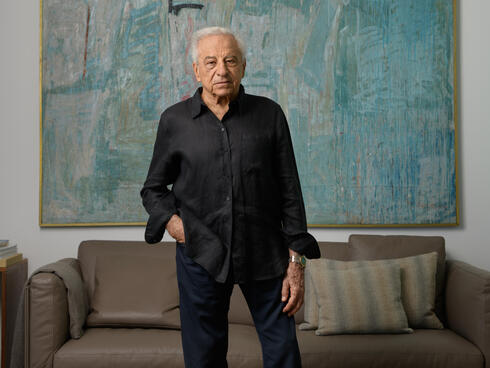
"It's surprising to see a 91-year-old in your physical and mental condition," I tell Daniel Jusidman when we meet in his apartment in a Tel Aviv tower on HaShoftim Street. "My physical and mental condition is a matter of genetics, luck and discipline, and I don't know exactly what dosage of each of them," he answers with a smile. "I'm very disciplined. I exercise, 20 minutes of meditation every day, stretching three times a week, and tennis with a professional trainer. I read and play chess to keep my mind active. I eat healthily, and for 15 years I've been in a medical program with a doctor in New York who monitors me and gives me all kinds of pills, vitamins and supplements, I take 45 of them a day. And there's also the matter of genetics. My sister, for example, is 82 years old and doesn't do anything, and she's perfectly fine. And I'm active all the time, in philanthropy and in my personal investments."
Where does the money come from that allows you to be active in investments and philanthropy?
"I lived in Mexico for 71 years, and there was a time when making money there was easy, I used to say jokingly. Any idiot could make a profit. I used to say back then that in order not to make money in Mexico, you have to be both lazy and an idiot. I've seen completely stupid people who made good money. In recent years, when the economy has become more complicated and there's more competition, it's different. But before, it was enough to set up a store and you could get rich."
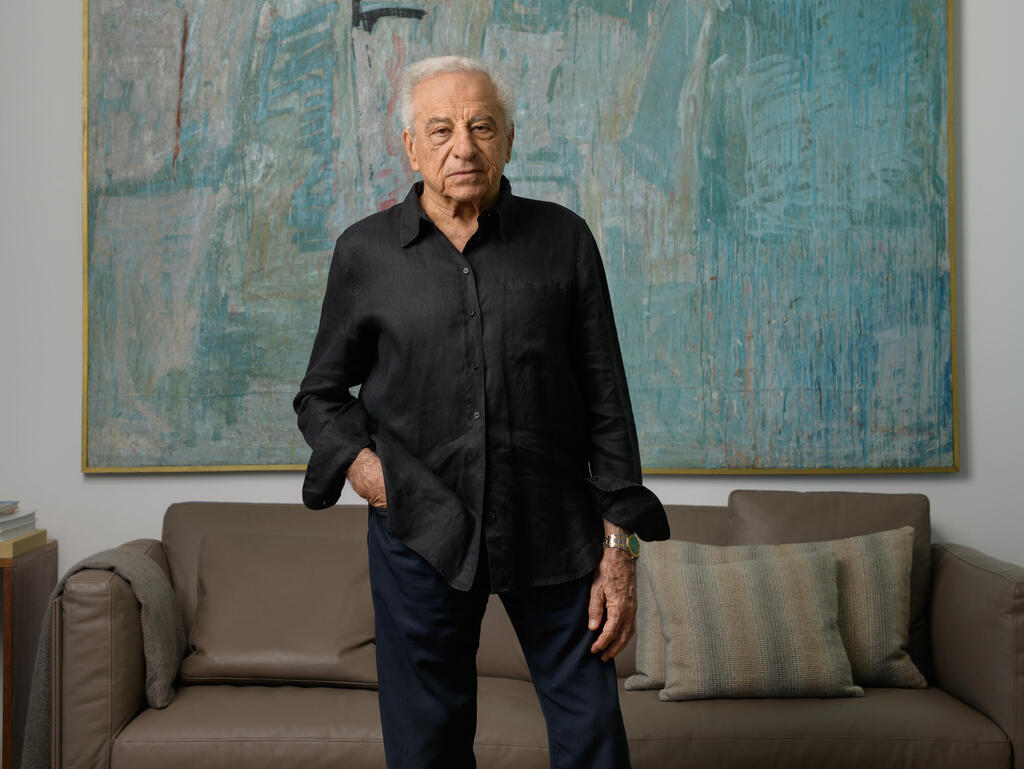
Jusidman, it is clear, was not lazy and certainly not an idiot. His enormous business success in Mexico allowed the Jusidman Family Foundation to make an extraordinary donation last week: NIS 200 million to establish the new rehabilitation hospital of the Reuth Association, which treats, among other things, wounded soldiers, victims of car accidents, chronically ill patients, and elderly geriatric patients. This donation will help move the hospital, which will be renamed the Jusidman Rehabilitation Hospital, from the Yad Eliyahu neighborhood in Tel Aviv to Sde Dov, and increase the number of beds from 350 to 540, enabling a better response to those in need of rehabilitation, whose number has surged since October 7.
The donation to Reuth is just the latest in the extensive philanthropic activity of the Jusidman family. Over the past 15 years, it has donated NIS 200 million to a variety of causes, including the establishment of an emergency room and trauma center at Beilinson Hospital, a cancer research center at Sheba Hospital, a conference center at Reichman University, a youth science center at Ben-Gurion University, a program to develop Bedouin leadership in the Negev, and the Magshimim program to train youth in the periphery for high-tech professions. In the coming decade, the foundation plans to donate another NIS 500 million (including Reuth).
Don't you feel that you are burning your children's inheritance?
"How much can you already give your children? I had a friend who got very rich from real estate in Berlin and lived in Israel for many years. He would come here every year to give advice to everyone, but did not donate a shekel, claiming that 'there are wars here all the time and who knows if Israel will even exist in the future'. When he died, he bequeathed all his money to his son, who paid heavy taxes on the inheritance. Then his son got divorced, came out of the closet and spent the money like crazy.
"I, on the other hand, grew up without money, and when I leave this world I will have nothing. I will leave 50% of my capital to philanthropy and the rest to my children, while 50% of what they receive will also go to donations they choose themselves. I will not leave much to my children, but I will leave them enough. Everyone knows this and everyone is fine with it."
And why is the largest donation so far to a hospital in Tel Aviv?
"In the past, I didn't want to invest in projects in Tel Aviv, because I said the periphery needed help, while Tel Aviv is a strong city. But these days, when the government is attacking the life of the liberal secular society that this city represents, I decided that I wanted to support a project related to it."
Do you see yourself as a liberal Jew?
"I am very Jewish and very secular. There is no contradiction between the two. Today there is this trendy perception that being Jewish requires being on the extreme right, and if you are on the left then you are not Jewish. But that is not true. You can be normal: Jewish and democratic. I have strong Jewish values without going to synagogue. My democratic, humanitarian and social perceptions are very Jewish."
"I just copied from other companies"
Jusidman, who is interviewed in basic Hebrew and English, is the founder of the Mexican Truper Group, the largest manufacturer and marketer of hardware in Latin America. His fortune is currently estimated at hundreds of millions of dollars. He was born and raised in Mexico City in a family of immigrants from Russia and Ukraine.
"My family was in the hardware business all the time," he says. "My grandfather had a hardware store back in Ukraine, and when my father came to Mexico he started selling hand tools on the street. All his life was in the hardware business, not very successful at the time. When I reached high school, I started working with him in the store and the small shop located behind, but after five years I left because we didn’t get along."
Was Judaism significant in the family?
"My parents identified as Jews, but it wasn’t really expressed in practice. On the one hand, my grandparents spoke Yiddish, and on the other hand, we had a Christmas tree at home. I didn’t go to a Jewish school, but a third of the children in my school were Jewish. On May 15, 1948, the day after the declaration of independence of the State of Israel, I had my bar mitzvah and became a Zionist. I organized a Zionist group in class, and we became a group. I have no idea where it came from within me. After a few months, my mother sent me to Bnei Akiva because she thought I had no friends, but they suspended me because I took the kids to eat pork tacos. From there I went to Hashomer Hatzair, where I stayed for three years, and that shaped me as a person."
5 View gallery
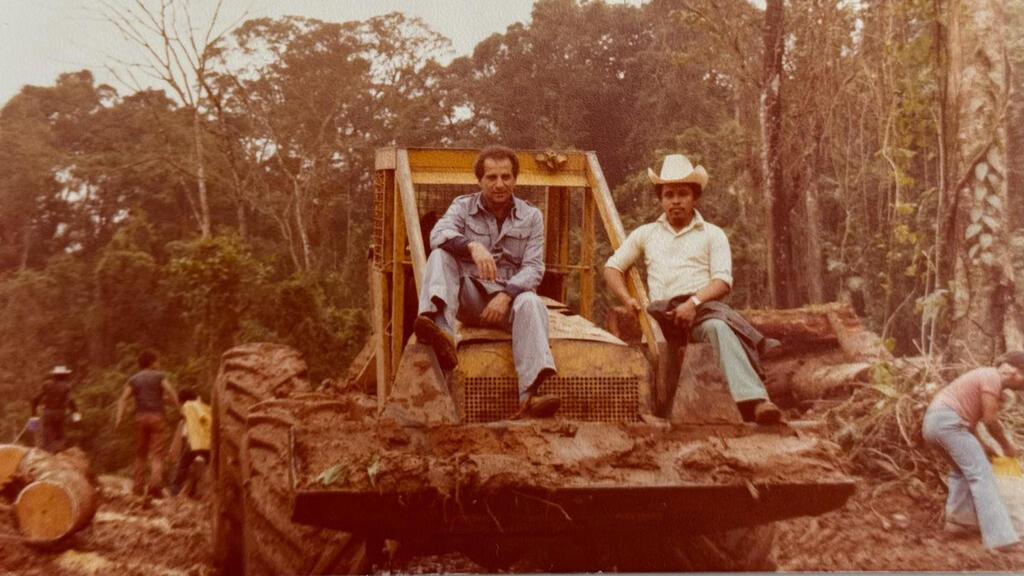
Daniel Jusidman on an ATV in the mountains of Mexico, cutting down trees for tool handles, late 1970s
(Courtesy of the interviewee)
Why?
"This is the place that shaped my character and personality more than anything else. First, because it was there that I first understood my Zionism and Judaism. I identified with the philosophy of the Marxist left. I studied and read a lot of Marx and Engels, about fighting the establishment, about being a revolutionary, it fascinated me. Until I visited the Soviet Union in 1961, and within 48 hours I realized that the communist paradise I had imagined was actually hell."
At the age of 25, Jusidman came to Israel to study for a master’s degree at the Technion after completing a bachelor’s degree in mechanical engineering in Mexico.
"I arrived in a one-room apartment in Haifa, they got me a job for 250 pounds a month, and it was one of the happiest years of my life," he says. "I connected with the people, I identified strongly with everything I saw, and I planned to stay. But after a year, my father died and I had to return to his shop in Mexico to support my mother and sister. It was the first difficult crossroads in my life. I asked myself: what will I do with my life now that its trajectory has completely changed?"
And what did you answer yourself?
"That I would get married and become rich. The first was easier, and I did get married within a year. Getting rich took longer, but like I said, it was a great moment in Mexico."
Jusidman’s first significant business decision was to shift from marketing tools to manufacturing them himself.
"I saw that the local standard for hammers, axes, shovels, and other tools was poor, and since there was almost no import, there was little competition in the field. So I started studying what other companies in the world were doing, and I understood how we could improve the quality of tools in production."
How?
"In 1973, the American company sold their part of the shares which drove me to rename the company to Jusidman dissolved the partnership and renamed the independent companyTruper, a brand spanning tools for gardening, plumbing, electrical work, and heavy industry equipment.
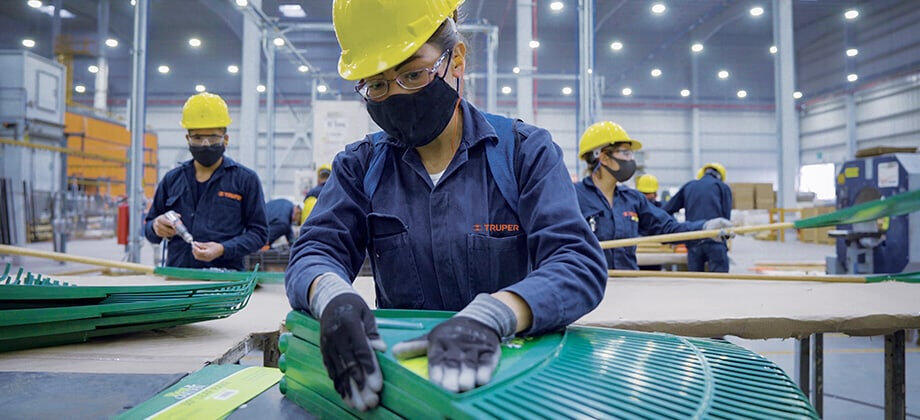
Today, Truper is the largest exporter of hand tools in Latin America, with 22 factories, 30,000 employees, and a presence in dozens of countries. Jusidman ran it for most of its history until 2006, when he stepped aside under circumstances he still finds difficult to discuss.
"I won’t touch on that subject," he clarifies. "I only say that even 20 years after I retired, Truper is still my baby, and I continue to follow it."
"I was lucky to profit with Dankner"
Jusidman has three sons, and he partners with Yigal (57), the youngest, to run the family philanthropic foundation.
Family members describe a titanic struggle between father and son, both dominant figures, which ultimately ended with the father’s retirement from the company.
This event shook Jusidman’s world.
"At 71, I had to reinvent my life," he says. "I didn’t know what would happen to me, and I had no plan. I only knew how to lead the company, and it was confusing and complicated to understand who I was without it. It was a difficult moment in my life, but in the end it worked out for the best."
What did you do?
"I asked myself what I wanted to do, and the answer was to move to an island. So I ended up in Manhattan," he laughs. "I moved into real estate investments in the United States and other investments and philanthropy, so I stayed busy."
The new chapter also allowed Jusidman to fulfill his long-standing dream of immigrating to Israel.
"I’ve been a Zionist my whole life," he says. "In Mexico, I wasn’t active in the Jewish community, but after I left Truper my ties with Israel became stronger and stronger. I bought an apartment in central Tel Aviv 15 years ago, started spending more time here, and 10 years ago I became a citizen."
What business investments have you made in Israel?
"I am invested in Navitas (the oil and gas partnership founded by Gideon Tadmor) and in the Dalia Power Plant (a private electricity producer led by George Horesh). I first met George Horesh two months ago, a great guy. Smart, low-key, just fantastic. We went down in the elevator together and I didn’t recognize him until someone whispered that it was him. I invited him to a restaurant, and he said, ‘No. Come to my house.’ And we also have an investment in Tamar, not the Tamar partnership, but Tamar Petroleum (the company led by Eli Azur, established to dilute Yitzhak Tshuva’s control over the gas reservoir)."
Are you a friend of Tshuva?
"I wouldn’t say that. We only met once. He invited me to lunch and I went because I wanted to understand my investment in his company, which was doing very poorly at the time. That was the only time we met. He is a very smart and lucky man. It took many years for our investment to grow, and I kept it from the beginning, even when it wasn’t doing well."
In the past, you tried to invest in Nochi Dankner’s IDB. You deposited about NIS 90 million in 2013 as part of a group of investors to acquire control of the group, and you continued with the investment.
"It was actually an excellent investment. I didn’t know the business world here at the time, and someone suggested I invest with Dankner in IDB. I looked at his companies, and they seemed excellent to me, so I wanted to invest. I don’t remember how many millions I put in, but it was money held in trust, with an option to return. They say it’s better to be lucky than smart. And because of the exchange rate changes, I even made $600,000, so I was quite pleased."
Are you still making new business investments?
"Two years ago I decided to stop, because returns take a long time, at least 5-6 years, and now I prefer shorter-term things (although a year ago I came across a good real estate investment in the United States and couldn’t resist). My main goal now is to reach 100 years old in good health and enjoy that time as much as possible. That’s why I focus on philanthropy. I get great satisfaction from doing good. It gives my life meaning."
"Democracy is a top priority"
Jusidman founded the family philanthropy foundation in 2010 with the goal of reducing socioeconomic gaps in Israel, with a focus on investments in education in the periphery and in health. "We are very serious and professional. We research, test, and participate in every project, not just give money," he says.
Where did you start?
"In a construction project for the Neve Michael boarding school in Pardes Hanna. It's a pretty funny story. I wanted to do philanthropy in Israel, but I didn't know where, so I asked for proposals from Keren Hayesod (the fundraising arm of the Zionist Organization), and that was the first proposal I received. I started with small donations, and when the scale increased, I said I had to see the place with my own eyes. So I arrived and I was shocked: all the children were religious! I wanted to leave. But when they showed me that they were doing good work and that their attitude was positive, I continued to support them. And thanks to them, I also met my wife, Batya."
How did that happen?
"I was already divorced for the second time at the time, and she actually lived in New York. On one of her visits to Israel, her cousin brought her to visit Neve Michael, because he studied there as a child, and someone suggested we be introduced. They gave me her number, I called, and we've been together for 18 years. At my age, it's very important to have a life partner."
In recent years, a new focus has been added to the foundation's contributions: preserving the democratic character of the country. "This means that, in the spirit of the Declaration of Independence, we support joint programs for Jewish and Arab administrators, a pre-military preparatory school for Arabs, and Bedouin leadership, a population that the system has simply neglected. If you want a healthy country, you must support minorities."
Why is it important for you to invest in democracy?
"Because of the problems in the country today. It's a top priority. We see the steps the government is taking, and I hope it will be replaced soon. But the deeper problems in Israeli society are the far right and the subsidies for the Haredim. This is Israel's number one problem, not Iran."
Easy to say, hard to do.
"Solving the problem is very easy, stop the flow of funds. Cut the money. All the rest is bullshit. If the next government has the power and the will, the Haredim will have to change, and we will have to help and support that. That is why we donated to the Hillel and Yotzim L'Shinui (Out for Change) associations, which support people who left ultra-Orthodox (Haredi) society. But that is just aspirin. It does not solve the problem. We need to stop funding a lifestyle that does not include study and work. You can be Haredi but work, study, and pay taxes like Haredim in the United States. Besides, we also need to fight the new and extreme trend of Itamar Ben-Gvir’s supporters and their extremism. Israel's main problem is internal. If you don't control it, it will destroy you."
Which politician can change the situation?
"Avigdor Lieberman. In Spanish they say, 'Only a needle can pull out another needle.' Even if he doesn't become prime minister, he will be strong with the Haredim, and for me that's the number one consideration."
To commemorate or not to commemorate?
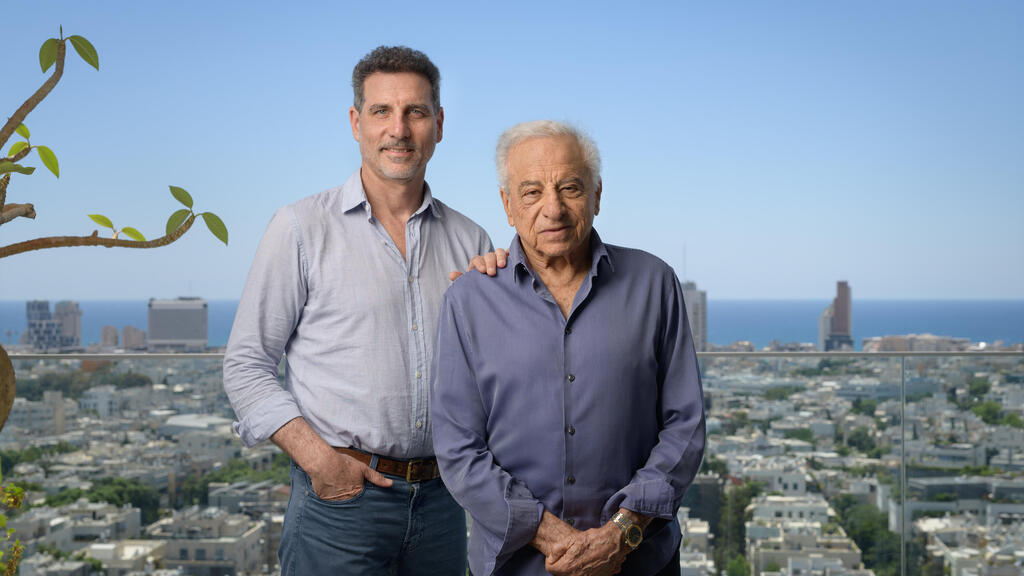
Jusidman's youngest son, Yigal, who runs the philanthropic foundation, immigrated to Israel himself three years ago, and the two maintain an intense relationship. "There are generational differences in perceptions between us," says Yigal. "But we learned to work together even in disagreements. Ultimately it is his money and will."
How did you get into your dad’s fund?
"I always thought I would work with my dad, that this would be my life. Even as a kid, I remember him coming home, asking about school for five minutes, and the rest of the conversation at dinner was about the business. I learned about Truper from a young age, studied business administration at university, and then I joined the company. But after five years, I suddenly realized that this was not the world I wanted to be in."
What did you understand?
"That being in business is an endless race. I learned that from my father too. When he divorced my mother at the age of 50 or so, he decided to make a change, to enjoy life and the money he had made. I was 22 at the time, I had a girlfriend for seven years and a job in the business, and I told myself that I already knew the end of the movie. Until then, I thought I just had to put a ring on my girlfriend's finger, and we would live happily ever after, have children, and the business would bring me a lot of money. And suddenly I said to myself: this is a boring path in life. Why do I have to wait until I am 50, like my father, to dare? I wanted to see what else was out there, so I decided to stop, to see what else life had besides business, and I went on a trip that lasted three and a half years, including a year in India where I did Vipassana, which changed my life. The trip opened my heart."
What happened to you there?
"I found what I wanted from life. The principles and values that I wanted to live by."
What are they?
"To be happy, to live in peace with myself, and to try to do good for others. I was looking for a way to work without ego for the benefit of others, and in 2010 I had the opportunity to work at the foundation with my father. Since then, I have been working for the benefit of the community, that's what's important to me and what makes me feel good."
On one central issue, father and son disagree: is commemorating the family name in their buildings and projects important? "As a philanthropist, I want to do good for the community. The name and recognition are not important to me," says Yigal. But his father insists there is meaning in it: "I understand Yigal, but two things are important to me: the first is that people see that our family did something. And the second: you die when your name is forgotten. But if I leave my name in a hospital or a school, I will still be here."
"My heart is in Israel. Period"
At 91, Jusidman is far from resting. "Tomorrow I'm flying to Barcelona with Batya, after two days we'll go to Mexico and then to Aspen to celebrate my son's birthday. From there we'll continue to New York, then to Switzerland, to a music festival and spa, and only then back to Israel. My life is active and full, I live well. I spend money, but not crazily. I have everything I need, I'm active, and I'll continue to be that way as long as I can."
Where is the center of your life today?
"A third in Israel, a third in Mexico, and a third in New York. But my heart is in Israel, period. In New York I love the restaurants, the theater, the concerts and Central Park, it's wonderful. In Mexico I have a house in the mountains with big trees and a huge garden. I love Mexico, the Mexicans, the food and the weather, but that's all. It's a good place to be alone. Only in Israel do I feel part of society. When I open the news in the morning, wherever I am, it's first and foremost news about Israel. Every news I read makes me think, 'How does this affect Israel?' In Israel I have many friends and a social life, which I don't have anywhere else. Even my children are no longer in Mexico. Ari moved to Miami, and from there he runs Truper. Yishai lives in Los Angeles and is moving to Israel before the end of the year. Yigal lives in Israel."
What would you say to someone who is leaving the country because of the situation?
"Historically, Jews have forgotten their Judaism, for whom living in Israel or Timbuktu is the same. I was like that once. I understand people who want to escape wars, but if you want to disappear somewhere in the world, you can. You will live somewhere else as if being Jewish is not personal, until someone reminds you that you are Jewish. There is a price for that. Of course, those who stay in the country also pay a price of pressure, wars and cost of living. But in my opinion, Israel is the only option for Jews, and therefore it is so important to keep it democratic."
Do you have plans for the future?
"You get old when you stop planning for the future and just live in the present. And that's what happened to me. I plan small things here and there, but I don't buy property or even art anymore, because how much longer will I be here? If I live another nine years and make it to 100 years healthy, I'll be happy."



