










Israel’s natural water reserves hit 100-year low after two years of drought
Despite rainfall approaching the national average in 2025-2026, the cumulative volume of water available in the Sea of Galilee over two seasons was the lowest in a century of measurements. The north remains under pressure, while the south has experienced an unusually intense season of flash floods.
In September, acting on instructions from the Water Authority, Mekorot increased pumping from the Sea of Galilee and the Coastal Aquifer after an algae crisis forced desalination plants to reduce production. It has now become clear that two consecutive years of drought in northern Israel have severely depleted natural water sources, bringing the country’s available water reserves to a historic low at a time when they are needed most.
According to the Hydrological Service’s summary of the 2025-2026 rainy season, which runs from October through April, rainfall across Israel reached approximately 95% of the long-term average. The figure was about 90% in the Sea of Galilee basin and 85% in the Western Galilee. However, rainfall totals alone do not reflect the damage left by the previous year’s drought.
The cumulative volume of water available in the Sea of Galilee from the start of the 2025-2026 season through the end of April was approximately 142 million cubic meters (MCM). Combined with the 2024-2025 drought season, the total for the two seasons amounted to about 208 MCM, the lowest level recorded in 100 years of measurements.
Although the past rainy season brought an improvement over 2024-2025, the effects of the previous year’s severe shortage remain evident in natural water sources, particularly in northern Israel and the Sea of Galilee basin.
1 View gallery
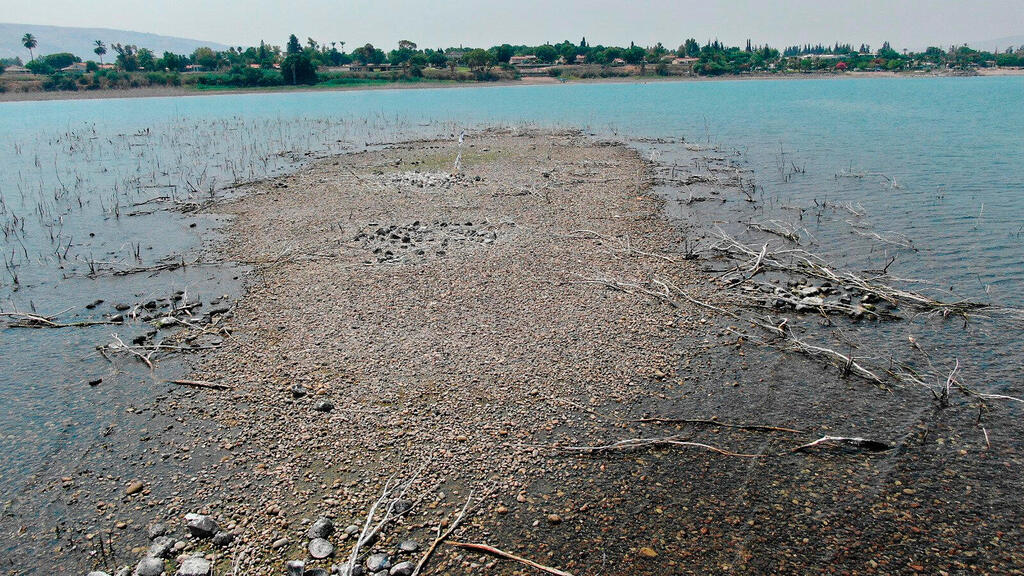
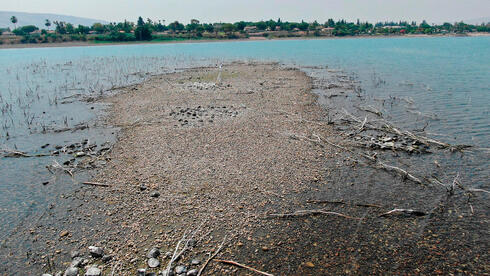
An island in the Sea of Galilee that formed following the drop in water levels.
(Shai Mizrahi)
National rainfall reached approximately 95% of the long-term average, with the Coastal and Yarkon-Taninim basins receiving around 100%. By contrast, the Sea of Galilee basin received about 90% of average rainfall and the Western Galilee just 85%. The figures highlight how a national average close to normal can mask persistent regional water shortages, especially when a previous drought has already depleted reserves.
The impact of the two seasons is particularly evident in the Sea of Galilee basin. The volume of water flowing into the lake from the beginning of the 2025-2026 season through the end of May totaled only about 140 million cubic meters, one of the lowest figures on record.
The shortage has practical implications for Israel’s water management. In September, Mekorot increased pumping from the Sea of Galilee and the Coastal Aquifer after an algae crisis forced desalination plants to reduce production. The episode highlighted the pressure on natural water sources when desalination capacity is constrained.
While northern Israel struggled with a persistent water deficit, the south and east experienced an unusually high number of intense rainfall events and flash floods.
On April 27, 2026, a storm over the Judean Desert and northeastern Negev brought more than 50 millimeters of rain, most of it falling within about an hour and a half. The Meteorological Service estimated that the intensity of the rainfall near the storm’s center had a return period of at least 100 years.
The rainfall triggered flash floods across numerous streams. In Nahal Tze’elim, the Water Authority’s Hydrological Service recorded a peak flow of 570 cubic meters per second, the highest since measurements began. The stream’s water level rose by approximately four meters within about half an hour of the event’s onset. The estimated return period for the peak flow was more than 50 years.
The event was part of a series of floods in southern and eastern Israel, making the 2025-2026 season particularly unusual in the frequency of such events. The contrast between the dry north and the flood-prone south illustrates the uneven distribution of rainfall across the country.
The Dead Sea also showed a relatively unusual trend compared with recent years. From the beginning of the season through the end of April, its water level fell by 18 centimeters, compared with a decline of 63 centimeters during the same period a year earlier.
“The recent rainy season clearly illustrates the gap that can arise between national precipitation figures and the actual state of water sources,” said Yechezkel Lifshitz, director of the Water Authority. “Even when rainfall approaches the average, water sources continue to bear the impact of the preceding drought year. At the same time, the south experienced an exceptional season in terms of the frequency and intensity of flash floods.”
Lifshitz said the data underscored the importance of continuous monitoring, forecasting, long-term planning and flexible management of Israel’s water resources.
Israel is already classified as facing “extremely high water stress” under the World Resources Institute’s Aqueduct index, with a baseline water stress score of approximately 4.94 out of 5. The score reflects the ratio of water withdrawals to available renewable water supplies.
Desalination and water reuse help reduce the risk of shortages in municipal water supplies, but they do not eliminate pressure on natural water sources, agriculture and streams. Nor do they remove the effects of prolonged drought on ecosystems and water availability in individual regions.
The Meteorological Service has described the 2024-2025 drought as exceptional. Non-desert regions received an average of about 55% of their usual annual rainfall, while the north experienced unprecedented shortages. Although the following season was close to the national average, the rainfall deficit in the north persisted, compounding the effects of the previous year.
The broader pattern is consistent with growing concerns about drought risk in the Mediterranean basin. Climate change is increasing the likelihood and severity of some extreme dry spells, although the contribution of climate change varies by region and event.
The World Meteorological Organization reported severe dryness in the Eastern Mediterranean in 2025. Separately, a study by World Weather Attribution found that human-induced climate change had made the drought affecting Syria, Iraq and Iran more than ten times as likely. The researchers concluded that, without climate change, the combination of low precipitation and high temperatures would not have qualified as a drought.



