










Apple's lawsuit puts OpenAI's AI hardware dream under scrutiny
The company alleges a coordinated effort to obtain decades of confidential Apple engineering work as OpenAI races beyond ChatGPT.
Apple filed a federal lawsuit over the weekend against OpenAI and several of its executives, alleging that they orchestrated a systematic campaign to steal trade secrets from its hardware division. According to the complaint, the company recruited hundreds of Apple employees, encouraged them to disclose confidential information before leaving, and even instructed them on how to bypass Apple's security procedures in order to accelerate development of the new AI device being led by former Apple designer Jony Ive.
The allegations inevitably draw comparisons with one of Silicon Valley's most notorious trade secrets cases. In 2016, Anthony Levandowski, a co-founder of Google's self-driving car division, left the company to launch his own startup, which was acquired by Uber just months later. Before leaving Google, Levandowski copied 9.7 gigabytes of confidential engineering diagrams, designs, testing documents and trade secrets.
When Google discovered the theft, it filed a civil lawsuit against Levandowski, which was later followed by federal criminal charges. The court ruled against him in both cases. Although Uber ultimately paid a reduced settlement to Google, Levandowski was sentenced to 18 months in prison before being pardoned by President Donald Trump at the end of his first term. The scandal also contributed to the collapse of Uber's autonomous vehicle ambitions at the time.
In the decade since Levandowski walked away from Google with a trove of confidential information, the technology industry has changed dramatically. Enthusiasm for autonomous vehicles has largely been replaced by artificial intelligence as Silicon Valley's defining technology race. But the battle over intellectual property appears as fierce as ever. Apple's lawsuit against OpenAI evokes clear echoes of the Levandowski affair, only on a much larger scale. Instead of one employee accused of stealing confidential files, Apple alleges a coordinated effort involving hundreds of employees. Instead of a single rogue executive, Apple claims OpenAI itself instructed employees on how to bypass security procedures.
The lawsuit casts a shadow over OpenAI's reputation and could complicate any future public offering. It also raises questions about the legacy of Jony Ive, Apple's former chief design officer and now a key figure in OpenAI's hardware ambitions. Although Ive is not named as a defendant, Apple alleges that io, the hardware startup he co-founded and that OpenAI later acquired,played a central role in the broader scheme.
The case is particularly striking given that OpenAI remains one of Apple's closest AI partners. When Apple introduced Apple Intelligence two years ago, ChatGPT became the only third-party chatbot integrated directly into Apple's operating systems, despite earlier plans to add competing AI services. Behind the scenes, however, the companies have also been competing aggressively for engineering talent.
About a year ago, OpenAI acquired Ive's hardware startup, io, with the stated goal of developing what executives described as the iPhone of the AI era. The deal was widely viewed as a direct challenge to Apple, and it came from the legendary designer behind many of the company's most iconic products, including the iPhone, iPad and iPod.
Apple now alleges that the acquisition formed part of a broader effort to obtain its trade secrets and incorporate them into OpenAI's products, including the hardware device that Ive is leading. According to the lawsuit, filed Friday in federal court in California, OpenAI asked Apple employees interviewing for jobs to discuss projects they were working on and, in some cases, to bring components and prototypes to interviews. Apple also alleges that former employees retained internal documents on MacBooks they took with them after leaving the company. According to the complaint, OpenAI later used that information to approach Apple's manufacturing partners and, in at least one instance, attempted to replicate a metal-finishing technique developed by Apple.
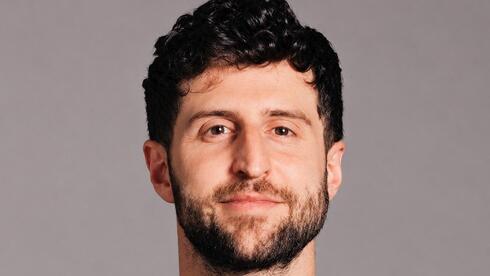
One of the key defendants is OpenAI's vice president of hardware, Tang Tan. Before leaving Apple, Tan was one of the company's most senior executives responsible for designing products including the iPhone and Apple Watch. In late 2023, he announced his departure, but Apple allowed him to remain until February 2024 to complete a major reorganization of its hardware division. Apple alleges that, behind the scenes, Tan had already begun working with Ive and OpenAI CEO Sam Altman on the company's AI hardware project.
Ive and Tan later co-founded io alongside other former Apple employees before the startup was acquired by OpenAI for $6.9 billion. Apple alleges that Tan played an active role in obtaining confidential information and instructed employees he recruited from Apple on how to bypass the company's security procedures.
According to the lawsuit, Tan also used job interviews to gather intelligence about future Apple products. In one case, Apple alleges that an employee received information about an internal project only hours before interviewing with Tan. "During the interview, Mr. Tan extracted more information about Apple's project," the complaint states. "This became a pattern."
Apple further alleges that after accepting employment offers from OpenAI, former Apple employees were encouraged to email confidential information to their personal accounts before resigning and returning company devices. "OpenAI distributed a checklist to help employees evade detection by Apple security teams," the lawsuit alleges.
Another former Apple engineer named in the lawsuit is Chang Liu, who worked on the iPhone development team. Apple alleges that Liu left the company with a MacBook he never returned and exploited his relationship with a former colleague to gain continued access to Apple's internal systems. According to the complaint, Liu discovered a software vulnerability that allowed him persistent access to Apple's internal file servers. In one exchange cited by Apple, he wrote to colleague Alyssa Peng: "LOL, you found out I can access the storage network, so funny." Apple alleges that Liu used this access to download presentations, software designs, manufacturing details and testing procedures while already working at OpenAI.
Apple also alleges that Peng helped Liu obtain additional confidential information using her own company laptop before later joining OpenAI's hardware division. Together with more than 400 former Apple employees who, according to the lawsuit, were recruited by OpenAI with lucrative compensation packages and the opportunity to work on what has been described as the iPhone of the AI era, Apple claims they formed part of a broader campaign to obtain proprietary information. “Significant evidence has emerged suggesting individuals employed by OpenAI wrongfully took Apple’s secret and confidential information regarding our unreleased technologies, processes and products,” the company said in a statement.
OpenAI responded: “We have no interest in other companies’ trade secrets.”
“We remain focused on building innovative technology that empowers people everywhere.”
Reputational damage
Regardless of the lawsuit's ultimate outcome, the case represents a significant reputational challenge for OpenAI. The company has already faced growing scrutiny as it pivots toward the enterprise market while continuing to spend heavily on AI infrastructure. Reports have also suggested that OpenAI is considering delaying its planned IPO until 2027.
The lawsuit also adds to criticism surrounding CEO Sam Altman. Earlier this year, OpenAI disbanded its safety team, a move that drew criticism from researchers and former employees who argued that the company was prioritizing rapid development over AI safety.
At the same time, OpenAI faces broader industry challenges, including growing concerns about the sustainability of massive AI infrastructure investments, increasing public anxiety over AI's impact on jobs, and criticism of the environmental costs associated with large data centers. The company has also faced criticism over allegations that ChatGPT was used to help plan violent crimes.
Against that backdrop, allegations of systematic industrial espionage involving senior executives could inflict further damage on OpenAI's reputation. Investors who remember the consequences of the Levandowski affair are likely to scrutinize the company even more closely if it eventually pursues a public listing.
Even if the lawsuit does not ultimately end with a decisive victory for Apple, the discovery process is expected to expose internal communications and decision-making that could prove embarrassing for OpenAI and its leadership. That could further undermine confidence in the company and make recruiting top engineering talent more difficult in an industry where competition for employees is already fierce.
If Apple ultimately prevails, the consequences could extend well beyond financial damages. A ruling in its favor could disrupt OpenAI's hardware ambitions at a critical stage, potentially delaying or even halting development of what the company hopes will become its first major consumer device beyond ChatGPT.



