










"Consumers today expect more information, more engagement with platforms, and are less satisfied with traditional links"
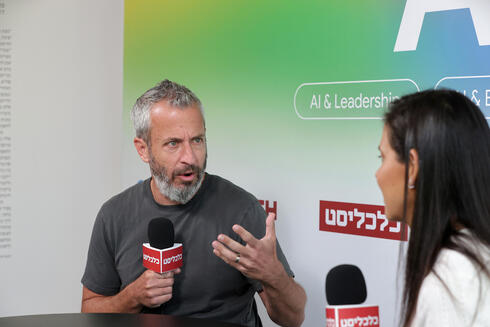
Jonathan Edelshaim, CEO of Natural Intelligence, said at Calcalist and Google’s AI Week that AI is changing consumers’ decision-making process: “The user comes to us more informed, after being exposed to more information.”
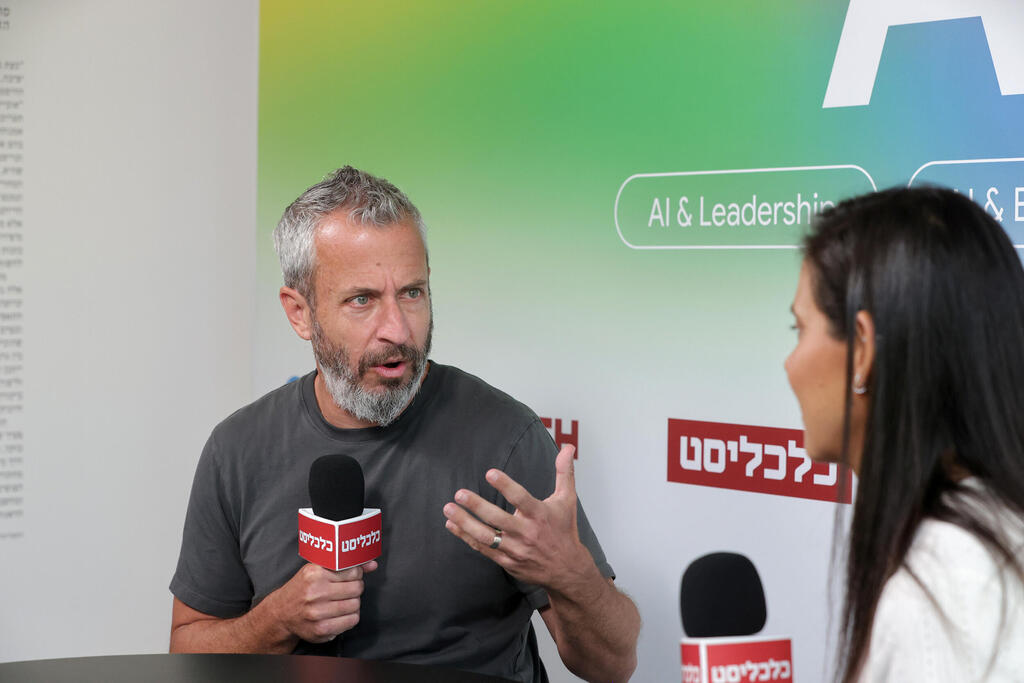
"We fly at a very high speed and at high altitude, but we are required to design parts of the plane while in motion," said Jonathan Edelshaim, CEO of Natural Intelligence, in an interview during Calcalist and Google's AI Week. The interview, which dealt with artificial intelligence as an engine for the development and growth of new products, was conducted by Maya Henkin, Director at Google Israel.
Natural Intelligence is a fascinating company. You have built a global market leader, and the model is profitable, stable, and growing over the years, without raising capital. You rely on sharp business execution and the ability to respond quickly to the market. When you look at where the company stands today, what are the main growth engines and where is management’s focus?
"We need to go back to the roots of the company and its foundation. What we knew how to do from the beginning of our journey, 16 years ago, was to position ourselves at the intersections where consumers make decisions, and create encounters between a consumer looking for a specific service or product and companies and brands looking for new users. In the early years, it was very simple, because most decision-making happened on Google, in the world of search. Users or consumers would come in and describe in three to five words what they wanted, what is called intent. We knew how to build a business that captures them at this point and connects them to brands looking for new users."
According to him, the company currently operates in about 80 areas, including mortgages, insurance, credit cards, banking, food, pet food, and games. "In recent years, our growth strategy has been two-pronged: first, more areas, what are called verticals, entering the next field where we can create a marketplace that brings brands and consumers together. Second, expanding the channels and nodes where we meet the user, not necessarily in places where intent is explicitly expressed, but also at other points in the consumer journey, with an emphasis on Google, YouTube, and similar platforms."
Edelshaim added that the company’s growth strategy is not fundamentally changing, but the operating environment is changing rapidly. "The very nodes where we bring consumers and brands together are being redefined. They are expanding, multiplying; new companies are emerging, new platforms are appearing, and Google itself is changing the way it organizes these nodes. Our strategy is to be present at all of these nodes and continue creating matches between brands and consumers to complete the decision-making process."
We are in a time of rapid change and paradigm shifts in the tech market and beyond. Business models that have held for years are now being shaken up, and companies are required to adapt their business models and products and strengthen their value to customers. Where do you identify the key changes in the rules of the game, and how does this environment affect your product and value proposition?
"There are changes everywhere. There are changes in the consumer decision-making journey. In the past, they would go to Google and settle for a few keywords. Today, they access multiple platforms, search, compare, and hold conversations with different search engines. This also affects expectations: they expect more information, more engagement with platforms, and are less satisfied with the traditional links of the past. We must adapt to these changes in consumer behavior."
According to him, the change is not only happening with consumers but also with the platforms themselves. "Google is a good example. It recently announced changes to the traditional search box. These changes have been underway for several years, but this is a dramatic shift. We are dealing with changes in the platforms themselves, while new platforms are also emerging. Consumer behavior is changing, and the very intersection where consumers operate, the intersection of decision-making and interface, is also changing."
Edelshaim noted that these changes require the company to re-examine the value it provides to consumers. "If in the past users would declare their intent, come to our website, and begin a sales journey there, today they may arrive more informed, after being exposed to more information. We must ensure that at every point where we meet the consumer, we add a layer of value to the decision-making process, whether comparative value or value for each advertiser and brand we connect with the consumer. We must ensure, more than in the past, that we consistently create additional value."
You talk a lot about creating value and changing platforms. You are a relatively small organization, and we are in a period of rapid technological change with many new artificial intelligence tools. How do you approach this as a CEO who must implement new technology? After all, you have working processes that generate profitability and are proven in the market. On the other hand, you must innovate and adopt new technologies. How do you balance this?
"In the last two or three years, we have been actively introducing tools and encouraging their use internally. Like the entire market, this comes from a desire to increase productivity and ensure that we harness collective intelligence for day-to-day operations."
According to him, the company has moved from implementing tools in specific areas to addressing core organizational processes. "I think we are now at a stage where we are tackling core processes in the organization and trying to make them much more efficient, more accurate, and more frequent. This is where the difficulty lies: ultimately, we fly at very high speed and at high altitude, but we are required to design parts of the plane while it is in motion. It is difficult - and not just for us."
Edelshaim added that the challenge is compounded by the company’s commitment to its business partners. "The additional difficulty for us is that we are committed to delivering results to our partners, the advertisers we represent, and there are many of them. They expect a certain volume and a certain quality from us. They expect that not to change."



