










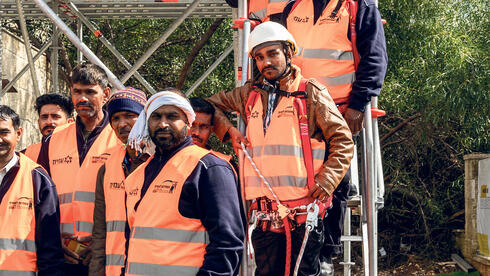
Israel to end private recruitment of construction workers from India and Sri Lanka
The Population and Immigration Authority cited global concerns over human trafficking, while industry representatives say bilateral recruitment does not provide enough skilled workers.
The construction sector has been thrown into turmoil in recent days following a new directive from the Population and Immigration Authority. The directive stipulates that, effective January 1, 2027, private recruitment of workers from India and Sri Lanka, which have recently become key sources of labor for the industry, will cease. Instead, recruitment from these countries will be conducted exclusively through bilateral channels. Industry manpower corporations are opposing the decision, warning that it could significantly curtail their ability to recruit skilled workers and drive up employment and construction costs.
A letter from the Population and Immigration Authority to manpower corporations indicates that the halt on private recruitment from these specific countries stems from global concerns over human trafficking. However, the Authority will continue to permit private recruitment from Uzbekistan, Azerbaijan, Italy, Montenegro, Mexico, Poland, Albania, Ecuador, Brazil, Guatemala, Georgia, Hungary, Vietnam, Portugal, the Philippines, Panama, Kosovo, Romania, Thailand, and Turkey.
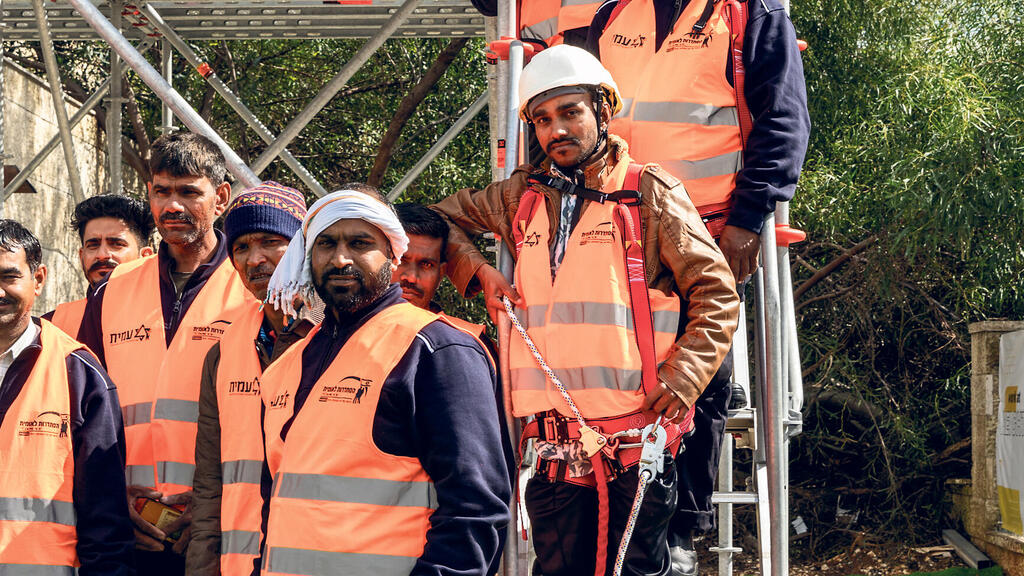
In a letter sent this week to the Population Authority, the "Daf Hadash" association, which represents approximately 160 corporations, argued that the bilateral recruitment channel does not meet the industry's needs. According to the letter, more than 5,000 workers from India and Sri Lanka arrived in Israel through the bilateral channel during 2023-2024. The association claims that some of these workers lacked sufficient professional experience.
By contrast, private recruitment allows manpower corporations and contractors to screen workers in their countries of origin, conduct practical tests, and obtain advance information about their qualifications. The association says this process also reduces the time it takes for a worker to arrive in Israel, from 4-6 months under the bilateral channel to 2-4 months under private recruitment.
From the industry's perspective, the issue extends beyond the number of workers available. The letter argues that restricting private recruitment to other regions, specifically Eastern Europe, Western Europe, and South America, is expected to drive up both recruitment costs and hourly wages. According to the corporations, wage demands and recruitment costs in these regions are significantly higher, by tens of percentage points, than in East Asian countries. As a result, they expect the increase in labor costs to be passed on to construction costs.
Meanwhile, manpower agencies are raising another issue with the Population Authority regarding the reporting of foreign workers' absences. A letter sent to the Authority yesterday claims that, following a change in guidelines, employers are unable to report workers who are absent voluntarily and without justification through the system. As a result, they are required to pay full wages even for days on which such workers do not show up.
The association argues that the phenomenon is widespread and that the change imposes additional costs on employers while creating a disincentive for workers to show up for work.
In response, the Population and Immigration Authority stated: "The update regarding countries approved for the private recruitment of foreign workers for the construction sector was published in accordance with Government Decision 1752. It should be emphasized that private recruitment remains possible, subject to the applicable quota set for such recruitment.
"The updated list of countries will take effect in January 2027. There will still be approved countries for private recruitment alongside countries with which Israel has bilateral agreements, including India and Sri Lanka, which possess a pool of foreign workers available to come to Israel."
The Authority also noted that since the beginning of the war, approximately 76,000 new foreign workers have arrived in Israel for the construction sector. It said there was therefore no basis for the claim that only 20,000 workers had arrived. In any event, the Authority said, approximately 90,000 foreign construction workers are currently in Israel, three times the number present in the country before the outbreak of the war.



