










Behind Israel’s Arrow 3 boost: Months of disputes and delayed decisions
Procurement approval came only after prolonged wrangling over funding.
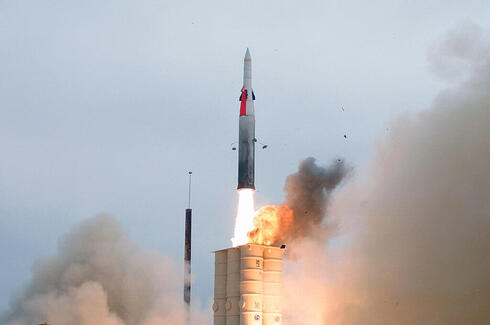
With considerable delay, and only at the beginning of the week, against the backdrop of a prolonged war with Iran and sustained barrages of ballistic missiles targeting Israeli cities, the Ministerial Committee for Procurement, headed by Defense Minister Israel Katz, approved a plan for a “significant acceleration” in the production of Arrow 3 interceptors at Israel Aerospace Industries (IAI).
The decision enables the Defense Ministry to place new orders for Arrow 3 missiles while expanding the infrastructure required to increase production capacity. The scope of the deal, including the number of interceptors, remains classified for security reasons.
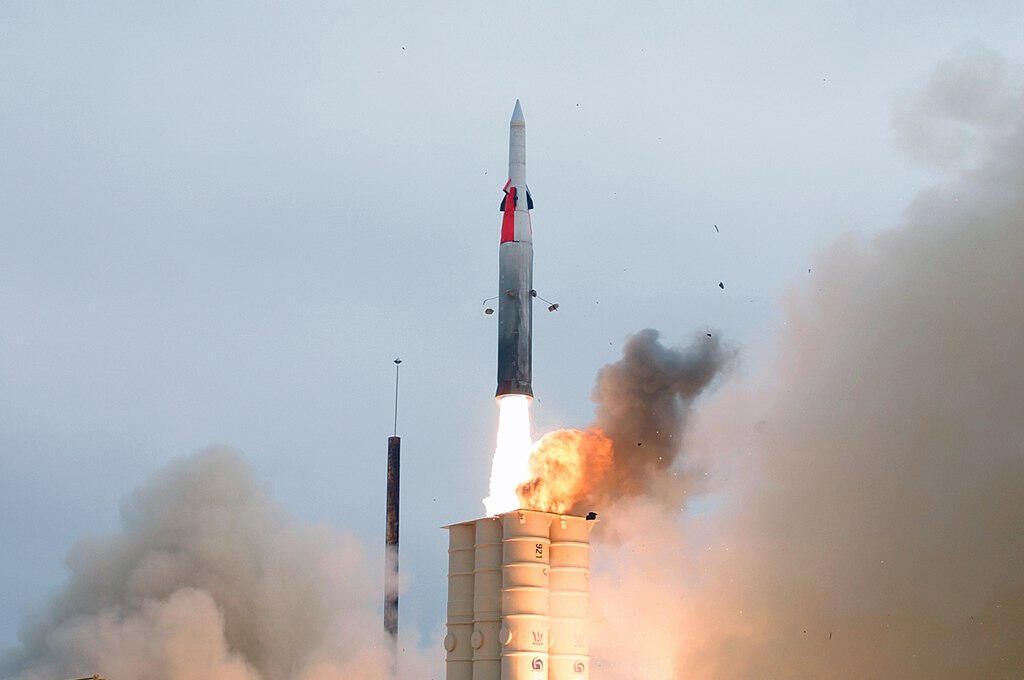
Previous procurement agreements between the Defense Ministry and IAI over the past two years have been estimated at several billion shekels. Each Arrow 3 interceptor is believed to cost more than $2 million. Since the outbreak of the October 7 war, the system has served as Israel’s primary defense against long-range ballistic missiles launched from Iran and Yemen.
In the days leading up to the decision, senior defense officials emphasized its urgency. From Defense Minister Katz and Ministry Director General Amir Baram, to IAI CEO Boaz Levy and head of the Directorate of Defense Research & Development at the Ministry of Defense Danny Gold, officials stressed that accelerating production and expanding stockpiles are essential to maintaining Israel’s defensive edge.
Yet behind the rhetoric lay months of budgetary disputes between the Defense Ministry and the Ministry of Finance, which delayed the decision. At the core of the disagreement was how to fund the expanded procurement, without which no new orders could be placed and production capacity could not be increased.
Following last year’s war with Iran, the Finance Ministry resisted further defense spending, viewing the conflict as an opportunity to restrain a budget that had already surged past 140 billion shekels. Treasury officials argued that the Defense Ministry should absorb the cost within its existing framework. Defense officials, however, warned that the first confrontation with Iran was merely a precursor to a more complex and prolonged campaign.
The latest conflict has also reshaped Israel’s interception strategy. In addition to Arrow 3, the air defense system deployed David’s Sling interceptors, originally designed for medium-range threats, against ballistic missiles. Arrow 3 operates outside the atmosphere, while David’s Sling intercepts at lower altitudes.
This distinction carries significant operational implications. In cases involving missiles with cluster warheads, intercepting them at lower altitudes may still allow submunitions to spread over wide areas, causing extensive damage. By contrast, interceptions outside the atmosphere typically result in most fragments burning up upon reentry.
Officials said the shift in interception policy reflected the need to manage Arrow stockpiles carefully, balancing immediate defense requirements with preparedness for future escalation.
Israel does not disclose the size of its missile stockpiles, nor the interception rate of incoming threats. Since October 7, more than 1,300 ballistic missiles have been launched at Israel from Iran and Yemen. Many were intercepted by Arrow systems, while others were neutralized by U.S. systems such as Aegis and THAAD.
A recent report by the British think tank RUSI estimated that interceptor stockpiles have been heavily depleted: Arrow reserves by roughly 80%, David’s Sling by 55%, and THAAD systems deployed in Israel by about half. Israeli defense officials dismissed these assessments as exaggerated, noting that production has continued uninterrupted since October 2023 and has already been significantly expanded.
In the past year, Arrow 3 production at IAI has tripled, partly driven by large export orders from Germany totaling approximately $6.5 billion. According to defense officials, advance payments from these deals helped sustain and expand production despite budgetary constraints imposed by the Finance Ministry.
The newly approved plan is expected to further increase production rates in the coming months.
Both the Defense and Finance Ministries have sought to downplay the consequences of the delay. A Treasury source said that “no missile failed to reach the IDF due to budgetary constraints,” while defense officials argued that interim solutions ensured continuity in production.
At the same time, the procurement delay unfolded alongside political infighting. Defense Minister Katz and Minister for Government Companies David Amsalem were engaged in internal disputes within the Likud party, which at times spilled over into decisions affecting IAI during wartime.
Alongside the approval of the production plan, Katz announced a resolution to a separate dispute: the appointment of IAI CEO Boaz Levy as chairman of the company.
Levy is widely regarded as a professional choice. A longtime IAI veteran, he previously led its most sensitive missile programs and headed the division responsible for Arrow production. During his tenure as CEO, IAI reported record financial performance, with its order backlog surpassing $30 billion.
However, the transition raises governance questions, as Levy will effectively move from CEO to chairman and may be required to oversee decisions he previously made. The Government Companies Authority has approved arrangements to manage potential conflicts of interest, including a temporary separation between the roles.
Levy’s appointment is expected to be approved by the senior appointments committee in the coming days, after which the board will formally elect him as chairman. He is expected to appoint an interim CEO while a search is conducted for a permanent successor, likely from within the company.
Officials also see Levy as well positioned to advance a long-delayed plan to partially privatize IAI. The proposed IPO would involve selling 30% of the company at an estimated valuation of 80-100 billion shekels, leveraging its strong financial performance.
The Defense Ministry has recently signaled its support for public offerings of both IAI and Rafael, a process that is expected to take about a year.



