










“We never stopped investing in our talent”: Salesforce doubles down on junior hiring
As AI reshapes entry-level tech jobs and computer science enrollment declines in Israel, Salesforce says it is continuing to recruit university students and junior employees.
Israeli students are steering away from computer science. Undergraduate enrollment in mathematics, statistics and computer science fell 7.4% in the 2025-2026 academic year, to 20,571 from 22,203, after an earlier drop from 23,111 in 2023–2024, according to Council for Higher Education figures.
Students appear to be reading the job market. As companies pour money into AI agents, junior developers are struggling to land a first job, and the conventional wisdom has hardened: AI is closing the door on entry-level tech.
But the numbers point to a shift, not a collapse. Over the same year, enrollment in AI, data science and data engineering rose 3.9%, and at least one major employer in Israel says its junior hiring never stopped.
Earlier this year, Salesforce CEO Marc Benioff posted on X that the company was "hiring 1,000 new grads & interns right now to ride the AI exponential". In Israel, Salesforce says it never stopped.
1 View gallery
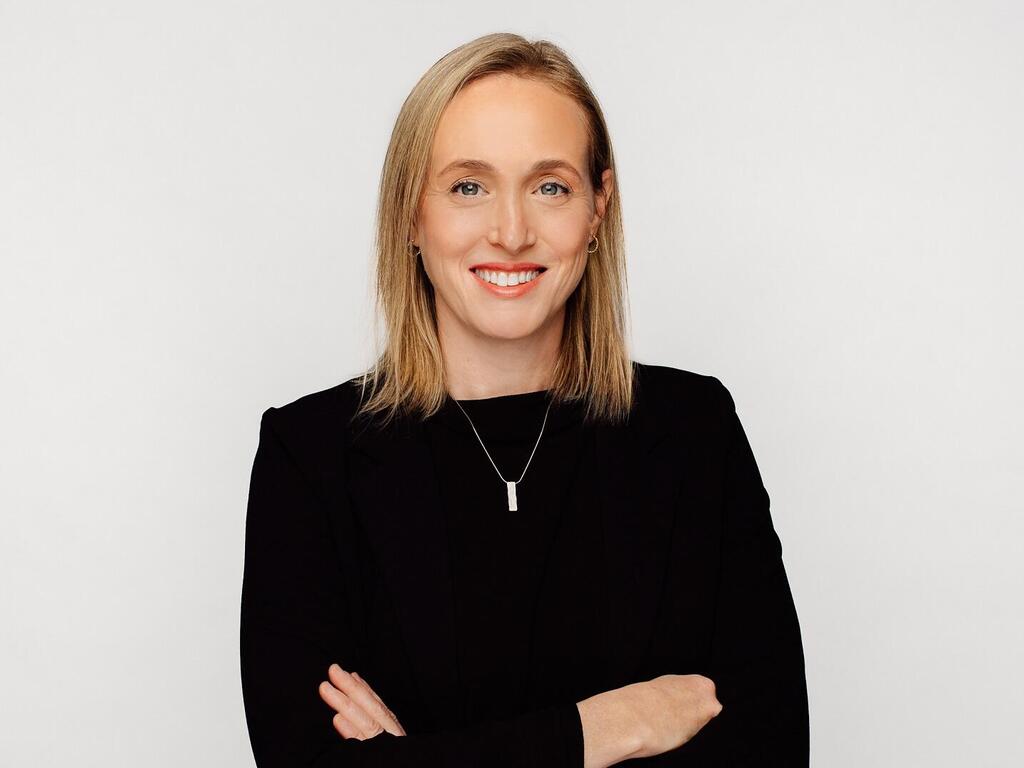
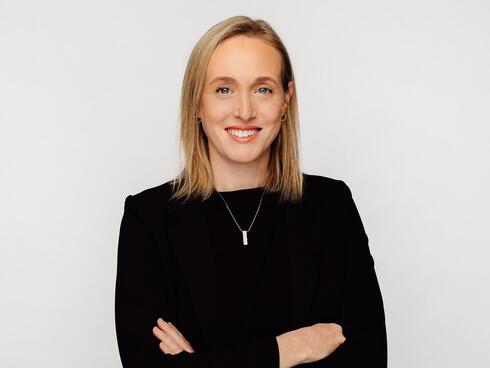
Einat Frish, Director of Technology Recruiting EMEA at Salesforce.
(Photo: Netanel Tobias)
"Unlike the broader market trends across the Israeli tech ecosystem over the past few years, Salesforce Israel did not implement a junior hiring freeze," Einat Frish, Director of Technology Recruiting EMEA at Salesforce, told CTech. She said "this year actually marks the biggest year for junior hiring in Salesforce Israel's history."
What has changed is who gets through the door. Those doing the hiring, and those advising them, describe a new profile: fluent in AI and expected to build. At Salesforce, one requirement has stayed the same: a degree.
AI-native or bust
Israel is part of Benioff's 1,000, Frish said. "We have recruited dozens of university students, alongside a substantial intake of junior hires," mainly in software engineering (R&D) and product management. Salesforce did not give figures.
What has changed, she said, is what the company looks for. The first trait on her list is an AI-native mindset: "strong technical foundations with a natural fluency in AI tools, workflows, and modern development paradigms." Next come problem-solving and creativity, "the ability to tackle complex, ambiguous engineering challenges," and communication skills, because early-career hires "work in global, cross-functional teams, making soft skills and collaboration as crucial as technical acumen."
The same shift is being preached to founders. Speaking at EY Israel's JOURNEY 2026 conference in Tel Aviv last week, NFX co-founding partner Gigi Levy-Weiss told executives that "the kind of people you need is different." "Every role needs to be a builder role. We no longer have employees that are not builders," he said, finance and marketing included. Levy-Weiss was talking about how companies should restructure for AI, not about entry-level hiring specifically.
The business case for juniors is not obvious. Speaking on a panel at the same conference, Shelly Oppenheimer-Levy, partner at EY Israel, said AI's payoff depends on experience. "If you have young employees, AI is not going to help a lot, because they don't [have the knowledge] yet," she said. The gains, she said, come with mid-level employees, who know enough to put the tools to work.
Salesforce's case for juniors rests on the future pipeline rather than present productivity. "The industry risk of a mid-level talent shortage in a few years typically stems from multi-year junior hiring freezes," she said. Because Salesforce kept its Futureforce early-career program running "even through broader market fluctuations," she said, it has "a steady internal progression of engineers growing from interns into mid-level and senior technical leaders."
"At Salesforce, we are not worried about a pipeline gap because we never stopped investing in our talent," Frish said.
Not everyone qualifies, though. Futureforce does not take bootcamp graduates. "For our Futureforce program, our policy is: we recruit exclusively university and college graduates, rather than bootcamp candidates," Frish said. "That requirement has been consistent for us."
For candidates who came into tech through a bootcamp rather than a degree, Salesforce Israel's biggest junior hiring year is closed by policy.
For those who do clear the bar, Frish says the door is staying open. "This is not a temporary trend for us; it is a core, long-term strategic pillar."



