











Nvidia takes aim at Intel’s core business
New AI-focused PC processors could threaten the revenue engine underpinning Intel’s turnaround.
Nvidia is opening a new front against Intel, introducing central processing units (CPUs) for personal computers for the first time. The company says the chips are designed specifically for the era of AI agents. “This is the most efficient PC chip ever built,” Nvidia claims.
If computers powered by the new processors, which are scheduled to launch this fall, prove successful, they could erode Intel’s most important revenue base and undermine the turnaround effort led by CEO Lip-Bu Tan.
Nvidia unveiled the chips on Monday at Computex in Taiwan. During the event, founder and CEO Jensen Huang also addressed growing concerns that artificial intelligence will eliminate programming and software engineering jobs, a debate that has intensified amid widespread layoffs across the technology sector.
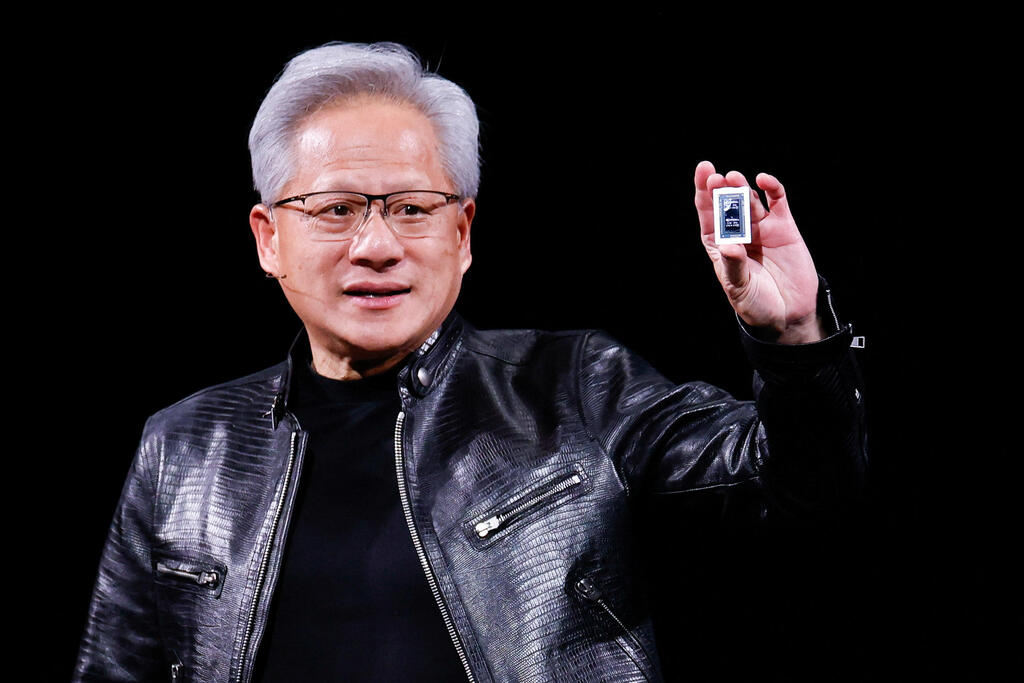
“People are talking about AI reducing the number of jobs - complete nonsense,” Huang said. “The number of software engineers is actually increasing. AI is driving the hiring of more software engineers. The reason is very simple: if you can generate another $9 trillion in economic output, why wouldn’t you hire more software engineers? Because the output is so extraordinary, companies want to hire more engineers. That’s going to be reflected in our economy soon.”
The main announcement at the event was Nvidia’s entry into the PC CPU market. The company’s new processor, RTX Spark, is designed for Windows desktops and laptops and is built specifically for AI workloads.
Nvidia describes RTX Spark as a “superchip.” It combines a Blackwell RTX GPU with a 20-core Grace CPU. According to the company, the chip delivers up to one petaflop of AI performance, supports up to 128GB of unified memory, and offers industry-leading power efficiency.
“The PC is reinventing itself,” Huang said. “For 40 years, you launched applications, pressed keys, and typed commands. With RTX Spark Windows PCs, you ask, and the computer does the work.
“RTX Spark combines everything Nvidia has built into one superchip. Local AI agents, advanced models, content creation, gaming - all on a laptop. This is the new PC. The personal AI PC.”
Laptops and desktops powered by RTX Spark will reach stores this fall through six major manufacturers: HP, Dell, ASUS, Lenovo, Microsoft, and MSI. Acer and Gigabyte are expected to follow. In total, Nvidia expects 30 laptop models and 10 desktop models based on the new chip.
According to the company, laptops using RTX Spark can be as thin as 14 millimeters, weigh as little as 1.4 kilograms, and be offered in screen sizes ranging from 14 to 16 inches.
Microsoft has been a close partner in developing both the chip ecosystem and the software infrastructure surrounding it. The company has contributed security technologies designed to allow AI agents to operate locally in a secure environment under full user control.
According to Nvidia, this security layer has already been adopted by developers including Hermes Agent and OpenClaw for their latest Windows-based AI agent applications. These applications will enable agents to perform tasks such as workflow automation, logical reasoning, image and video generation, software development, and local search.
“Our goal is to bring unlimited intelligence to every home and every Windows desktop,” said Microsoft CEO Satya Nadella. “RTX Spark represents a major breakthrough toward that vision.”
Nvidia’s announcement is part of a broader strategy Huang has been promoting in recent years: shifting the AI industry’s focus from training advanced models and chatbots to deploying AI agents capable of autonomously performing a wide range of tasks.
The company believes these agents will eventually become the primary consumer-facing application of AI, replacing the chatbot-centric experiences that have dominated the first phase of the AI revolution.
“That era is over,” said Kari Briski, Nvidia’s vice president of generative AI software. “Agents are the new workload. They will operate everywhere, from data centers to edge devices.”
The trend is already gaining momentum in the enterprise market, and Nvidia hopes that RTX Spark will help it establish a leadership position in consumer computing as well.
Nvidia’s meteoric rise has been fueled primarily by its graphics processing units (GPUs), which have become the backbone of AI model training. However, many AI inference workloads, the process of actually running AI applications, rely heavily on CPUs.
As AI agents become more widespread, demand for powerful processors is expected to increase dramatically, potentially mirroring the explosion in demand for AI GPUs over the past three years.
Unlike the AI GPU market, where Nvidia enjoys overwhelming dominance, the PC CPU market remains largely controlled by Intel.
Much of the optimism surrounding Intel’s recovery effort has been tied to expectations that the company could leverage its decades of CPU expertise, dominant market position, and manufacturing capabilities to benefit from the AI era.
With RTX Spark, Nvidia is attempting to disrupt that thesis.
The company has already demonstrated its ability to build competitive data-center CPUs through its Vera architecture, which is expected to enter production later this year and will be deployed by partners including Dell.
Now Nvidia is extending that strategy to personal computers, attacking a market that Intel has controlled for decades.
For Intel, the challenge could hardly be more significant.
Revenue from PC processors remains the financial foundation of the company’s broader strategy. It provides a stable source of cash flow while Intel continues investing heavily in other initiatives, particularly its foundry business, which will require years of investment before generating substantial profits.
Yet that foundation has already been under pressure.
In June 2023, Apple sold the last Mac powered by an Intel processor, completing a three-year transition to its own internally designed chips led by Apple executive Johny Srouji.
Microsoft has also promoted AI PCs powered by Qualcomm processors. While those systems have yet to gain significant traction, Qualcomm claims it has captured roughly 10% of the premium PC segment priced above $800. Intel, however, still controls approximately 85% of the overall PC processor market.
Now Intel faces a far more formidable challenger: the company with the world’s largest market capitalization and the brand most closely associated with the AI revolution.
In the age of AI, will consumers find a computer powered by Nvidia more attractive than one powered by Intel? Will “Nvidia Inside” prove to be a stronger selling point than “Intel Inside”?
The answer will begin to emerge this fall.
If Nvidia succeeds, and if Intel fails to respond convincingly, the recent rally in Intel’s shares could quickly give way to renewed pressure on the company’s long-term recovery story.



