









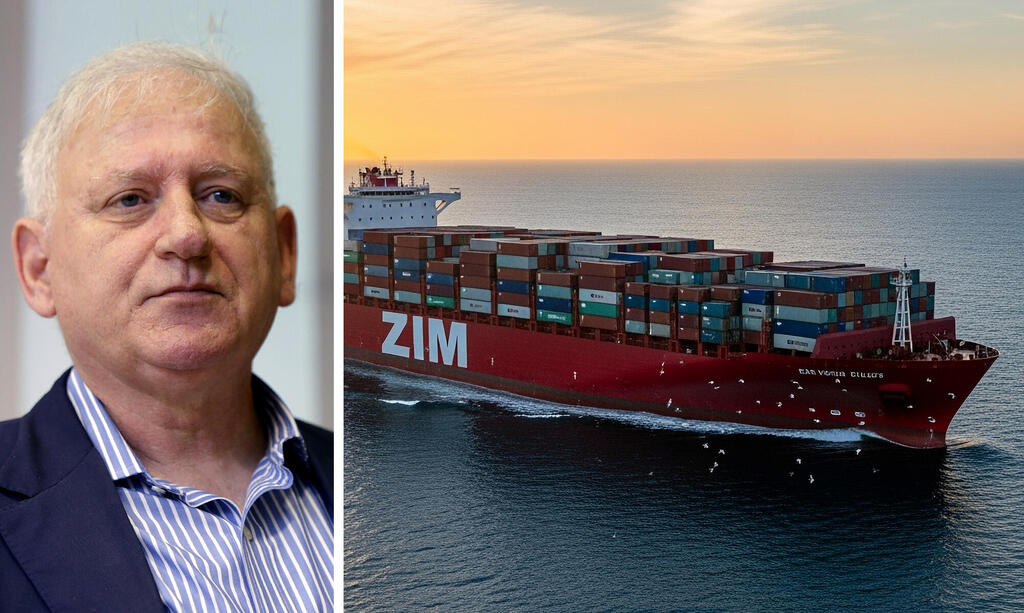
“Hapag-Lloyd raised to $35, Maersk to $30”: Zim Chairman on the intense bidding war that led to the $4.2 billion sale
Chairman Yair Seroussi recounts the strategic chess game that secured the highest bid amid global shipping volatility.
The deal to sell Zim to the German shipping giant Hapag-Lloyd and the Israeli investment fund FIMI for $4.2 billion ended a tender process full of ups and downs that lasted about six months for the Israeli shipping company. But for Yair Seroussi, Zim's chairman for the past 5.5 years, the process began much earlier, at the end of 2024, when Idan Ofer, the largest shareholder in Zim, parted ways with his holdings in the company. In an exclusive interview with Calcalist, Seroussi says: "In a message that came to me late at night, Idan Ofer informed me that he was selling his shares. The very next day, I told the board of directors that we needed to prepare." But what Seroussi had in mind was not a classic sale process.
"I told the board of directors that we needed to prepare for American activism. When you have a lot of money in the bank, and the value of the company is lower than the cash it holds, as was the case with Zim, it attracts attention. Zim did not have long-term investors at the time. Investors were changing constantly, and trading volumes were enormous. Sometimes the stock, traded on the New York Stock Exchange, had concentrated trading volumes greater than the entire Tel Aviv Stock Exchange. In this situation, you become vulnerable. Not only do you not have a controlling shareholder, you do not have a single strong shareholder. As soon as the Idan Ofer Group separated from the company, I told myself that American funds might attempt to promote moves. And even then, I started preparing, because the American capital market is large, harsh, and works differently."
But then Zim CEO Eli Glickman arrived.
"Eli came to my house one day, late at night, with an offer. And that's where the story began, and it's a complex story. I had estimated a month earlier that he was likely to make a move, and I was already thinking about what needed to be done when that happened. Then he arrived and made an offer: $20 per share, giving the company a value of about $2.4 billion. At that moment, I decided two things. First, I would not replace the management, despite the complexity this created. But I separated forces, establishing a dedicated board of directors for the purpose of the sale, or rather, to examine alternatives. We hired an American law firm alongside the Israeli Meitar firm and the Evercore investment bank, which specializes in mergers and acquisitions. This team was completely separate from management and discussed the various options. So it's true that management had considered buying the company themselves, but my mission was different, to create competition. I formed this team because I assumed no Israeli group could pull this off on its own."
Why didn't you report publicly in an organized manner about the management offer? Calcalist published this in August, but your first official comment came in November.
"We are only traded on the New York Stock Exchange, not in Israel. So what applies to us are U.S. rules. Every two weeks, this issue came up for discussion, and I asked the lawyers what should be published regarding these moves. They told me that if we were traded in Israel, certainly we would need to report. But if we just received an offer and were discussing alternatives, then according to American law, we do not say anything."
Why did you decide not to move forward with Glickman?
"As soon as you have one proposal on the table and another from management, outsiders might think the board is colluding and not acting in the best interests of all shareholders. Those who know me didn't think so, by the way, but it was expected that they might. I thought it impossible to make a deal before conducting internal assessments, creating competition, and maximizing possible value. Creating competition at this time was complicated. We are in the midst of a multi-sector crisis, and foreign investors were not enthusiastic. We approached 20 entities worldwide, including the largest private equity funds, and received negative responses from all. Then a major player expressed interest: Hapag-Lloyd. We started making progress with them, setting up information rooms, a process that takes two months. Meanwhile, some lesser-known investment company from the East appeared but quickly decided not to continue. Hapag-Lloyd's name leaked out, raising concern because sovereign wealth funds from Saudi Arabia and Qatar hold 22.5% in aggregate. But I did not give up and started dialogue with them. Later, I received a call from Maersk's CEO and told him they would need to act quickly and make an offer."
So now you had three entities in play. How did it progress?
"I requested offers by a certain date and received three: Glickman's group, Maersk, and Hapag-Lloyd. The Germans offered the most, $32 per share, with the others below $30. Glickman's offer started at $20, Maersk at $29. Management quickly received a negative response because the offer was too low, so we continued with the two foreign companies. Hapag-Lloyd was more enthusiastic and flexible on key issues, such as employee commitments, which are personally important to me. Hapag-Lloyd was criticized due to its shareholders from Arab countries, so I kept in touch with Maersk, who said they could not raise the price due to complex market conditions. Ultimately, Maersk raised its bid to $30 per share, and Hapag-Lloyd to $35 per share, the price at which the deal closed, reflecting a 126% premium over the share price six months earlier, when rumors of a sale began."
How did you navigate the issue of Israel’s “golden share”?
"Hapag-Lloyd consulted on the matter. I believed we could obtain the state's consent because the investors from Arab countries are on Hapag-Lloyd's strategic board, not the operational board, where Germans have full control. The Germans proposed joining Udi Angel's XT investment group. I thought the deal was secure, but the timeline for approvals was too short. Three weeks ago, I informed Hapag-Lloyd’s CEO there was no deal. We could have focused on Maersk, but other issues arose."
Is this where FIMI enters the picture?
"Yes. Two weeks ago, Hapag-Lloyd suggested a different direction with FIMI: splitting the company so FIMI would hold Israeli operations and receive the golden share for all state debts. I explained we could not leave the company in uncertainty for long, but they produced a mature agreement quickly."
Do you think this is a good solution?
"In my opinion, it strengthens the state’s position regarding the golden share. Authorized bodies will now review the deal. My job is to maximize shareholder value realistically, and I believe we have found a strong formula. Hapag-Lloyd and FIMI will consult regulators. The process will take 9-12 months to complete approvals."
What are the chances of approval?
"I cannot know exactly. But I think our proposal is reasonable, strengthens the country, and offers commercial opportunities. The Germans make a serious impression. We’ve consulted people with more government experience than I have, and they found it an interesting approach. The country wants business continuity, not forbidden sales. As an Israeli, certainty in maritime transport during emergencies is important."
Some analysts warn the new Zim will be small and unstable.
"All analysts worldwide currently view the shipping sector negatively. Zim is in better shape than others. Yes, the new Zim will not hold our most significant China-US line, but we have a small, flexible fleet, which is an advantage. The new company will have high equity of about $1 billion, be debt-free, and receive guaranteed revenue from Hapag-Lloyd for its first five years. In practice, Hapag-Lloyd covers what the new Zim cannot achieve independently. This amounts to hundreds of millions, essentially the price of the golden share."
Why did Zim need to be sold?
"I joined Zim 5.5 years ago for the IPO, not to sell. The IPO in January 2021 valued the company at $1.5 billion and was one of the hardest things I’ve done. I did not initiate the sale, but I responded quickly and correctly. Investors seem eager for this deal now."
Seroussi emphasizes: "Since the IPO, Zim has distributed dividends totaling $5.7 billion. With sale proceeds, we have returned over $10 billion to investors, despite raising only $200 million initially. A year or two before the IPO, a sale attempt offered only $100 million. Hapag-Lloyd also asked for money at that time, about $180 million."
Regarding employees concerned about layoffs:
"On Friday afternoon, I initially refused to approve the agreement. Only after an hour-long Zoom call with Hapag-Lloyd’s CEO, where understandings regarding employees were reached, did I approve it. I understand employee concerns. Hapag-Lloyd agreed to invest more in preserving jobs and developing a technology center in Israel. I believe they are committed to protecting the workforce."
Will you leave Zim after the deal?
"Yes. I’ll be here until then. After the deal is completed, God is great. I have other interesting things to do and feel younger than my age."



