










Hapag-Lloyd CEO: "Qatar and Saudi Arabia reps supported Zim acquisition"
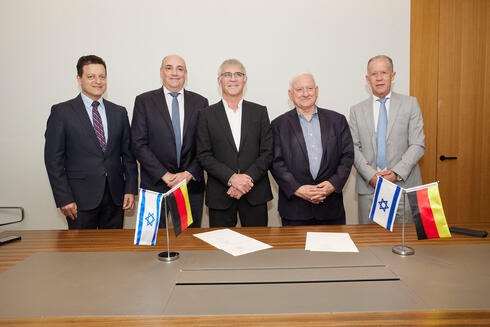
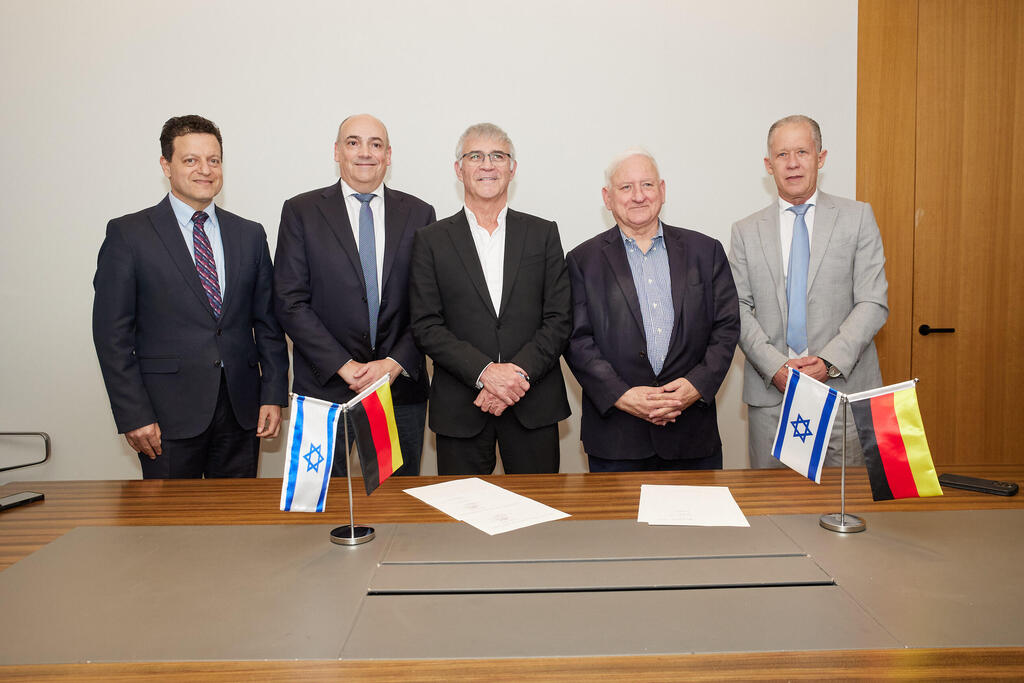
The agreement to sell the Israeli shipping company to the German giant, which is also owned by the two Arab countries, was signed on Monday in Tel Aviv. The German company's Israeli partner was supposed to be Udi Angel, but negotiations were delayed and the Germans brought in the FIMI fund.
Six months after Calcalist revealed that Zim CEO Eli Glickman was exploring an attempt to acquire the Israeli shipping company, a deal has now been signed, but not with him.
On Monday, Zim signed a binding agreement with German shipping giant Hapag-Lloyd, in a transaction first revealed by Calcalist. Under the deal, Hapag-Lloyd will acquire 100% of Zim’s shares for $4.2 billion in cash. Simultaneously, it will sign an agreement to sell Zim’s Israeli operations and certain additional assets to FIMI, Israel’s largest private equity fund. FIMI will establish a new entity, to be called “New Zim,” which will operate in partnership with Hapag-Lloyd.
The transaction is expected to close by the end of the year, subject to regulatory approvals. Upon completion, Zim will be delisted from the New York Stock Exchange.
Hapag-Lloyd will pay $35 per Zim share, representing a 58% premium over the market price on the eve of the deal’s announcement and a 126% premium since Glickman’s attempted bid became public in mid-August, effectively signaling that the company was up for sale.
Calcalist has learned that Hapag-Lloyd had previously held discussions about acquiring Zim when it was still controlled by Idan Ofer, who exited the company at the end of 2024. However, those talks did not reach an advanced stage until the current tender process.
At a press conference following the signing, Hapag-Lloyd CEO Rolf Habben Jansen said: “We have signed a merger agreement with Zim, under which we will acquire 100% of Zim’s shares in cash. We believe the price is attractive for Zim’s shareholders, and we will finance the transaction from our liquid resources. We expect this deal to strengthen our global position and generate synergies of $300-400 million in savings. We will particularly strengthen our presence on Atlantic routes, where we will become the second-largest carrier.”
According to data presented by the company, the merged entity’s EBITDA in 2025 is projected at $2 billion, compared with $1.1 billion for Hapag-Lloyd on a standalone basis.
The transaction will effectively divide Zim into two parts.
Hapag-Lloyd will integrate Zim’s international operations, including 99 chartered vessels, its main trade routes (primarily Asia-U.S. lanes), customer contracts and the Zim brand outside Israel.
FIMI’s “New Zim” will retain the Israeli operations. These will include 16 vessels, 12 currently owned by Zim and four to be leased from Hapag-Lloyd, the national shipping lines to and from Israel, the company’s headquarters in Haifa and compliance with the state’s golden share requirements. Following the split, the new company’s equity is expected to total approximately $1 billion.
The state’s golden share played a decisive role in shaping the structure of the deal. The golden share grants the Israeli government special rights, including the ability to mobilize the fleet in emergencies to ensure the supply of essential goods such as wheat and fuel. It also sets a minimum fleet requirement, in Zim’s case, 11 vessels, and prevents a foreign entity from holding sole control of the company.
In Hapag-Lloyd’s case, the ownership structure adds geopolitical complexity. The German company counts shareholders from Saudi Arabia (10.2% through a sovereign investment arm) and Qatar (12.3% through a sovereign investment arm). The CEO of Hapag-Lloyd said at the press conference that "Qatar and Saudi Arabia have observers on our board of directors, and they supported the deal."
The connection between Hapag-Lloyd and FIMI was brokered by Samer Haj-Yehia, former chairman of Bank Leumi, who is expected to receive compensation for his role. Calcalist has also learned that Udi Angel, through his investment company XT, was initially the intended Israeli partner. However, delays in finalizing terms led Hapag-Lloyd, just two weeks ago, to pivot to negotiations with FIMI, which ultimately signed a binding memorandum of understanding and agreed to several clauses that Angel had hesitated over.
The new structure must receive extensive regulatory approval. The process is expected to take approximately nine months and requires sign-off from 11 Israeli authorities.
While Hapag-Lloyd and FIMI express confidence that approvals will be granted, opposition is mounting. A document from the Administration of Shipping and Ports warns that the new Zim could be financially vulnerable in a downturn in the global shipping cycle, potentially leaving Israel without a reliable strategic fleet in times of emergency.
FIMI and Hapag-Lloyd reject that assessment, arguing that the new company will benefit from Hapag-Lloyd’s global network and access to slots on major shipping routes.
Meanwhile, the Companies Authority has indicated it may seek a court injunction, arguing it was excluded from parts of the deal’s formulation despite its approval being required. Transportation Minister Miri Regev has also expressed opposition.
Labor tensions add another layer of uncertainty. Approximately 1,000 Zim employees fear significant layoffs. Worker representatives claim they were told that as many as 880 employees could be dismissed. Hapag-Lloyd denies plans for mass layoffs but has acknowledged that workforce reductions are possible. The company has also said it intends to expand certain activities in Israel.
Hapag-Lloyd ultimately won a formal tender launched last November after Zim’s board, chaired by Yair Seroussi, rejected a $2.4 billion offer from a group led by Glickman. The board simultaneously hired investment bank Evercore to review strategic alternatives. At the conclusion of the process, Hapag-Lloyd emerged as the winning bidder.



